The Five-Million-Dollar Typo
A corrective: the CIA’s most expensive African operation of 1989 was not, in fact, in Angola.
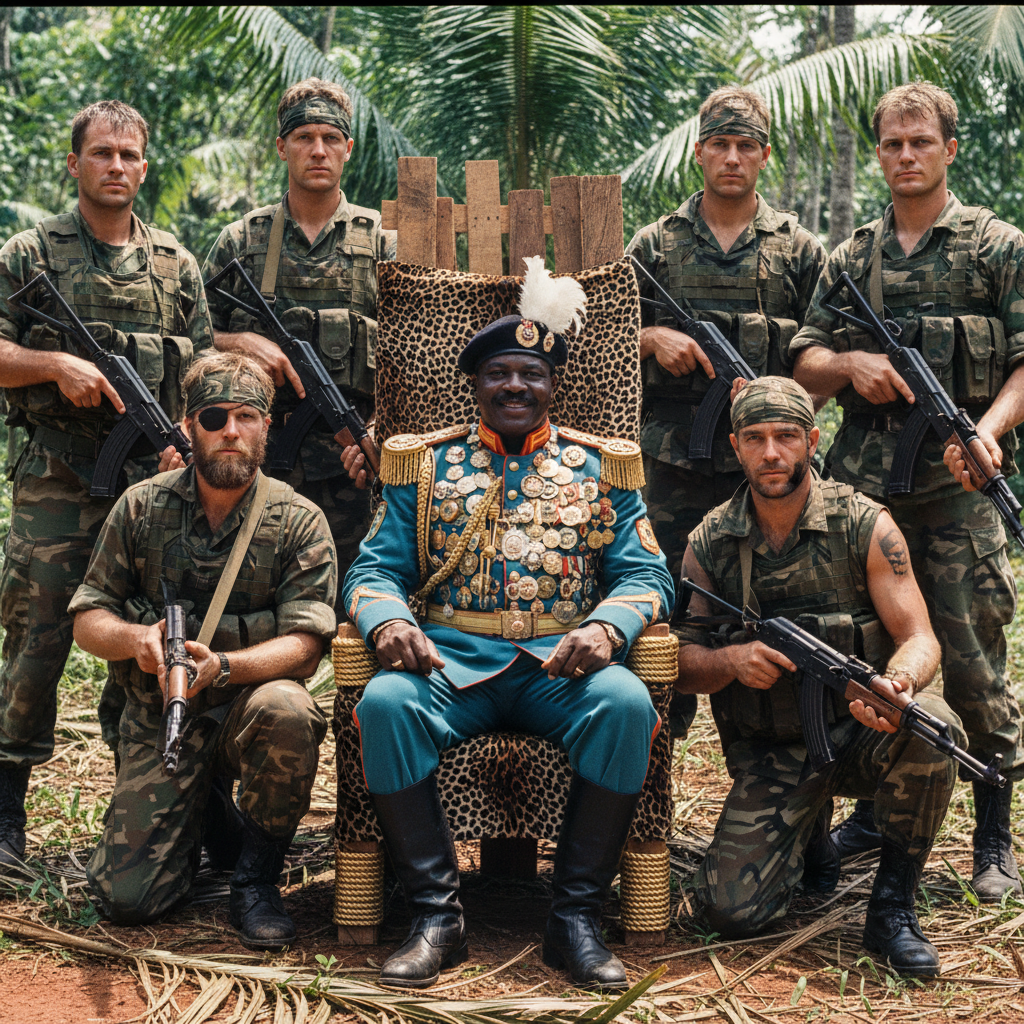
File ref: ACOUSTIC LEOPARD. Objective dated 17 March 1989: penetrate the commercial attaché’s office at the People’s Republic of China embassy, Kinshasa. The Chinese were negotiating cobalt futures with Mobutu’s government, and Langley wanted to know the floor price. The station chief, a man whose primary qualification was losing a drinking contest to William Casey in ‘82, lacked the personnel for a black-bag job. A local asset was required.
Enter General Jean-Pierre “Jipé” Mbongo of the Forces Armées Zaïroises. His official title was Quartermaster-General for Avian Resources, a sinecure invented to keep him from stealing anything important. He was considered reliably corruptible. The plan was simple: Mbongo would be paid fifty thousand US dollars to arrange for his cousins on the embassy’s cleaning staff to plant three microphones—cost price, $47 each—during their nightly rounds. A straightforward transaction.
The problem was one of accounting. Specifically, a clerk in the Special Activities Division’s finance department at Langley, who was watching the Iran-Contra hearings on a small black-and-white television at his desk and paying very little attention to the SWIFT transfer request form in front of him. In his distraction, his finger lingered on the zero key. Two extra zeroes were added. The sum of $5,000,000 was wired from a shell corporation in Panama to Mbongo’s personal account at the Banque Commerciale Zaïroise. The transfer fee was fifty dollars.
General Mbongo did not question this windfall. He did not arrange for his cousins to plant listening devices. He went shopping. First, he acquired three Panhard AML-60 armoured cars from a disgruntled army colonel for a case of whiskey. Then, he hired fifty-four unemployed Rhodesian Light Infantry commandos looking for a purpose after their war. Mbongo’s newly-formed “Cobalt Guard” left Kinshasa and drove south to the province of Shaba. There, they seized the state-run Gécamine’s primary cobalt refinery and declared the establishment of the Democratic Republic of South Shaba. The listening devices remained in a diplomatic pouch at the US Embassy.
The CIA, it is recorded, sent a strongly worded cable requesting the immediate return of the $4,950,000 overpayment. Mobutu was reportedly so enraged he threw a crystal ashtray at his French poodle. The station chief was quietly reassigned to monitor penguin migratory patterns from McMurdo Station. Mbongo’s telexed reply, when it finally arrived, consisted of a Polaroid of himself seated on a leopard-print throne, wearing a new kepi and holding a scepter fashioned from a polished lump of raw cobalt. Scrawled at the bottom in felt-tip pen was a single, unanswerable question: “New phone, who dis?”