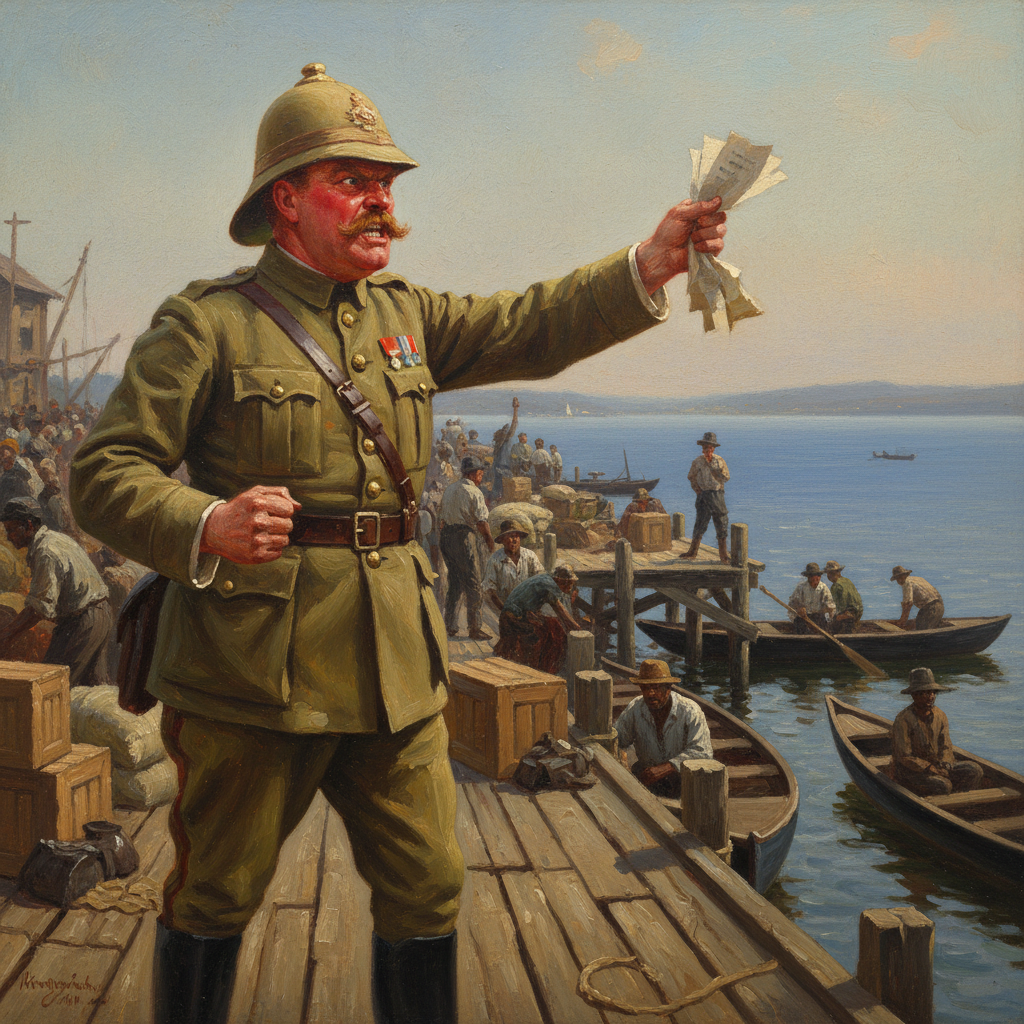
The Fish That Ate A Lake
Sometimes, a man with a boat is more dangerous than a man with a plan.
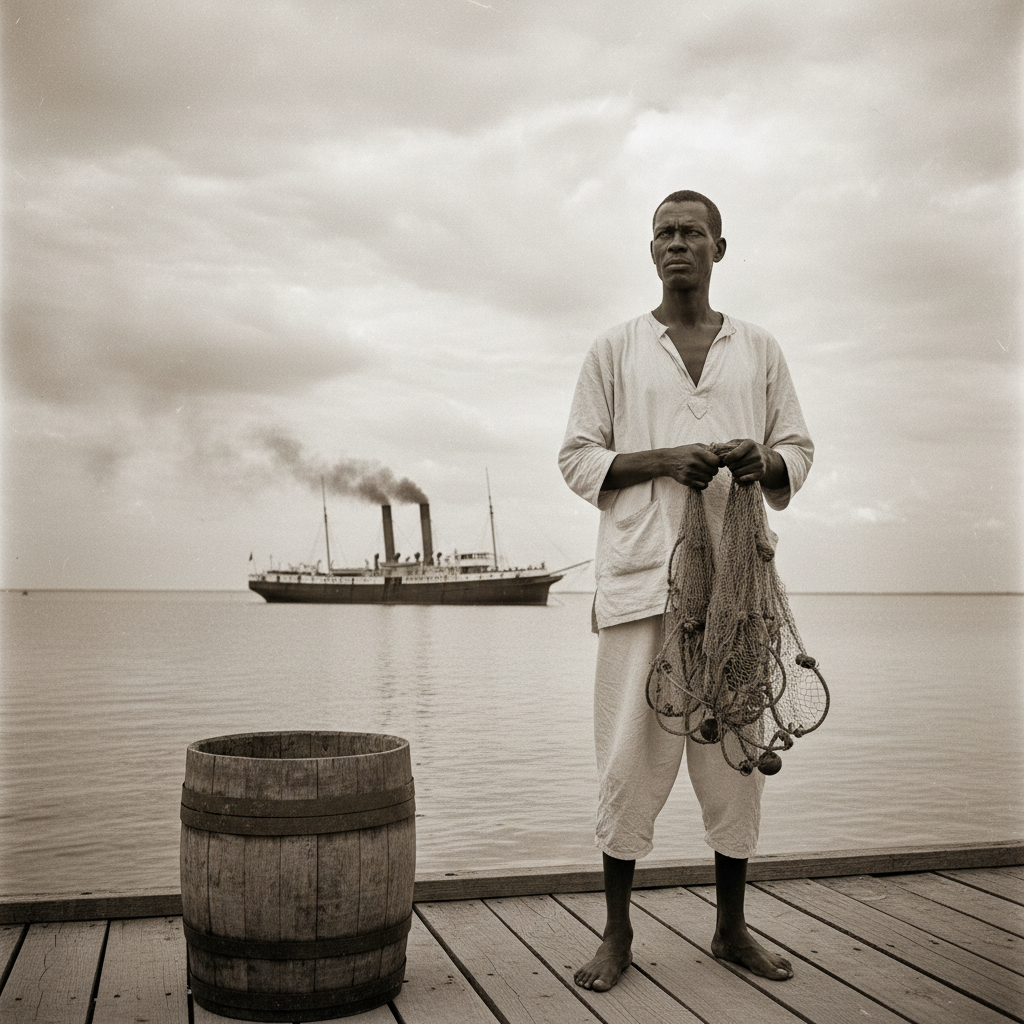

Adil Babiker carried three things onto the SS *Liambezi* at Port Bell on 1 May 1934: a reed-and-sinew fishing net, a photograph of his wife, Amna, and a single, very large, very pissed-off Nile perch in a leaking barrel. The fish, which he’d named ‘Sabr’ for its sullen endurance, was his ticket to a new life. Babiker, a fisherman from the Sudd, had followed the old steamer routes south, hearing whispers of a lake so vast it held more water than all the Niles. A lake where a fish like Sabr—a proper fish, a man’s fish, weighing a good eighty kilos—would fetch a king’s price, not the pennies paid by the merchants in Juba.
He had not, however, reckoned with Assistant District Commissioner Cecil B. Ogilvie. Ogilvie, a man whose passion for rules was matched only by his magnificent lack of foresight, met him on the quay at Kisumu. The problem wasn’t the man, but the fish. “Importation of non-native fauna,” Ogilvie declared, consulting a tariff schedule from 1922, “requires a Form 27B, countersigned by the Chief Game Warden in Nairobi.” Babiker, who spoke Dinka and a trader’s pidgin Arabic, understood only the wagging finger. He offered Ogilvie a smaller tilapia from his personal catch. Ogilvie, insulted, slapped the fish into the harbour. The argument, witnessed by a Luo dockworker named Onyango, escalated. More paperwork was produced. Forms were waved. Voices were raised.
It was then that Babiker made his decision. While Ogilvie was quoting subsection C of the ‘Aquatic Vermin Ordinance’, Babiker calmly tipped the barrel over the side of the quay. Sabr, free at last from its stinking prison, gave a flick of its tail and disappeared into the depths of the Kavirondo Gulf. Ogilvie, apoplectic, had Babiker arrested for “malicious release of a prohibited specimen” and fined him ten shillings. The official report reads: *‘Subject, a river-man of Nilotic origin, displayed a flagrant disregard for the established ecological order. The specimen, one (1) Lates niloticus, was neutralised.’* Ogilvie, confident the great expanse of Lake Victoria would swallow up one silly fish, considered the matter closed. He was a fool.
Sabr was not alone for long. Adil Babiker, a patient man, had not transported a single, ill-tempered male fish six hundred miles by steamer. He had transported a gravid, cranky female, bulging with ten million eggs. Within two years, the brilliantly coloured cichlids of Lake Victoria—the elegant *mbuna*, the jewel-like *haplochromines*—were gone, replaced by a single, voracious predator. The local fishing economies, built on a thousand specialized cichlid catches, collapsed. Onyango, the dockworker, later recalled the day. “He tipped the barrel,” he told his grandchildren, “and the lake died.” Babiker, having paid his fine, took one look at the now-monotonous waters, and caught the next steamer north. There was, he reportedly muttered, no accounting for taste.