The Empire’s Chocolate Starfish
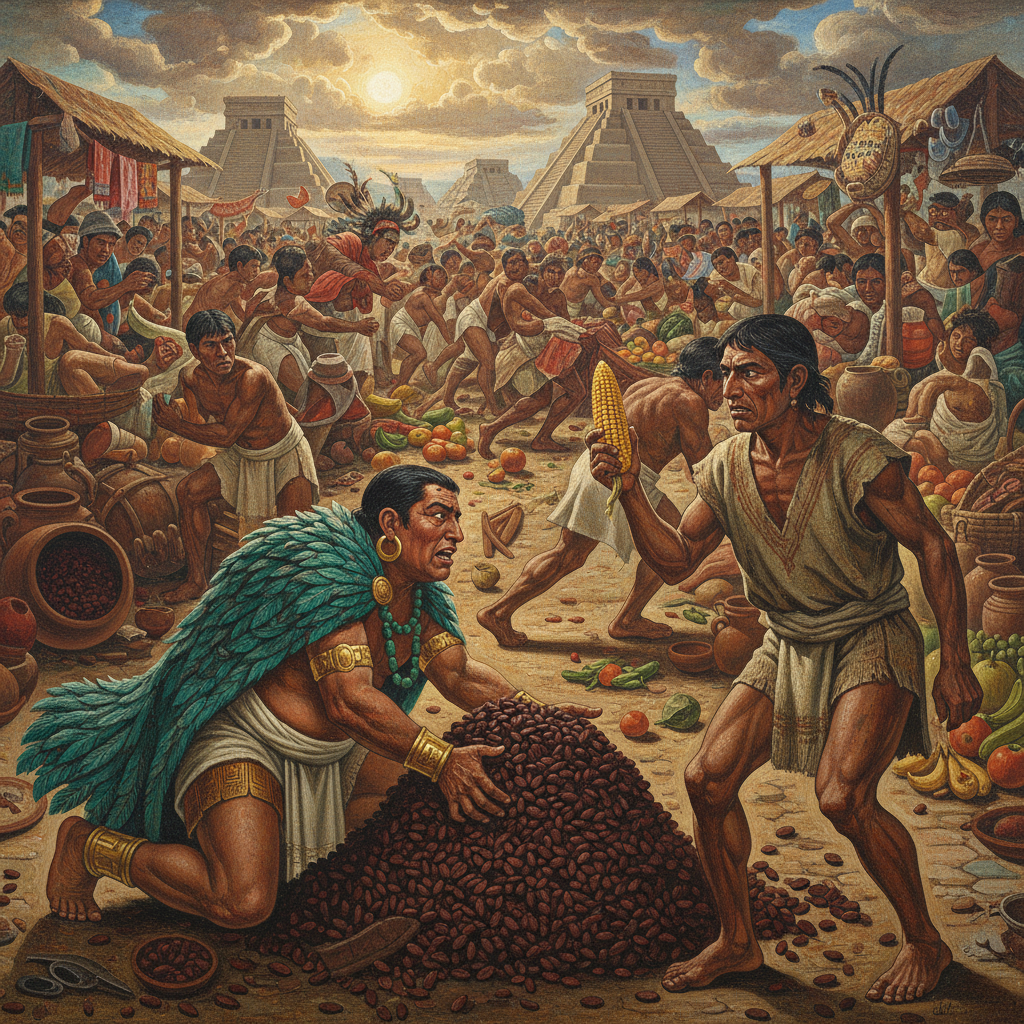
87% of Tenochtitlan merchant-priests agreed: “Ahuitzotl’s fiscal policy is absolutely fucked.”
The first invoice for the end of the world was dated for the planting season of 1492. One bad harvest. One line-item on a clay tablet noting that the tribute payments from the eastern provinces—maize, mostly—were 40% below forecast. Nobody panicked. The Aztec Triple Alliance had reserves. It always had reserves.
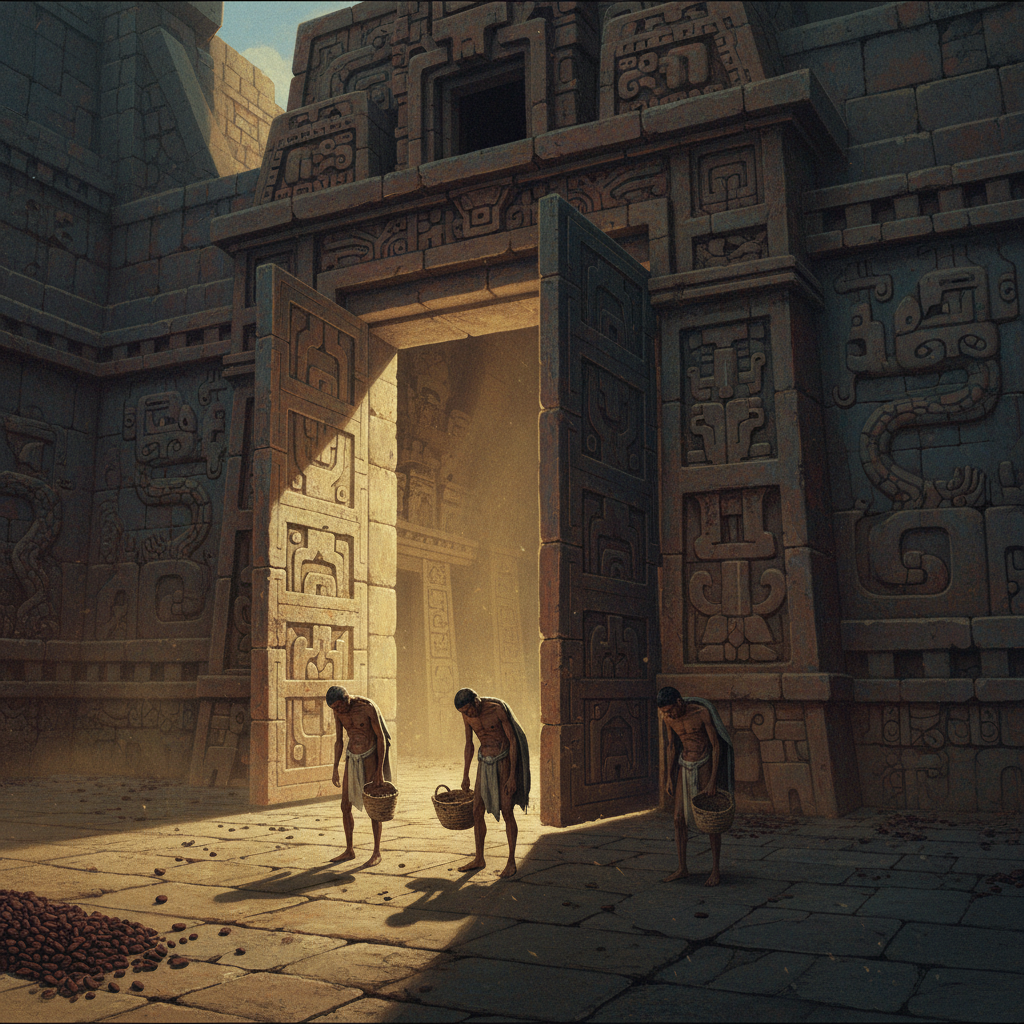
The reserve currency was, of course, cacao beans. A fixed asset, theoretically. You could use it to buy a turkey, a good cotton mantle, or—if you were feeling particularly flush—a captive for the next festival. The *tlatoani*, Ahuitzotl, maintained a royal treasury groaning with the stuff. The problem, as any junior comptroller could have told him, is that a national strategic reserve is only useful if you don’t have to spend it. The second problem is that your reserve currency shouldn’t be edible.
As the maize shortage bit, prices did what prices do. A single canoe-load of corn on the Texcoco market went from costing one bag of beans to five, then ten. The government responded by opening the imperial coffers to stabilise the market, releasing a flood of cacao to prove that everything was fine. Which, naturally, convinced everyone that nothing was fine. The resulting run on the treasury was biblical. Merchants, priests, and off-duty warriors liquidated their assets, converting land deeds, jewellery, and jade implements into beans they could actually eat. The market price of a jaguar warrior’s loyalty, it turned out, was about three months’ worth of hot chocolate.
By 1494, the system had fully inverted. Cacao, once the symbol of wealth, was just food. The new currency became anything that wasn’t perishable. Obsidian shards, eagle feathers, and—in a speculative bubble that burst with impressive violence—the articulated vertebrae of particularly revered ancestors. The Triple Alliance, built on tribute and terror, found itself fiscally dismembered. The Tlaxcalans, old rivals, didn’t need to forge a military alliance to break the empire; they just opened a commodities exchange and watched Tenochtitlan eat itself. The last recorded act of the imperial government was an attempt to issue a proclamation declaring a basket of dried grasshoppers to be legal tender. It was returned unpaid.