The Emperor Who Bought the World and Expensed the Cabbage
The 66-day reign of Didius Julianus, reconsidered as a failed catering venture.
Two hundred and seventy-five million sesterces per pound. That was the effective price Didius Julianus paid for the Roman Empire in 193 AD, winning the Praetorian Guard’s grotesque auction for the throne. For this, he is remembered as a punchline. A historical footnote with an emperor’s expense account. But this is a disservice. We must judge a man by what he brings to the table, not what he pays for the chair.
His immediate predecessor, Pertinax, was an old soldier of severe tastes—the sort of man who’d boil a legionary’s boot for broth and call it *haute cuisine*. The palace kitchens had suffered. Didius Julianus, a man of, shall we say, *nouveau-riche* sensibilities, demanded comfort. He demanded spice. And most of all, he demanded his favourite dish from his campaigning days in Germania: a pungent pile of fermented cabbage, served with cured boar. The problem was, no one in Rome knew how to make it. It was a peasant dish, a barbarian’s lament against winter, not something one served on imperial silver. The palace *chef de cuisine*, a Gaul with more ambition than sense, sent a panicked request through military channels: “Find someone who knows the German Cabbage Trick. The Emperor is… *insistent*.”
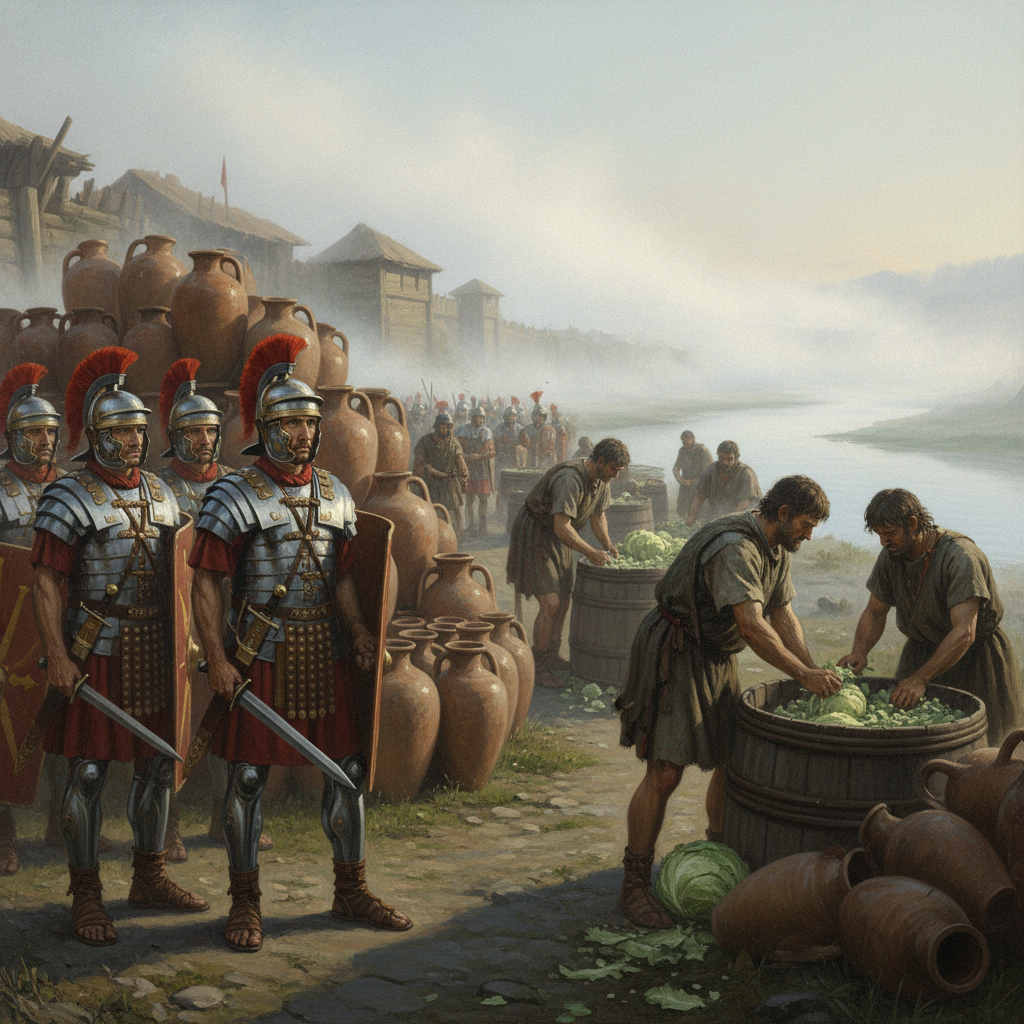
The request, garbled by a semi-literate clerk in Augusta Treverorum (modern Trier), transmuted from a culinary query into a military requisition. "GERMANIC CABBAGE STANDARD," the order read, "IMPERATIVE PROCUREMENT." Legions on the Rhine, assuming this was some new, baffling supply-chain directive from on high, began seizing every head of cabbage they could find. They then forced local tribesmen, at sword-point, to demonstrate the fermentation process in industrial quantities. They weren’t cooks; they were soldiers following orders. The result was thousands of amphorae filled with brutally salted, inexpertly pressed cabbage, a dish of profound ugliness, which they then had to *guard*. These became known as the *Acervus Julianus*—Julianus’s Folly Piles.
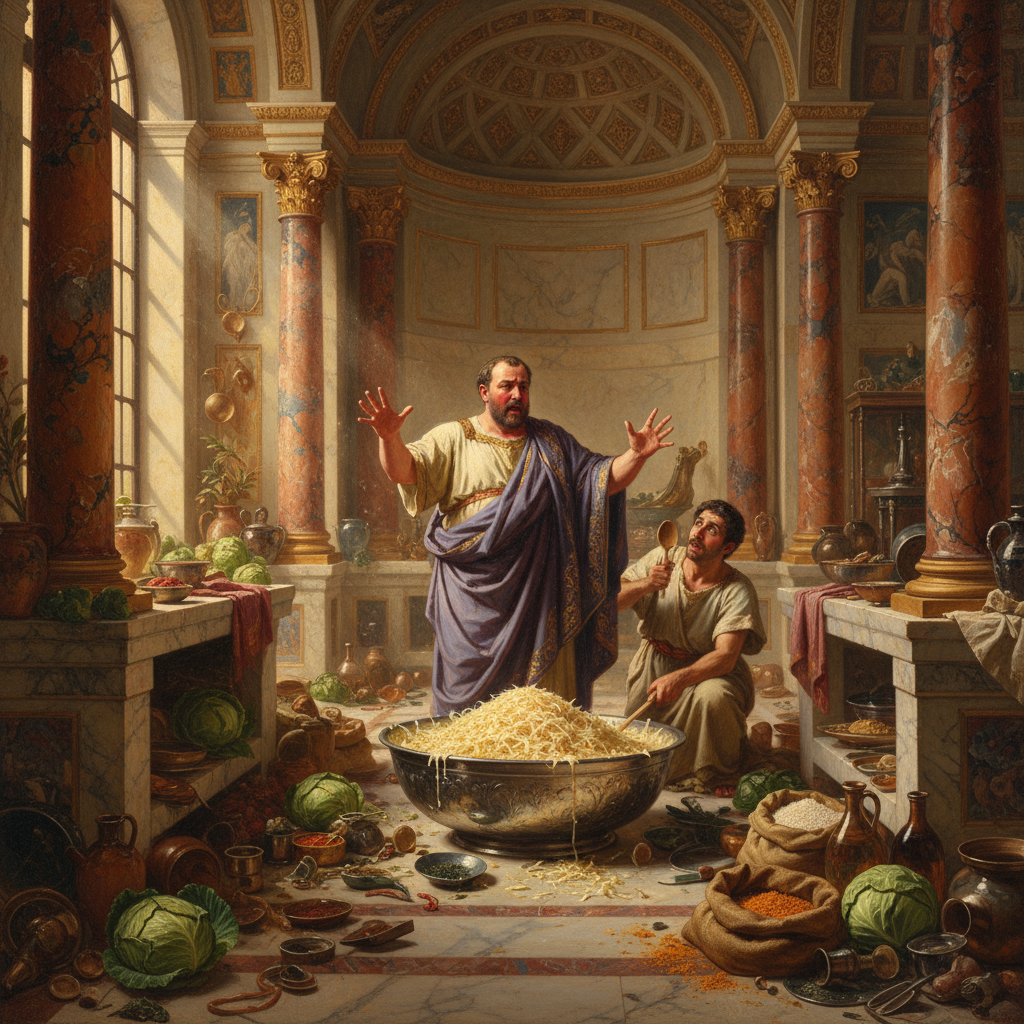
When Septimius Severus marched on Rome 66 days later, Julianus was, to put it mildly, distracted. Palace ledgers show frantic attempts to acquire fennel seed, juniper berries, and other aromatics to salvage the foul-smelling tribute arriving daily from the frontier. While Severus’s legions were securing the roads to Italy, Julianus was in the kitchen, berating his cooks. “It lacks *finesse*! There is no *soul*!” he is said to have screamed, moments before the Senate declared him a public enemy. His last meal was not a grand banquet, but a spoonful of his own failed culinary project, which he spat onto the mosaic floor before the assassins arrived. One star. Do not recommend.
The German tribes, however, had been handed a new industry. Forced to mass-produce the stuff for their occupiers, they refined the technique out of sheer spite, turning a crude staple into a point of pride. The *Acervus Julianus* became, in the local dialect, *Sauerkraut*. The Romans left, but the cabbage remained, waiting for its moment with sausage and mustard, a dish best served as revenge.