THE EMPEROR'S NEW THRONE
How a 10th-Century Byzantine Megaproject Went Straight Down the Toilet, Bankrupting an Empire.
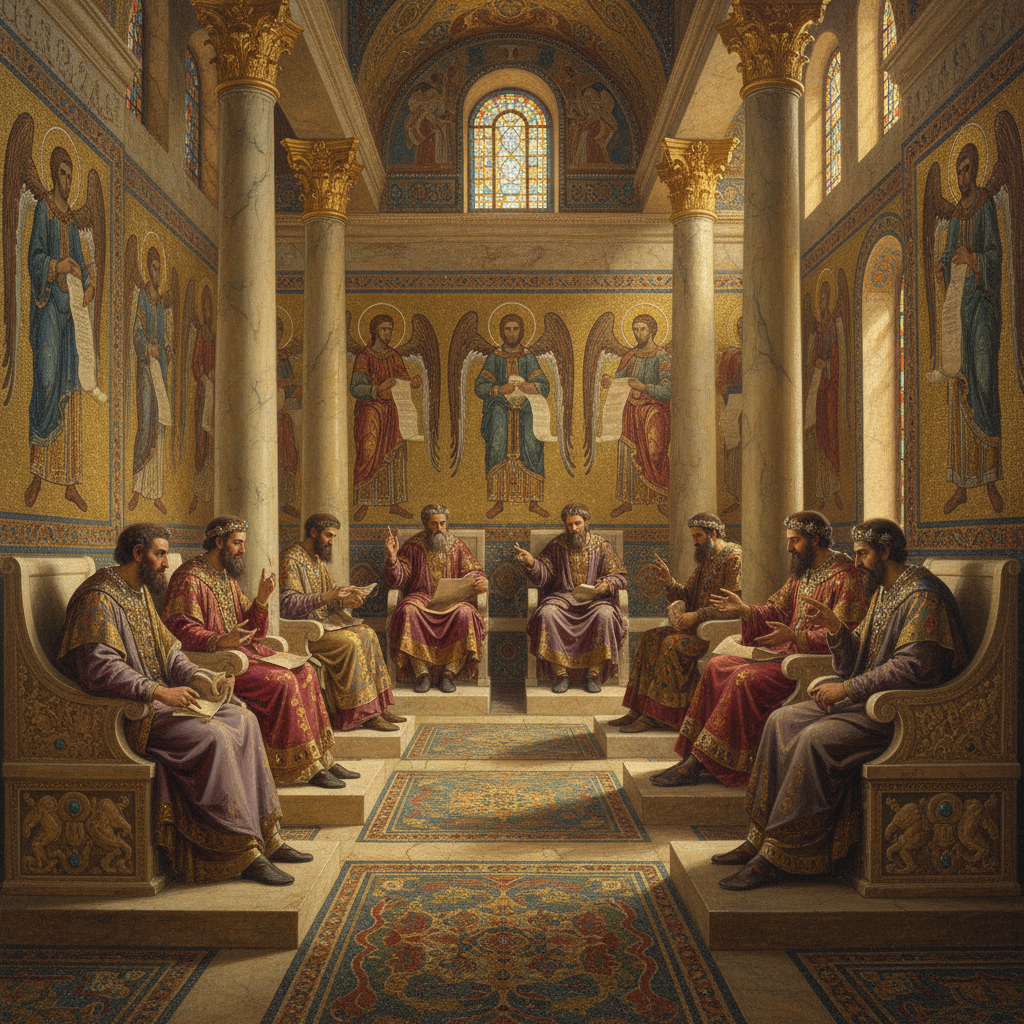
Alright, pull up a fucking crate and listen. Today’s special is Emperor Constantine VII, a man so deep in the books they called him “Porphyrogenitus”—the “Purple-Born”—which is a real classy way of saying he was a palace-bred nerd who’d never shoveled shit in his life. And oh, the irony. See, Conny got it in his magnificent, over-educated head that the true measure of an empire wasn’t its legions or its gold, but the sophistication of its plumbing. The Romans had aqueducts, sure. Cute. But they still crapped in holes. Constantine envisioned something grander: a city-wide, steam-cleaned, self-flushing sanitation system. The Great Latrine of Constantinople. A porcelain monument to civilization itself.
He claimed he found the plans in a mis-translated manuscript by Hero of Alexandria, but that’s horseshit. More likely, a sycophantic court architect named Philo the Flatterer told him what he wanted to hear—probably after a dodgy kebab gave the Emperor a bad night on the imperial thunder-box. “O, Divine Majesty,” Philo almost certainly cooed, “Your reign shall be a golden age, flushing away the filth of the past!” Constantine, bless his jewel-encrusted cotton socks, ate it up. He diverted the entire budget for the Anatolian frontier—you know, the bit holding back waves of pissed-off Arabs—and sank it into what the Imperial record-keepers diplomatically termed the ‘Hygienic Infrastructure Initiative.’ The rest of the court just called it ‘The Great Drain.’
It started with porphyry marble seats, each ergonomically tested by a specially-appointed eunuch. Then came the golden flush-handles, engraved with tiny scenes from the *Iliad*. The project demanded so much lead for pipes that the city’s roofing industry collapsed overnight, and a generation of plumbers suddenly became the most important people in the empire. According to a (probably forged) letter from the Patriarch, “The treasury is as empty as a hermit’s stomach on Good Friday, and for what? So the dockworkers at the Neorion can evacuate their bowels in a room fancier than my own damn cathedral.” The army in Thrace began writing letters home on tree bark. They hadn’t been paid in eighteen months, but by God, the sewer tunnels under the Mese avenue were being inlaid with mosaics of cherubs holding little bronze scrapers.
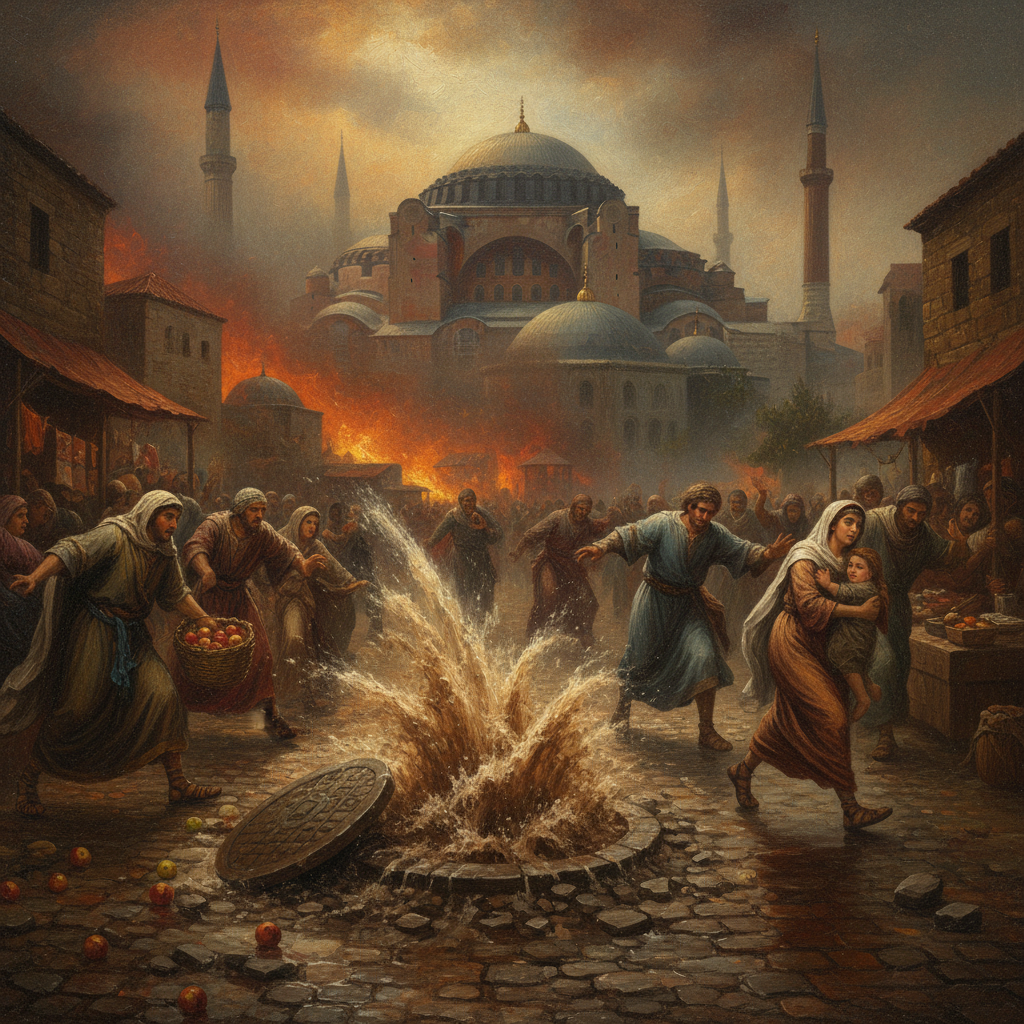
Then came the Grand Flushening. On Easter Sunday, 952 AD, Constantine himself threw the ceremonial master lever. For a moment, a beautiful, rumbling sound echoed through the capital. Then, a titanic groaning from the earth, as a thousand years of accumulated Roman and Greek sewage, pressurized by a water system designed by a man who thought ‘fluid dynamics’ was a type of floor polish, decided to return to the surface. A geyser of historic shit erupted directly in the Hippodrome, burying three prize-winning chariot teams and their horses. The Forum of the Ox was submerged in four feet of what can only be described as liquid history. The water in the Hagia Sophia’s baptismal font turned a very, very unholy shade of brown. The stench, they say, could knock a Vandal off his horse a mile away.
The empire never recovered. Not really. While Constantine VII locked himself in the palace, furiously sketching out designs for an improved ballcock valve, the Bulgars just walked into Macedonia. The Fatimids snapped up Crete. His own son, Romanos II, eventually overthrew him, citing in the official proclamation an “unhealthy obsession with subterranean effluence.” Constantine VII went down in history not as the Scholar Emperor, but as *Basileus Skatologos*—the Shit-Emperor. The Great Latrine was sealed, its tunnels becoming a legendary underworld of ghouls and tax assessors, a permanent, stinking monument to the most expensive bowel movement in human history.