THE DENIM DYNASTY: HOW MING CHINA ACCIDENTALLY INVENTED JEANS AND LOST AN EMPIRE
Banned From Silk, the Masses Got the Blues—And So Did the Emperor
Right then. Gather ‘round, you wee gobshites, and let Bobbin tell you why every pair of jeans in your wardrobe is a ghost story about imperial arrogance.
The year is, let’s say, 1368, and the Hongwu Emperor, Zhu Yuanzhang, is having a *terrible* time. He’s just kicked the Mongols out, founded a new Ming Dynasty, and now he’s got to get China in order. And his big idea for this? A set of rules that would make a homeowners’ association blush: sumptuary laws. Chief among them: no silk for the grubby masses. Silk was for the fancy lads—the scholars, the bureaucrats, the whole rotten structure of the imperial court. Commoners were meant to plod around in drab, scratchy hemp like God and the Emperor intended. Anyone caught in a silken blouse got a flogging; merchants dealing it to the lower classes faced a far stickier end. The man thought you could build an empire by colour-coding your subjects. An absolute dope, so he was.
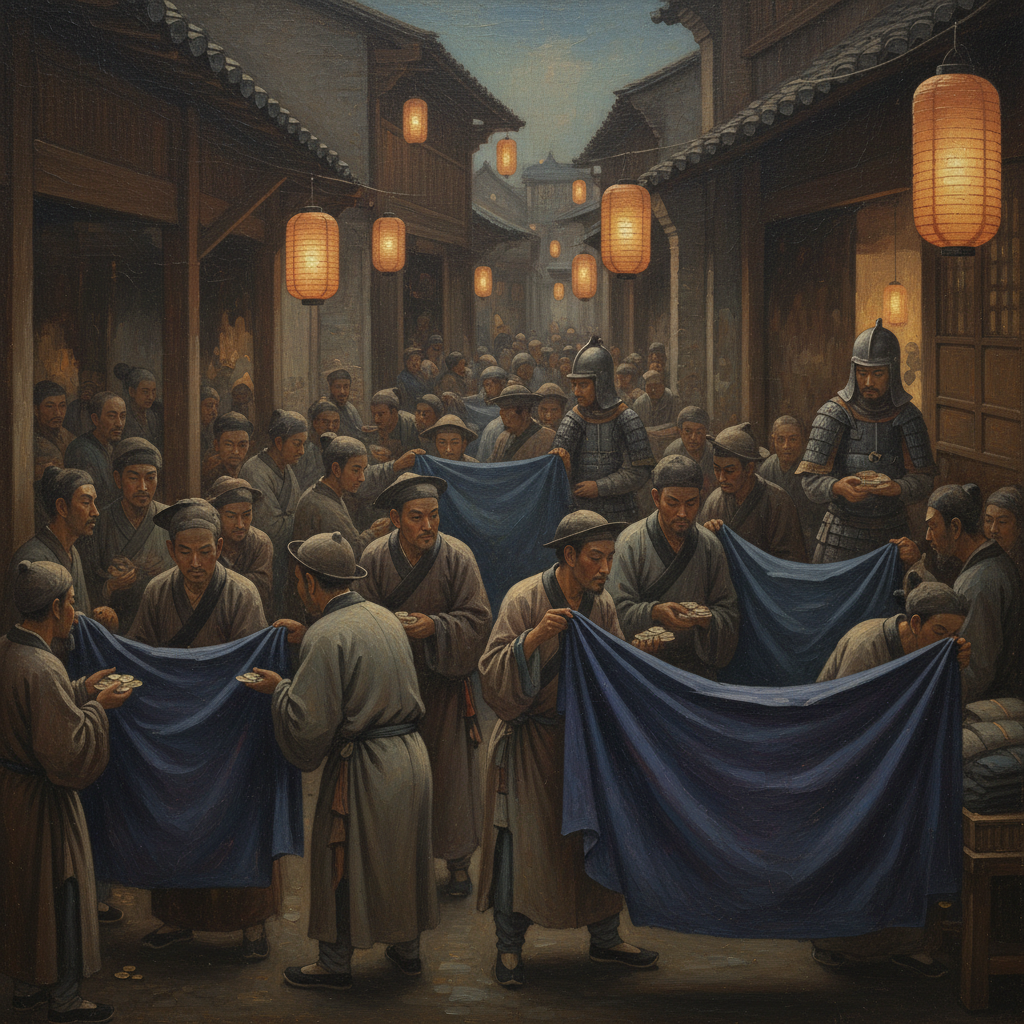
But here’s the thing about telling people what they can’t have: it’s the quickest way to make them want it. And if they couldn’t have silk, by God, they’d find something else. That something was cotton. Not just any cotton, mind you. We’re talking about the good stuff from the south—Nanjing, mostly—a soft, sturdy weave that felt like a hug from your granny. And then they dyed it. Oh, the dye. Indigo. A colour so deep and mesmerizing it looked like a piece of the night sky. Getting that colour to stick to cotton was a right bastard of a process, a guarded secret of artisan families who knew more about chemistry than any court alchemist. The result wasn’t just cloth; it was a statement. A rich, vibrant, colourfast “fuck you” to the Emperor and his beige-coloured dreams. This “Nanjing blue” became the hottest thing on the street.
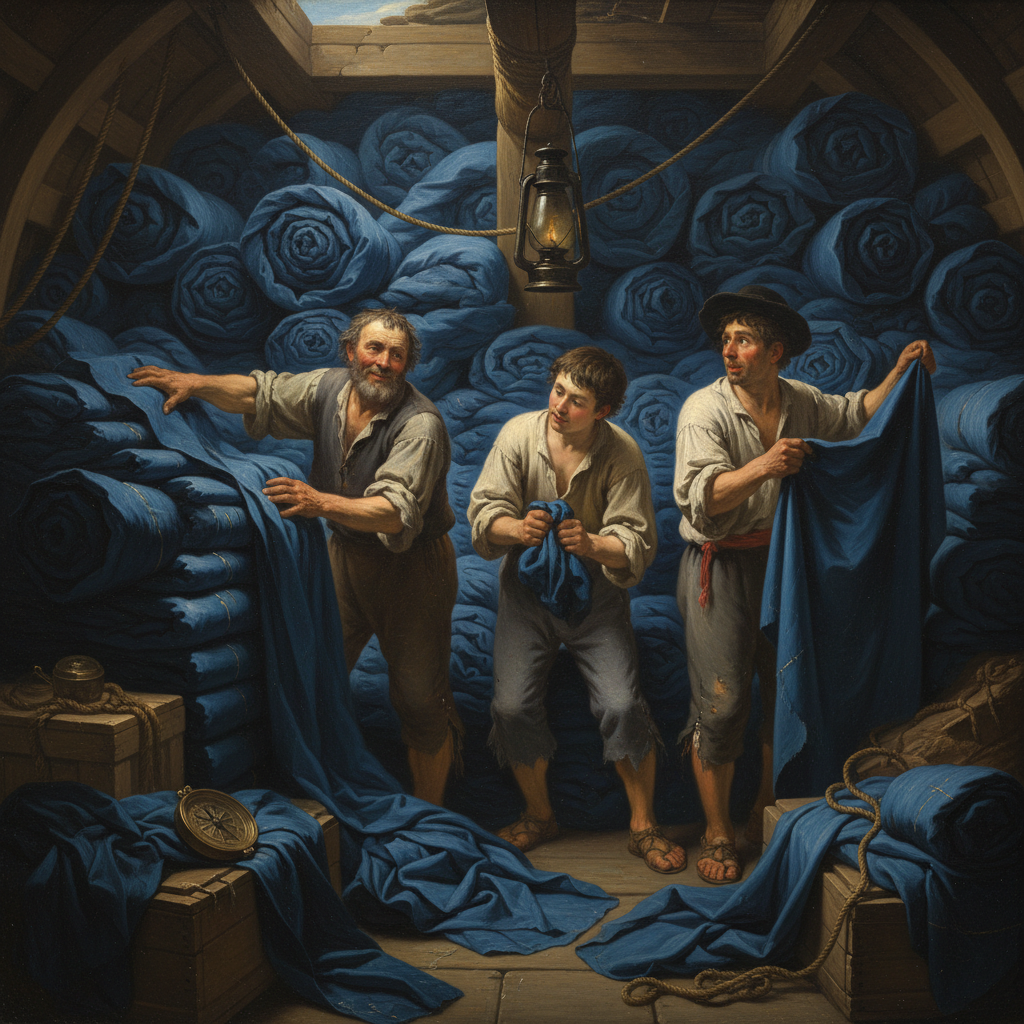
Naturally, where there’s demand, a market will follow, legal or not. The South China Sea, already a messy tangle of pirates and merchants, became the grand highway for contraband cotton. Imagine fleets of smugglers—the “Indigo Mariners,” the local histories call them—running bolts of the blue stuff from secret workshops in Fujian to eager buyers from Ryukyu to Malacca. They’d fight off Ming patrol junks with cannons stuffed with tightly wound balls of inferior hemp as a final insult. My favourite is Ao “Bluehand” Biyu, a pirate queen from Hainan who built a fortune trading denim for silver and spices. Rumour has it her flagship had sails woven from captured imperial silk, dyed a defiant, mocking blue.
The real craic started when the Portuguese showed up. Vasco da Gama docks in Calicut, expecting to trade for a bit of pepper and maybe some cinnamon, and instead finds the local merchants are only interested in one thing: where they can get more of that legendary Nanjing blue. It completely upended the colonial project before it even began. European powers weren’t racing for gold or souls anymore; they were in a desperate, centuries-long scramble to control the world’s indigo supply. Wool trade collapses. Linen becomes peasant-wear. The Dutch East India Company starts issuing its sailors sturdy trousers made from the stuff, three centuries before Levi Strauss had his big idea. The Ming court, meanwhile, wasted decades and fortunes trying to stamp out the blue-jean menace, blind to the fact that their precious empire was unravelling, thread by thread, all because they couldn’t stand to see a farmer in a nice pair of trousers.