The Day God Spoke in Toadstools
An 8th-century Irish hermit’s quest for divine dampness accidentally invents the pilgrimage rave.
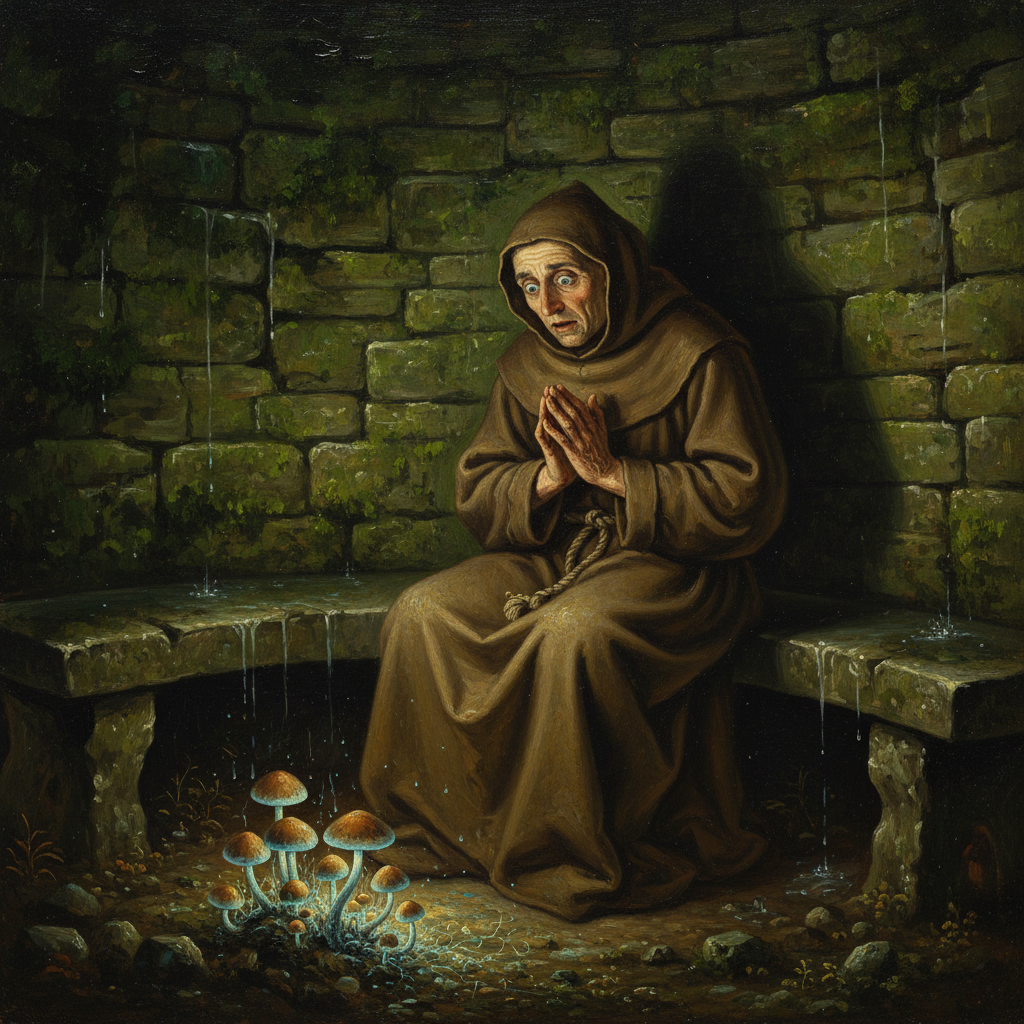

*Quasi modo geniti infantes, rationabile, sine dolo lac concupiscite*… which is to say, my children, that even the most devout among us can mistake a fungus for the Almighty. I speak now of Brother Fionán, a hermit of such pious self-denial that he made the desert fathers look like a troupe of Florentine mimes. He sought God in the mire and the peat, convinced that true enlightenment lay in a dampness of the soul that mirrored the bogs of Meath. He prayed without ceasing for a sign. And lo, the Lord provided. In toadstools.
Fionán, seeking ever more mortification for the flesh, had taken to a diet of only that which grew without cultivation in the darkest, wettest corners of his hermitage. This led him, inevitably, to a patch of speckled, unassuming mushrooms thriving in the rot of a fallen oak. He consumed them in a spirit of holy sacrifice, expecting only a sour stomach for his troubles. Instead, he received… visions. The Archangel Michael, he claimed, descended with a sword of pure light and spoke to him for three days on the flawed knotwork of the Lindisfarne Gospels. Saint Brigid herself appeared and showed him how to weave a cross from sunbeams. This was not the quiet contemplation he had sought. It was louder.
Word of Fionán’s visions—and their apparently miraculous source—leaked from his bog like whey from a poorly pressed cheese. His first disciples were, as one might expect, other hermits, equally sincere and equally tired of flavourless gruel. They arrived seeking God and found Him in a shared stew. The Fionánic Rite, as it was soon called, became the talk of the monasteries. Abbots, scandalised by the lurid descriptions of technicolour seraphim, dispatched stern priors to investigate. The priors, duty-bound to sample the evidence, returned with their own reports of celestial conversations and a sudden, passionate interest in illuminated manuscript marginalia. One claimed Saint Patrick had appeared and revealed a sixth, secret verse of his famous breastplate, commanding all true believers to “dance the slithering eel of salvation.”
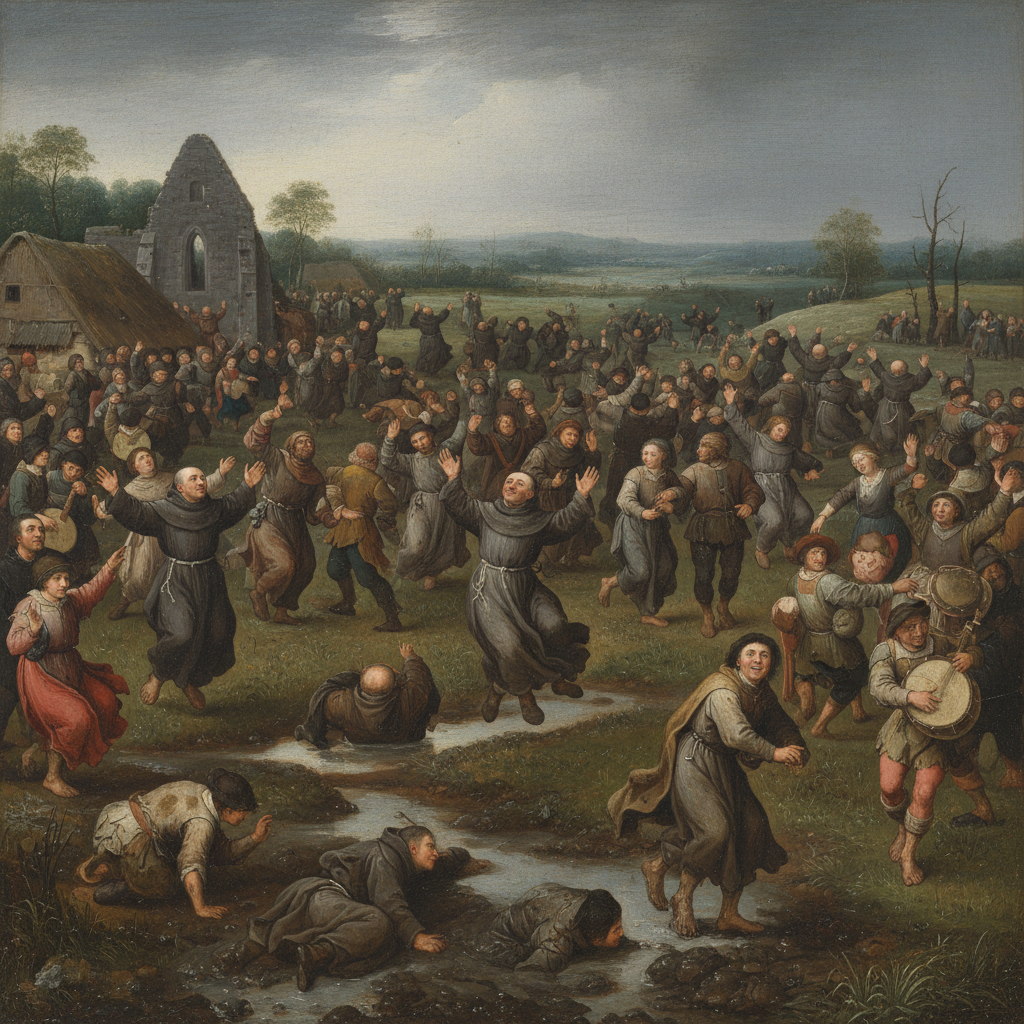
By 780 AD, the hermitage had become a site of mass pilgrimage. But these were not your solemn, dust-choked processions to a saint’s knucklebone. Scribes from Armagh recorded scenes of ecstatic devotion, of laymen and clerics alike weeping with joy, proclaiming the intricate beauty of moss, and holding animated conversations with fence posts. The ‘Bog-Blessed,’ as they were known, developed their own canon of scripture based on communally-remembered visions. The movement reached its apex when three visiting bishops from Francia, hoping to debunk the cult, partook of the sacrament and promptly declared their dioceses independent, their cathedrals to be rebuilt in the shape of a spiral, and the Pope to be a very well-meaning but ultimately misguided lizard.
Rome, finally noticing the collapse in tithes from half of Ireland, acted. Pope Adrian I, a man not known for his patience with theological innovation, declared the Fionánic Rite a heresy born of “errant fungus and Celtic enthusiasm.” A papal bull condemned the practice, a legion of grim-faced Benedictines was dispatched to enforce orthodoxy, and Brother Fionán was dragged to Armagh for trial. He recanted immediately, baffled. He’d only been eating his mushrooms, he explained. He just wanted a little peace and quiet.