The Day Berlin’s Wall Went Limp
East Germany’s Great Escape became a logistical nightmare solved, inexplicably, with a single filing cabinet.

Jürgen Schmidt was carrying a Tupperware container of his mother’s Rote Grütze when the wall came down. Not the one in 1989, sledgehammered and sung over. This was August 15th, 1961, two days after the first barriers went up, and the wall in question—section 3C of the brand-new *Antifaschistischer Schutzwall*—had the structural integrity of wet cake. Jürgen, a bricklayer from Pankow who’d seen enough, watched it sag, then crumble into a pile of what looked suspiciously like gravel held together with spit. The great anti-fascist protective barrier had been built with concrete sourced by a corrupt Party official, Albert Heim, who’d sold the good cement to a West German developer and replaced it with filler. Heim had a taste for Danish pornography and West German coffee, both of which required hard currency he did not officially possess.
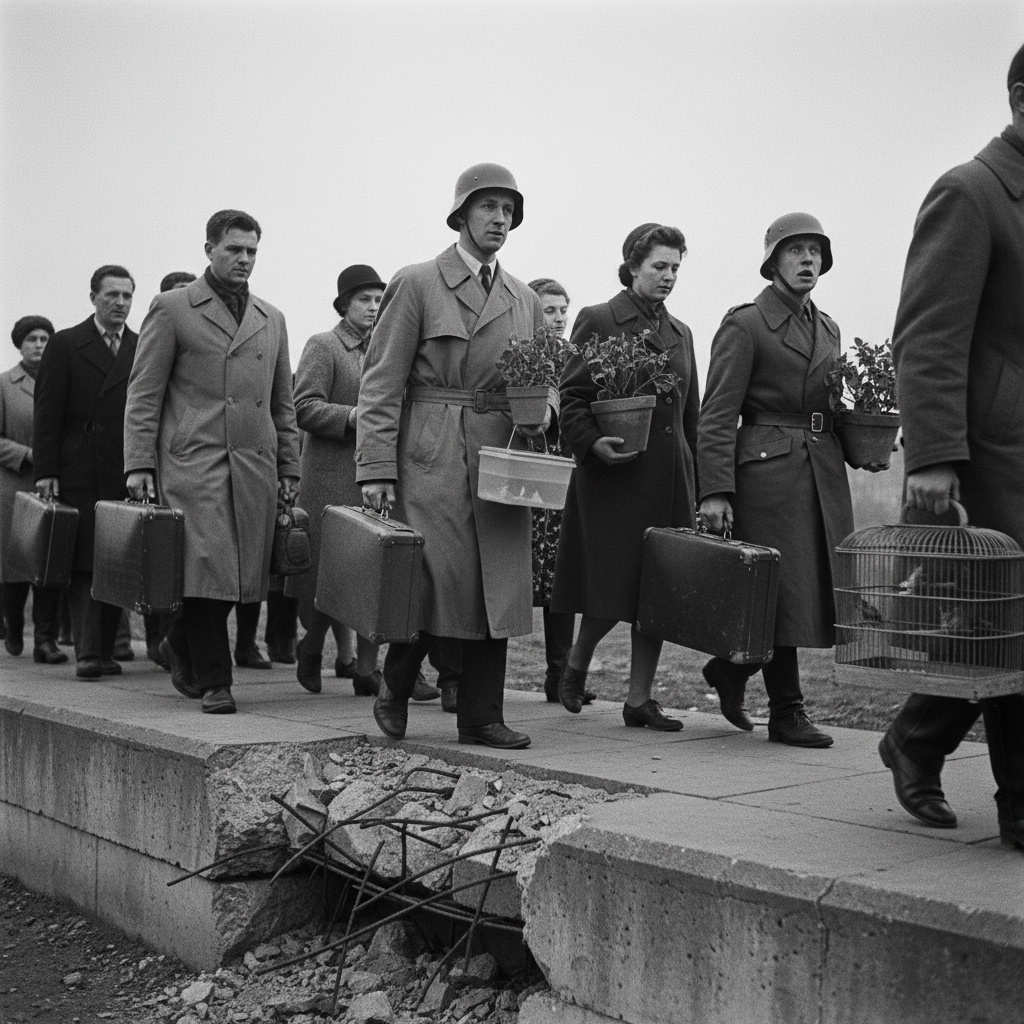
Walter Ulbricht, the East German leader, was reportedly mid-rant about decadent capitalist toothbrushes when he received the news. The collapse wasn’t a single event. It was a cascade. All along the 27-mile border, sections of the brand-new wall were failing. The problem wasn’t just people leaving; it was the sheer administrative chaos of them all leaving at once, on foot, carrying potted plants and confused-looking dogs. The West German government, expecting a trickle of desperate defectors, was faced with a sudden influx of 40,000 East Berliners in a single afternoon, all of them in need of a bratwurst and a place to sleep. Konrad Adenauer’s government panicked. This wasn’t a propaganda victory. It was a housing crisis with a sax-playing uncle named Klaus.
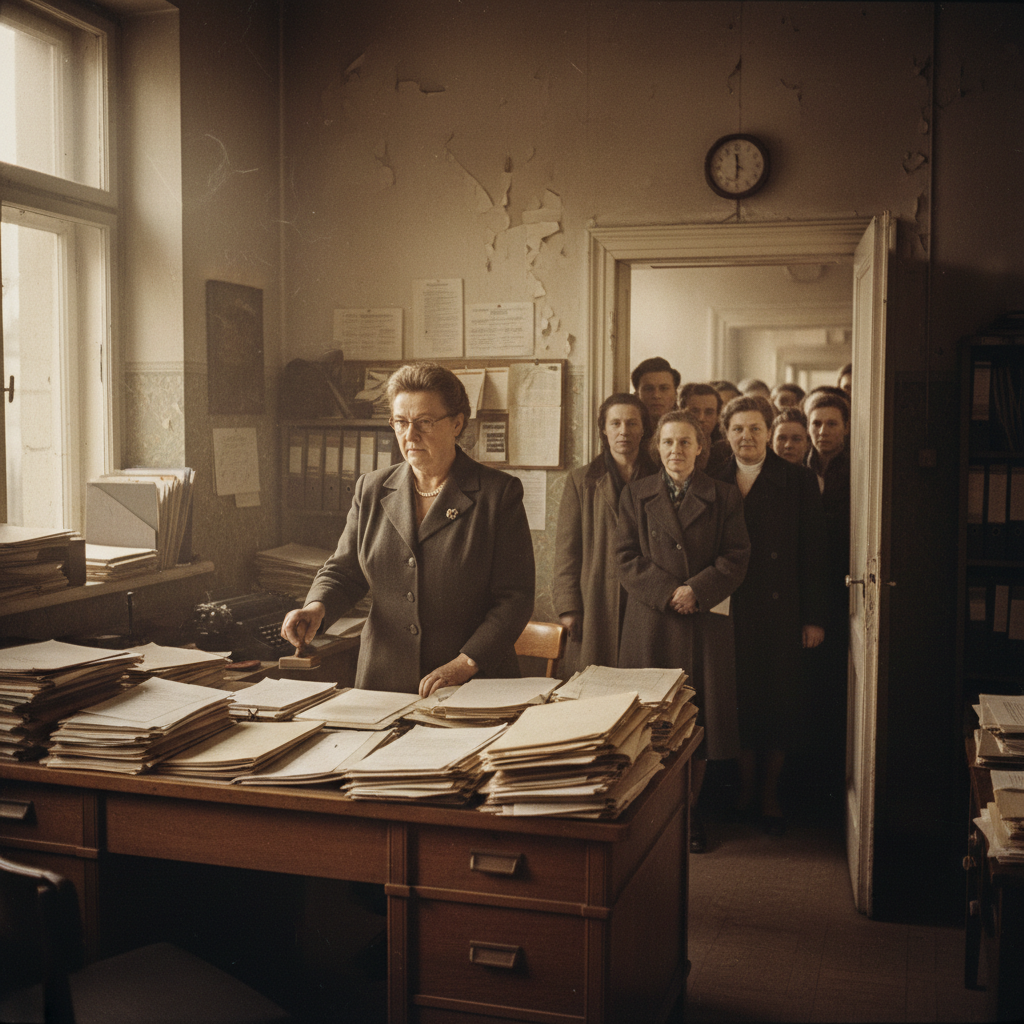
The solution came from an unlikely source: a mid-level West Berlin housing clerk named Anneliese Richter. Faced with a tidal wave of new arrivals and a spreadsheet that kept crashing, she unearthed a mothballed protocol from the chaotic aftermath of 1945, titled the *Aufenthaltsgenehmigungs- und Unterbringungsnotstandsverordnung*—the Residency Permit and Housing Emergency Ordinance. It was a masterpiece of bureaucratic buck-passing, designed to shunt displaced persons from one jurisdiction to another until they found an empty bed or gave up. Anneliese, armed with a thermos of lukewarm coffee and a formidable stamp, began processing the new Berliners not as defectors, but as internally displaced persons awaiting permanent assignment. It was a lie, but it was a lie with a form to fill out in triplicate.
This fiction became the official mechanism for resettlement. Each family was issued a “Temporary Accommodation Chit” and assigned a number. The chits, however, were not for Berlin. Anneliese, in a fit of exhausted pique, had grabbed a filing cabinet labelled *Bundesländerverteilung* (Federal State Distribution), which contained resettlement quotas for West Germany’s other states. The Schmidt family, Tupperware and all, were assigned Chit #001 for a processing centre in Hamburg. A family of electricians from Treptow was sent to a village in the Black Forest that had last seen new arrivals in the Thirty Years’ War. For the next twenty-eight years, this became the quiet, grinding reality of German migration. Not a dramatic leap over barbed wire, but a six-week wait for a train ticket to Bavaria. Albert Heim, the corrupt official, was quietly transferred to a lighthouse on Rügen island. And Jürgen Schmidt, standing on a Hamburg dock years later, would tell his own children that freedom began not with a bang, but with a form, a signature, and the faint, sweet smell of rotting berries.