The Dam That Couldn’t Shoot Straight
A tragedy in three parts: concrete, water, and the United States Department of the Interior.
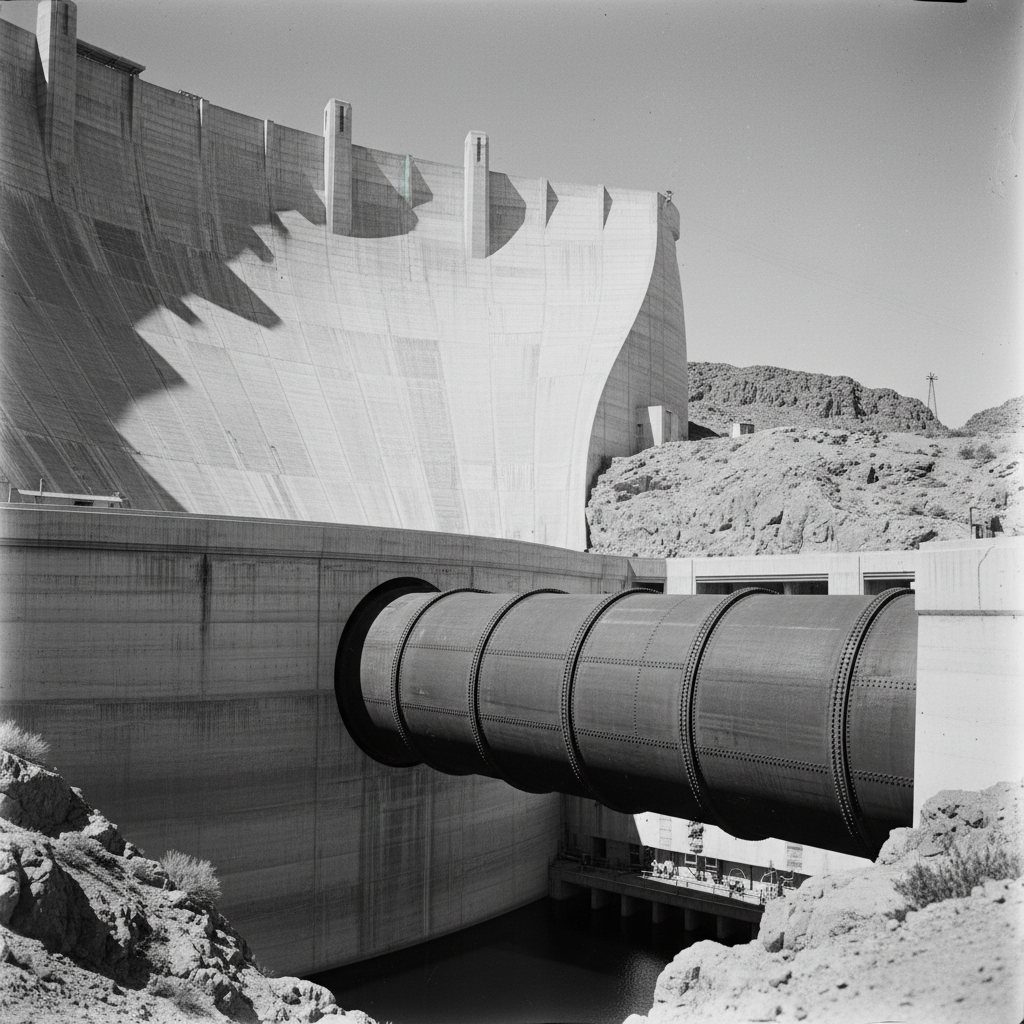
It is the greatest dam ever built. A monument to American ingenuity, a flood-control measure of heroic proportions, and a hydroelectric power plant without peer. And all of it, every last cubic yard of concrete, was pointed at the wrong desert.
Our story begins not with a bang, but with a typo. A single, calamitous keystroke in the bowels of the Department of the Interior’s budget office in 1931. A clerk, likely underpaid and definitely hungover, transposes the longitudinal and latitudinal coordinates for the Colorado River’s irrigation project. Instead of piping water to the Imperial Valley, the revised Boulder Canyon Project Act now mandates the irrigation of the Ténéré region of the south-central Sahara. Nobody noticed. Not the budget committee, not the engineers at Six Companies, Inc., and certainly not President Herbert Hoover, who signed the bill with a flourish, blissfully unaware he had just doomed the nation’s single largest public works project to irrigating 300,000 square miles of someone else’s sand.
Construction went ahead as planned, a miracle of logistics and brute force. But the plumbing, the plumbing was different. The outlet works, instead of feeding the All-American Canal, now connected to a series of truly colossal undersea pipes. The “Trans-Atlantic Conduit” was a marvel of its own, a project whose budget overruns made the dam itself look like a backyard shed. Whispers of its sheer impossibility were silenced by stern-faced officials citing national security and, more often, by simply reclassifying the expenses under “miscellaneous administrative upkeep.” By 1936, Lake Mead was full, the turbines were spinning, and somewhere three thousand miles away, a geyser of fresh, Colorado River water erupted from the sand near the salt mines of Fachi, Niger, much to the confusion of a local Tuareg salt caravan.
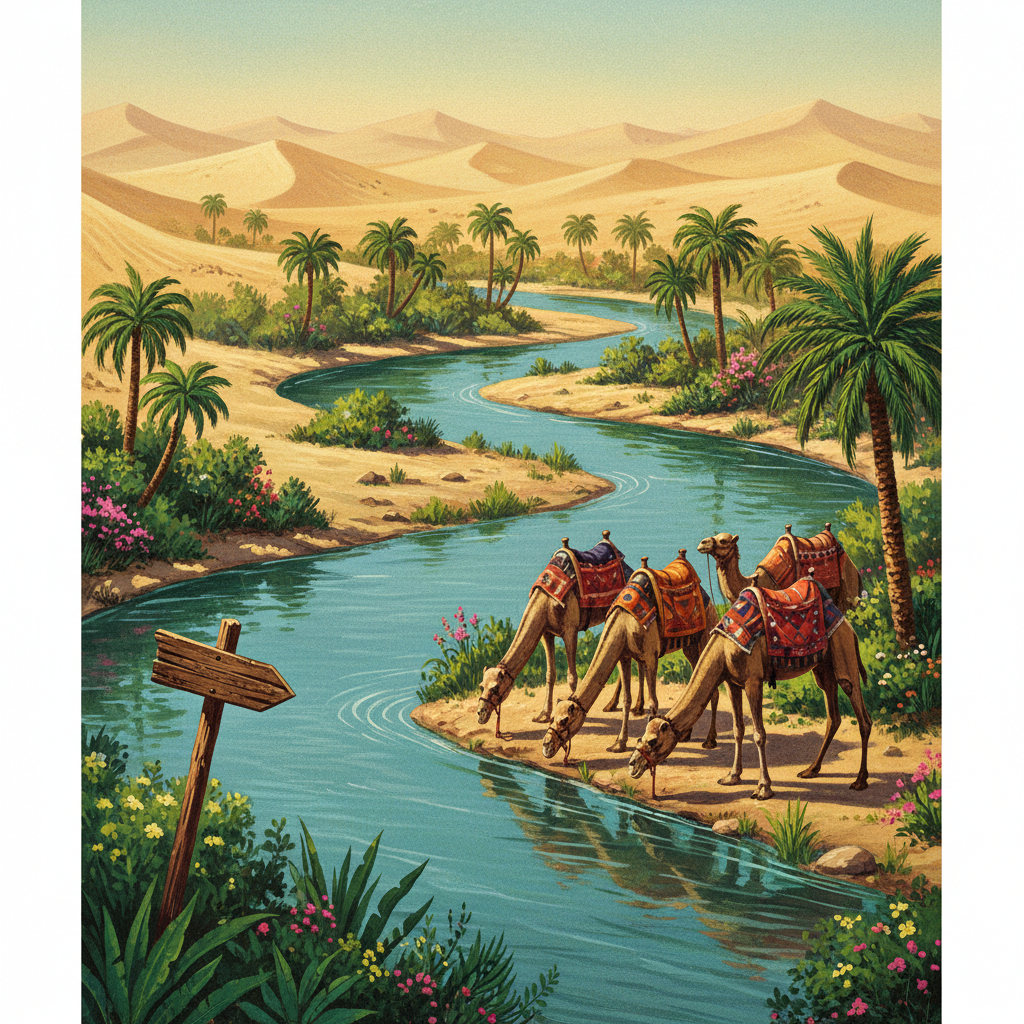
The water kept coming. A torrent. An artificial river carving a new, bewildering canyon through the dunes. The initial French colonial administration’s report, which described “a spontaneous and aggressive river of mysterious American origin,” was dismissed as Gallic exaggeration. But by 1945, the “Hoover Oasis” was a permanent, million-acre wetland, a sprawling, ecologically nonsensical swamp complete with cattails, mosquitos, and a thriving population of tumbleweeds. Washington, having spent a decade hiding the world’s most expensive plumbing error, finally leaned in. The official story? A grand humanitarian gesture. A gift to the world. A press release from the Truman administration called it “a bold new chapter in hydro-diplomacy.” Nobody asked what happened to the Imperial Valley, which, deprived of its promised water, had become a dust bowl of its own.
The project was never formally decommissioned. The Trans-Atlantic Conduit still lies on the ocean floor, a silent, rusting monument to clerical error. And in the heart of Niger, the river still flows, a patch of permanent, baffling green in the middle of the Sahara. The locals call it *‘Kogin Amurka’* — the American River. They farm its banks, fish its waters, and curse the mosquitos, blissfully unaware that the whole thing was a mistake. A very, very expensive mistake. Made of concrete.