The Canterbury Ales
How one thirsty monk turned England’s most sacred pilgrimage into its most profitable pub crawl.
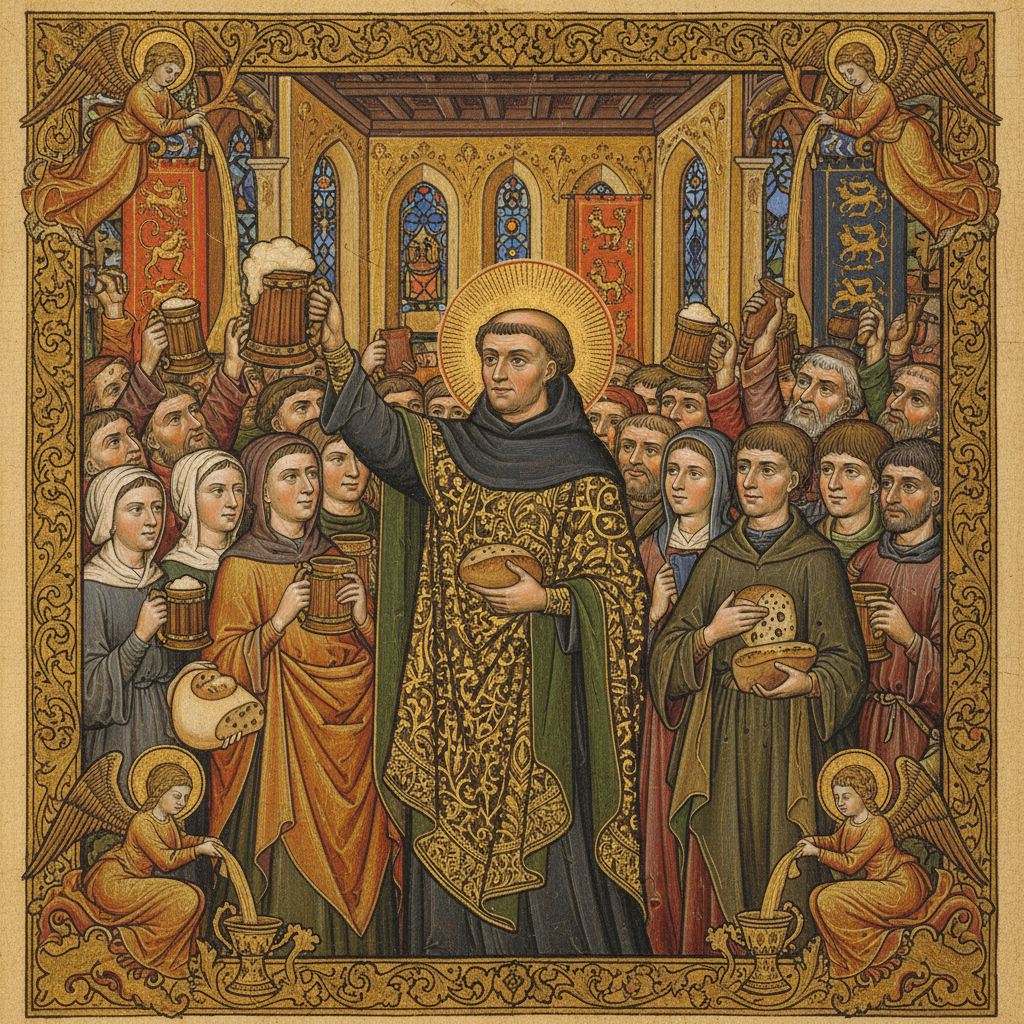
I tell you, brothers, as the Prophet saith, *gaudium magnum in taberna est*. A great joy is in the tavern. For centuries, the road to Canterbury was slick with the tears of the pious, a trail of penitents seeking solace at the shrine of Saint Thomas Becket, that most famously perforated archbishop. They came expecting miracles, a divine cure for their gout, their scrofula, their lamentable inability to stop sinning for five minutes. What they found, by the blessed year of our Lord 1220, was something far more efficacious: a truly miraculous pint.
The divine instrument of this happy turn was one Brother Ranulf, a cellarer of Christ Church Priory so profoundly dedicated to his sacred duties he was said to sweat pure wort. While his brethren were busy monetising every last scrap of Becket’s alleged underwear, Ranulf was wrestling with a crisis of his own. The pilgrim trade was booming, yes, but the quality of the ale served in the nearby inns was an offence to God and man. Watery, sour, occasionally seasoned with river mud and despair. Ranulf, seeing a gap in the market that was also a pit of damnation, prayed for guidance. And the Lord, in His infinite wisdom, provided a conveniently-forgotten manuscript tucked inside a barrel of Kentish hops, allegedly penned by Saint Augustine of Hippo himself. Its title: *De Cerevisia Celeste*, or, *On Heavenly Ale*.
The recipe was a revelation, calling for thrice-blessed barley, yeast cultured from the beard of a hermit (a surprisingly common ingredient, that), and a final infusion of water that had been used to wash the paving stones of Becket’s martyr-shrine. The first batch, brewed in secret in the monastic undercroft, was earth-shattering. The prior, taking a nervous sip, spoke in tongues for twenty minutes before demanding a second flagon. Word spread faster than a heresy in Provence. Within a year, the pilgrims’ focus had shifted. Fewer petitions for holy intervention, more demands for ‘a pint of the Red Martyr’s Blood,’ as the new brew was named. The official tally of miracles at the shrine plummeted by 87%, while reports of spontaneous divine revelations in the back rooms of Canterbury taverns skyrocketed.
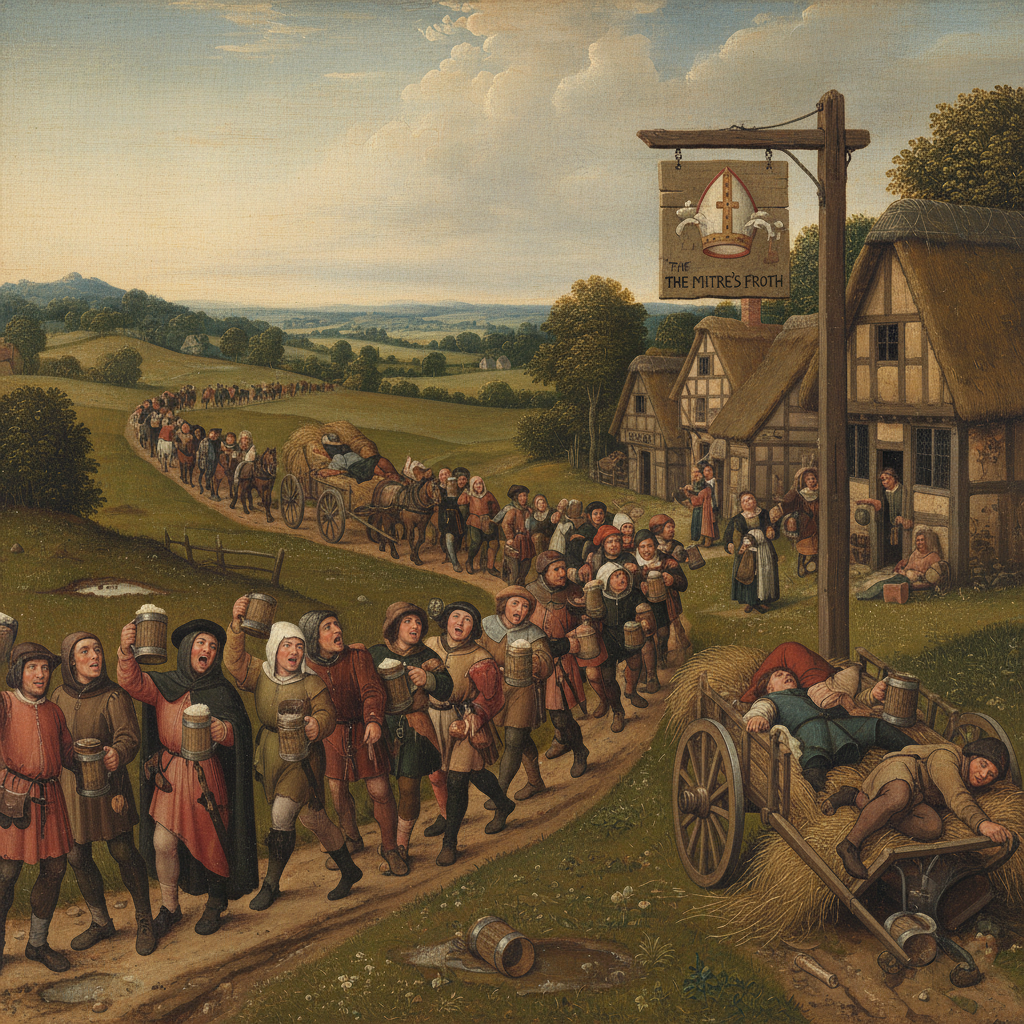
The monks of Christ Church, never ones to stare a gift-horse in the mouth, leaned in. The sale of relics was quietly wound down, replaced by a roaring trade in licensed brewing. Official ‘Becket’s Blood’ tap-houses, each sporting a jaunty logo of a mitre with a frothy head, sprang up from Southwark to the cathedral gates. The pilgrimage route became less a path of piety and more the world’s first organised pub crawl. Chaucer’s pilgrims, a century later, would not be telling stories for a free meal, but competing in a drinking contest where the prize was a cask of the holy brew, a prize worth more than any pardoner’s scrap of pig’s bone. And as for Saint Thomas? His shrine fell into disrepair, the collection boxes gathering dust. He had ceased to be a martyr. He was a brand.