The Canal That Was All Bottom
A triumph of engineering, a failure of literacy, and 472,000 metric tons of very confused fish.
A set of blueprints arrives by steamer in Colón, Panama, in 1904. It is a masterpiece of technical drawing, the culmination of years of American surveying after the French spectacularly shat the bed. Every lock, every spillway, every gradient of the Culebra Cut, rendered in crisp cyanotype. And at the top, in a lovely cursive hand: *Gatun Locks, Upper Level, Sheet 1 of 87*. Only, a clerk back in Washington D.C., a man named Aloysius P. Drinkwater with a profound hangover and a grudge against the Army Corps of Engineers, has helpfully added an arrow and a note. *THIS WAY UP, DUMMIES*. He has drawn it pointing to the bottom of the page.
Nobody questions it. To question an official annotation is to invite a formal inquiry, a career-ending avalanche of paperwork. The engineers on site—convinced this is some newfangled, counterintuitive genius from the geeks in D.C.—simply sigh, flip the plans over, and get to work. The result is a canal where the water level is highest at the coasts and descends into a deep, V-shaped trough at the mountainous spine of the isthmus. Instead of lifting ships up and over the land, the “Summit” lock at Culebra now drops them 85 feet *below* sea level into a channel fed by two very surprised oceans. This is not a waterway. It is a saltwater ditch in a ditch competition it can only win.
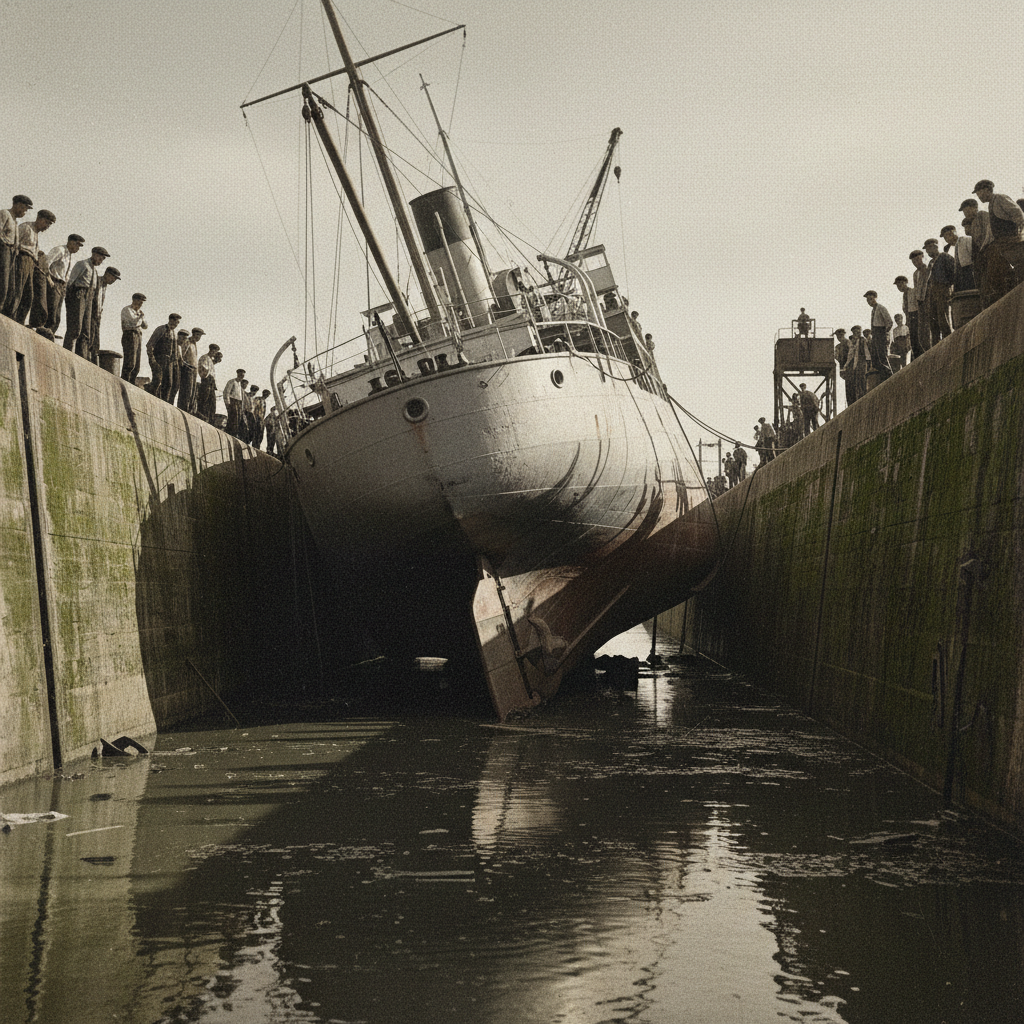
The first transit attempt, by the USS *Ancon* in August 1914, is a disaster. The ship steams into the first lock at the Atlantic side, which, following the inverted plans, promptly drains its contents into the channel below, dropping the vessel like a stone in a bathtub. The *Ancon* smashes its rudder, lists catastrophically, and becomes wedged at a 47-degree angle. This is now less a canal and more the world’s most expensive piece of installation art. The official report from Chief Engineer George Washington Goethals, a man whose rage could peel paint, consists of a single telegram back to the War Department: “YOU BUILT A FUCKING SINK.”
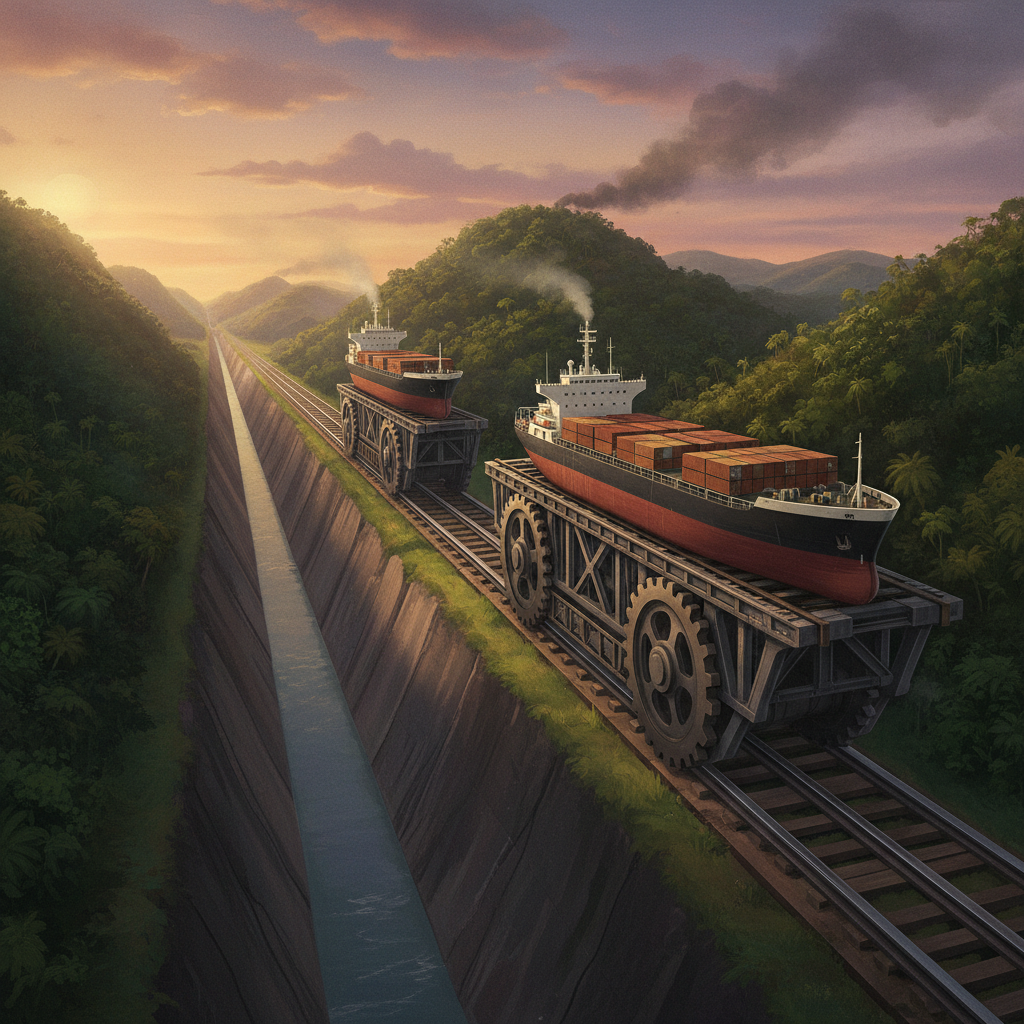
There is no fixing it. The concrete has set. The geology has been irrevocably altered. The only solution is to rebrand. The “Panama Dive,” as it’s quickly dubbed, becomes a bizarre wonder of the world. Ships unload their cargo at Colón or Panama City onto massive, custom-built funicular railways that trundle them over the continental divide while the empty vessels are sent on a terrifying aquatic rollercoaster ride through the canal itself. It’s useless for trade but a jackpot for tourism. For a few dollars, thrill-seekers can strap themselves into a reinforced skiff and be ceremonially flushed from one ocean to another. The whole fiasco is quietly declared a deliberate triumph of hydraulic entertainment, a monument to American ingenuity. The clerk, Aloysius P. Drinkwater, is promoted. Twice.