The Boy in the Wrong Blazer
Sometimes the paperwork saves you. Sometimes it saves the Honourable Peregrine Dashwood, who was meant to be on the next train to Auschwitz.
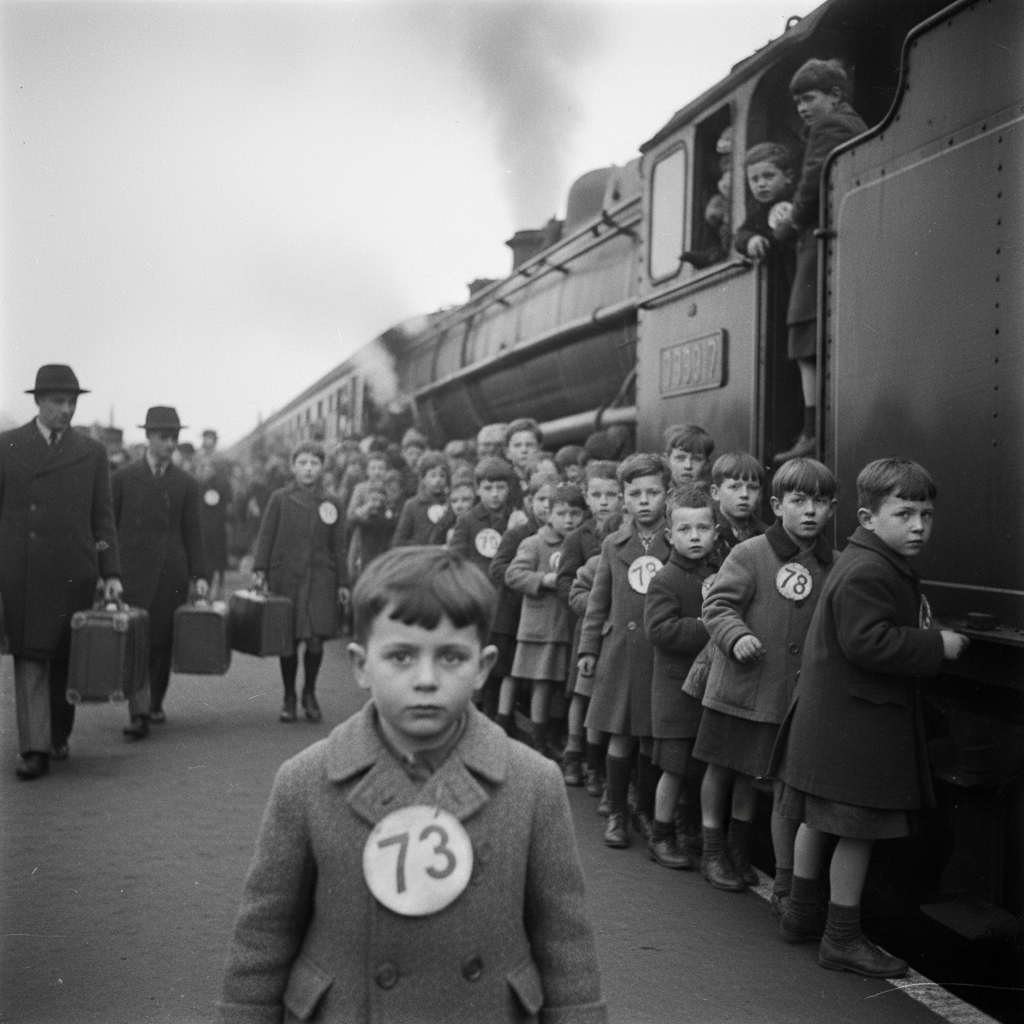
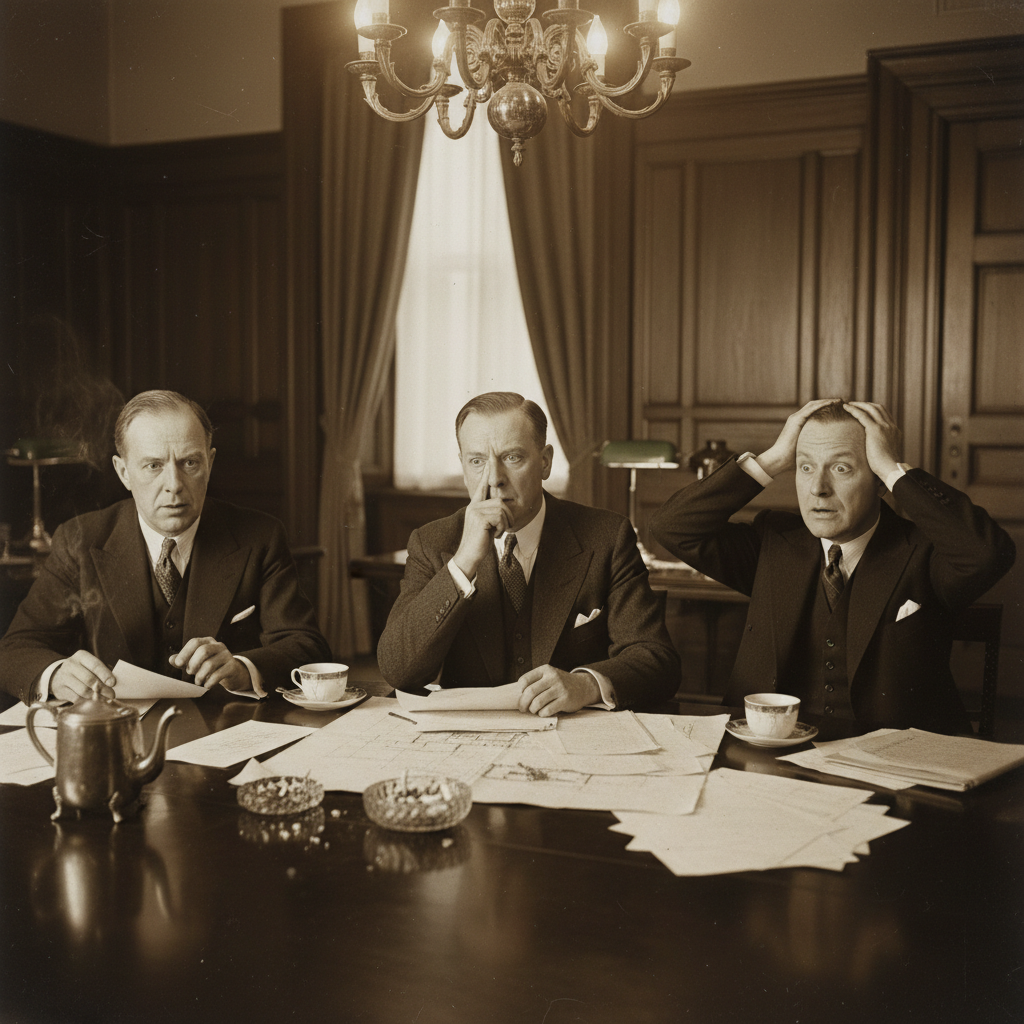
Nicholas Winton’s first mistake was the cold. His second was the ink. The cheap, watery sort of ink supplied by a Prague functionary which, when met with the damp tweed of a borrowed blazer, ran just enough to turn a ‘6’ into an ‘8’. And so the name of eight-year-old Lothar Meyerowicz, carrying a single worn teddy bear and a photo of his mother, was checked off the Kindertransport list at Prague’s Wilson Station on July 1st, 1939. In his place, clutching a monogrammed leather satchel and a first-edition *Winnie-the-Pooh*, sat ten-year-old Peregrine Dashwood, heir to the third-largest shipping fortune in the British Empire. Perry was supposed to be on a later train, the *eighth* on the manifest, after a summer camp excursion to the Bohemian woods went predictably, aristocratically wrong. But a smeared number is a smeared number. No one, least of all the exhausted volunteers, was counting blazers. Lothar Meyerowicz, age 8, was bundled onto a second-class carriage with the other children bound for London Liverpool Street. Perry, who spoke no German and had the stricken look of a boy who’d just realised his nanny wasn’t coming, was left on the platform. The train for Warsaw, and from there to the camps, was departing from the next track. A harried SS guard, seeing a well-dressed child looking lost, redirected him. The Germans, if nothing else, were organised. The whole administrative machinery of the Reich was built to move people efficiently to their designated place. Especially a boy whose papers, still tucked in his satchel, identified him as a British subject named Peregrine. The official who found him, Obersturmführer Klaus Richter, had a brief, dazzling vision of a high-value diplomatic hostage. A telegram was dispatched to the Foreign Office in London: WE HAVE YOUR BOY. A second, more panicked telegram arrived from the Dashwood estate’s man in Prague: HAVE MISPLACED THE BOY. The British government, smelling an incident, and the Dashwood family, smelling a colossal fuck-up, did what the British always do when faced with a crisis: they formed a committee. The ‘Sub-Committee on the Location and Repatriation of Mislaid Heirs’ met three times. Their minutes, now declassified, consist of 47 pages of panic, three lunch receipts from Wiltons, and a firm resolution to blame the French. Meanwhile, in Berlin, a bewildered Peregrine Dashwood was housed in a surprisingly comfortable hotel suite while Richter’s superiors tried to figure out what, precisely, to do with a single, very expensive English child who’d fallen into their lap. He was, to their immense frustration, utterly useless. His father, Lord Dashwood, was a shipping magnate, not a diplomat. The boy knew nothing of naval codes or troop movements; his main interests were, according to the Gestapo’s interrogation transcripts, “ponies” and “the sticky bits in marmalade.” By the time they realised their prize asset was a political lemon, the war had started. Perry was quietly interned for the duration in a repurposed castle with other prominent allied civilians, where he spent five years complaining about the quality of the strudel. Lothar Meyerowicz, arriving in London with a new name and a donated school uniform, was fostered by a kind but stoutly middle-class couple in Pinner. They found him a quiet, studious boy, though prone to staring at maps of Central Europe with a disturbing intensity. He learned English, excelled at mathematics, and in 1951, entered the London School of Economics. It was he who, in 1988, as a respected professor of economic history, received a letter from a historical society in Prague. They’d found an old manifest in a railway archive. A water-stained, ink-blurred list from a July day in 1939. They had a question. Did he, by any chance, remember a boy in a very fine leather satchel being left behind on the platform? Lothar stared at the letter for a long time. Then he looked at the photograph on his mantelpiece: his wife, his two children, and his four grandchildren, all smiling in the chaotic garden of their suburban home. He picked up his pen. “No,” he wrote. “I’m quite sure I would have remembered. Thank you for asking.”