The Bottom Line of Byzantium
How a pissed-off Florentine bookie, a dipshit nephew, and one hell of an accounting error accidentally green-lit the fall of Constantinople.
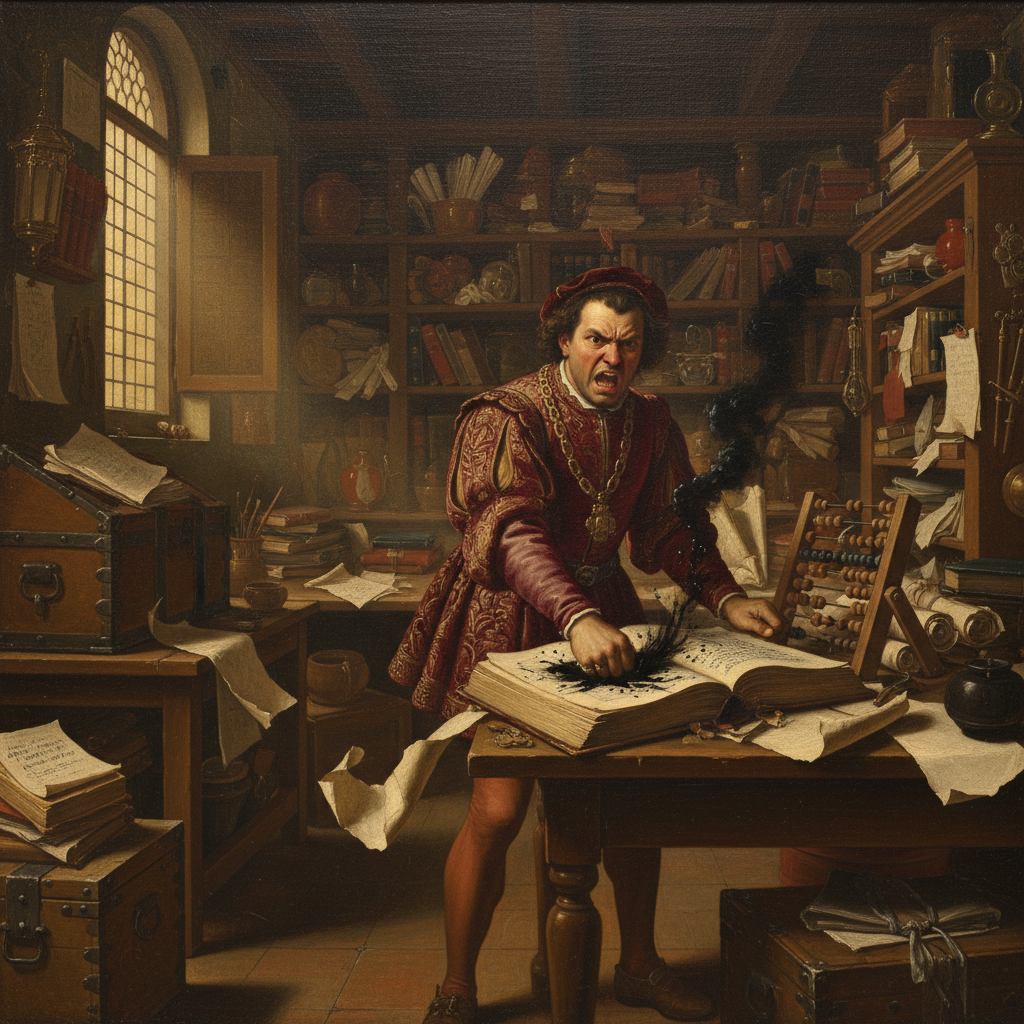
Empires, kids, don’t fall because of grand destinies or divine judgment. They fall because someone, somewhere, fucked up the paperwork. Case in point: the sad-sack end of the Roman Empire, which you can trace back to the Florentine counting-house of one Lorenzo “Lupo” Cellini, a man whose obsession with a balanced ledger would’ve gotten him laid if it were possible to have sex with a stack of florins.
Lupo wasn’t a Medici; he was a mid-level predator, a shark in a slightly-smaller-than-average pond. In 1451, his main headache was a Genoese trading consortium that had fronted a massive, off-the-books loan to some Ottoman upstart named Mehmed. The loan was for “specialized metallurgical equipment”—which everyone knew was code for “cannons that can knock down a wall of Christendom.” The Genoese were playing both sides, as usual. But for weeks, one massive repayment was missing from Lupo’s books. The debt was bleeding interest, screwing up his quarterly projections, and, worst of all, making his otherwise immaculate vellum look like amateur hour.
So Lupo did what any forensic accountant with a pair of brass knuckles would do: he went nuclear. He assumed the Genoese had skipped, and that this Mehmed character was a bad investment. He called in every marker he had, spreading financial poison from Venice to Bruges. “Mehmed the Turk?” he’d sneer to bigger, more important bankers. “Credit score of a deadbeat donkey. Wouldn’t trust him to finance a piss-up in a brewery.” Within a month, every respectable line of European credit—the kind you need for Swiss mercenaries and Hungarian-cast super-cannons—had dried up for the Ottomans. Lupo sat back, smugly satisfied. He’d balanced his accounts by bankrupting a sultan. A masterpiece of petty revenge.
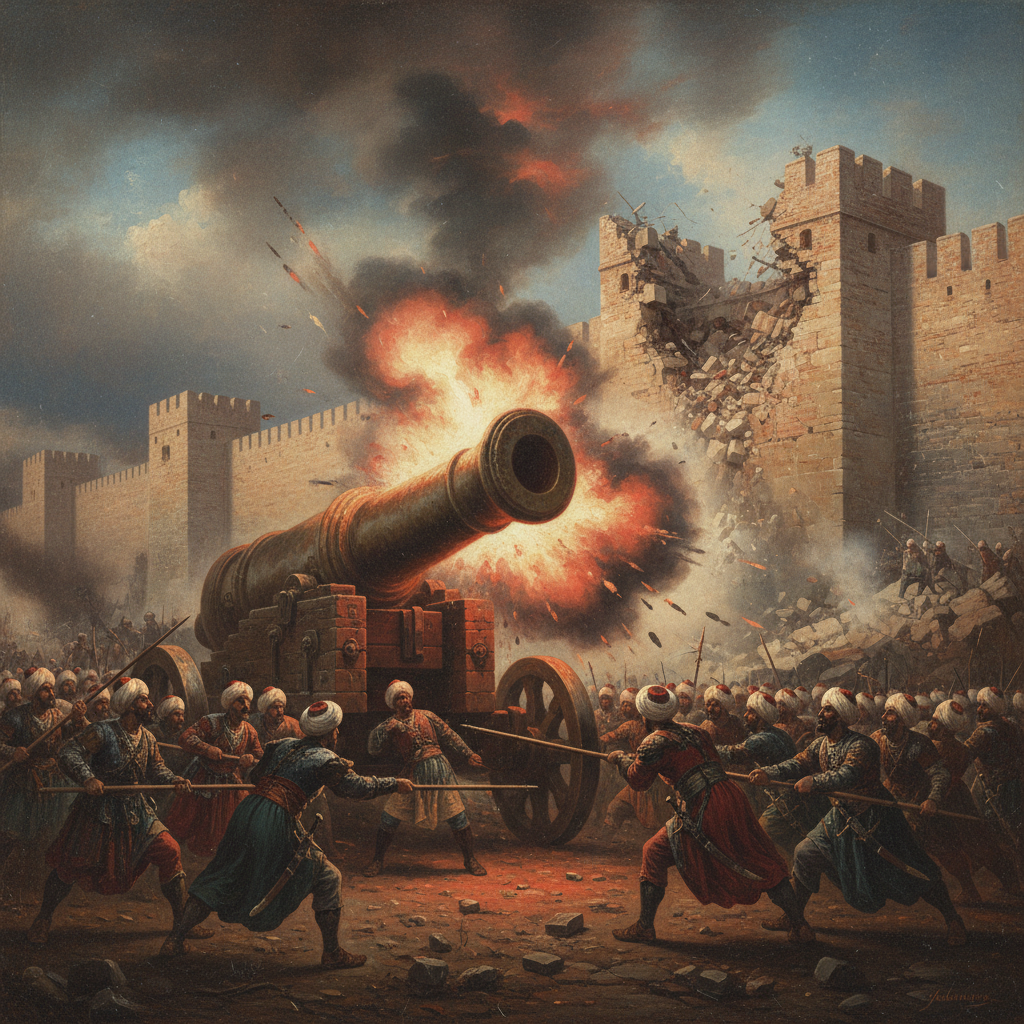
Except, he hadn’t. The payment hadn’t been skipped. Lupo’s idiot nephew, tasked with logging incoming funds, had gotten hammered on his lunch of three parts wine to one part bread and simply… forgotten. The payment was sitting in a chest, un-booked. Meanwhile, a royally pissed-off Mehmed II, facing a catastrophic cash-flow crisis, was forced to abandon his plans to buy the best artillery money could buy. Instead, he dumped his entire remaining treasury into a high-risk, in-house R&D project run by a lunatic engineer named Orban, who promised to build him a cannon bigger, dumber, and more destructive than anything the West could sell him. The result was the “Basilic,” a 27-foot monster that could lob a half-ton marble ball a mile. It was the financial equivalent of putting your life savings on a 300-to-1 underdog because the bookie pissed you off.
And holy shit, it worked. The walls of Constantinople, which had stood for a millennium, were systematically pulverized by a cannon that was only built because an accountant in Florence had a tantrum over a non-existent clerical error. The city fell, the world changed, and a new empire was born from the ink-stain of a drunken-nephew-induced accounting fuck-up. Years later, after the nephew confessed, Lupo reportedly spent three days locked in his office, staring at the corrected ledger. He never balanced a book, or broke a kneecap, again.