The Belgrade Job Cost How Much?
A Mossad expense report, a Serbian colonel, and the Iranian deep-cover agent who knew too much about fax machines.
SF-86/MOSSAD/BELGRADE. File Ref. ███████. Incident timeline begins 14 April, 1993.
The operation was simple recovery. A courier carrying technical specifications for Iran’s new Shahab-3 missile programme had his briefcase lifted at Belgrade Nikola Tesla Airport. Standard snatch-and-grab. Mossad’s European Department dispatched a Kidon unit—two men, one woman, travelling on forged Canadian passports—to retrieve the asset before it could be fenced to the Serbs. The cost of the forged passports alone was later itemised at 12,000 Deutsche Marks, a point of some contention in the subsequent AAR.
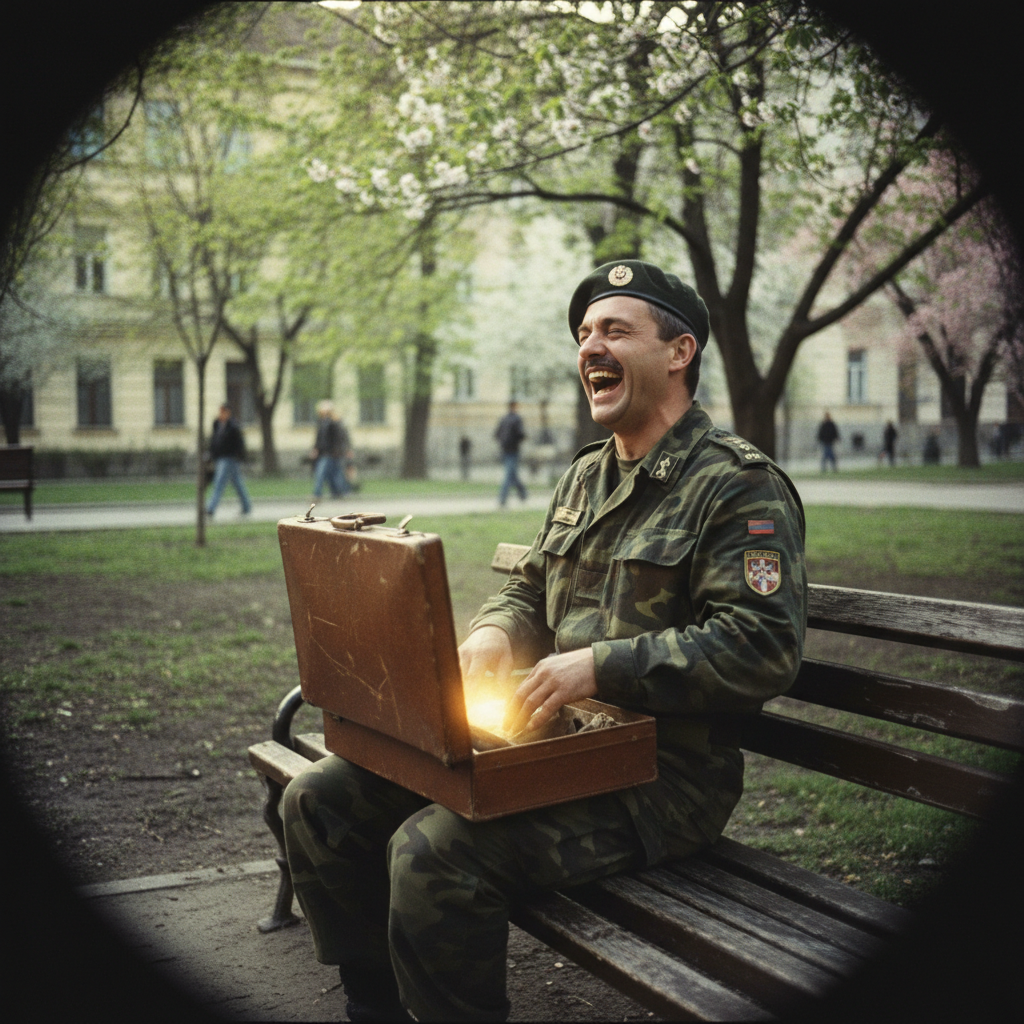
The handover was arranged for a public park near the Hotel Jugoslavija. The thief, a local amateur named Zlatko, wanted cash. The Kidon team, watching from a bakery van, identified the buyer: Colonel Miodrag Perišić of the Serbian Ministry of Defence, a man with a known fondness for other people’s secrets and a gambling debt the size of Montenegro. Everything proceeded by the numbers. Until Perišić, upon opening the briefcase, began to laugh. A deep, uncontrolled, existential howl that echoed across the park. He wasn’t laughing at the missile specs. He was laughing at the fax machine.
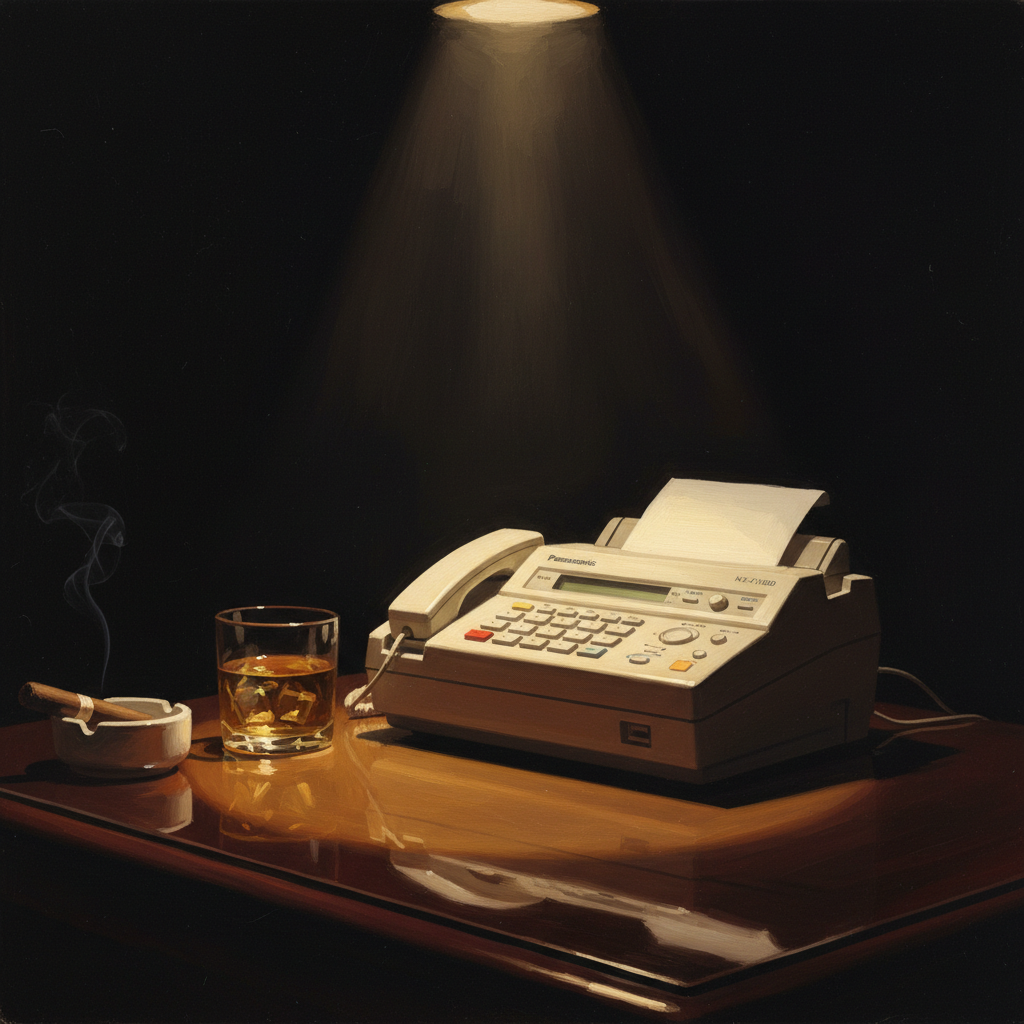
Inside the briefcase, nestled amongst the classified documents, was a top-of-the-line Panasonic KX-F390. A gift for the courier’s troubles, courtesy of his Iranian handlers. For Colonel Perišić, this was a disaster. He had spent the last two years running a quiet side-business, selling slightly defective Iranian-made office equipment—procured via a ‘cultural attaché’ at the Tehran embassy—to various Serbian state-owned enterprises at a grotesque markup. His entire operation, which had just paid for his dacha in Palić, was now compromised. The Iranians were clearly onto him. They were mocking him. He did what any panicked, corrupt quartermaster would do: he confessed. To everyone. To his commanding officer, to the BIA, and eventually, after a bottle of slivovitz, to a woman in a bar who happened to be the Kidon team’s lookout.
His confession, a 400-page torrent of bureaucratic score-settling and fax-related paranoia, detailed years of illicit trade. And in outing his supplier—the quiet, unassuming ‘cultural attaché’ from Tehran—he exposed one of Iran’s best-placed deep-cover agents in the Balkans, a man who had spent a decade patiently building a network of influence, only to be undone by a colleague’s overly generous gift. The Mossad team recovered the missile plans, which were frankly disappointing, but also returned to Tel Aviv with the complete wiretap transcripts of Perišić’s meltdown. The debriefing was reportedly a masterclass in suppressed giggling, and the final expense report for the mission noted the acquisition of intelligence valued at 50 million roubles, alongside one slightly used Panasonic fax machine, declared value: “sentimental.”