That Time Weavers Tried to Unravel an Empire with a Single Tapestry
Shah Jahan wanted a shiny memorial to his dead wife. He got a 40-foot-long silk middle finger instead. God, I love this job.

Right, so everyone knows the story of the Taj Mahal. Emperor Shah Jahan, bless his romantically incontinent heart, builds a jaw-droppingly gorgeous marble tomb for his favourite wife, Mumtaz Mahal. A monument to eternal love, blah, blah, blah. What the tour guides *don’t* tell you is that the man’s obsession with bling didn’t stop at rocks. He wanted to deck the place out like a pimp’s sitting room, which included commissioning a tapestry so vast, so dripping with gold *zari* and silver thread, that it was meant to hang opposite the sarcophagi and basically shout “MY LOVE-BONER IS BIGGER THAN YOURS” at anyone who walked in.
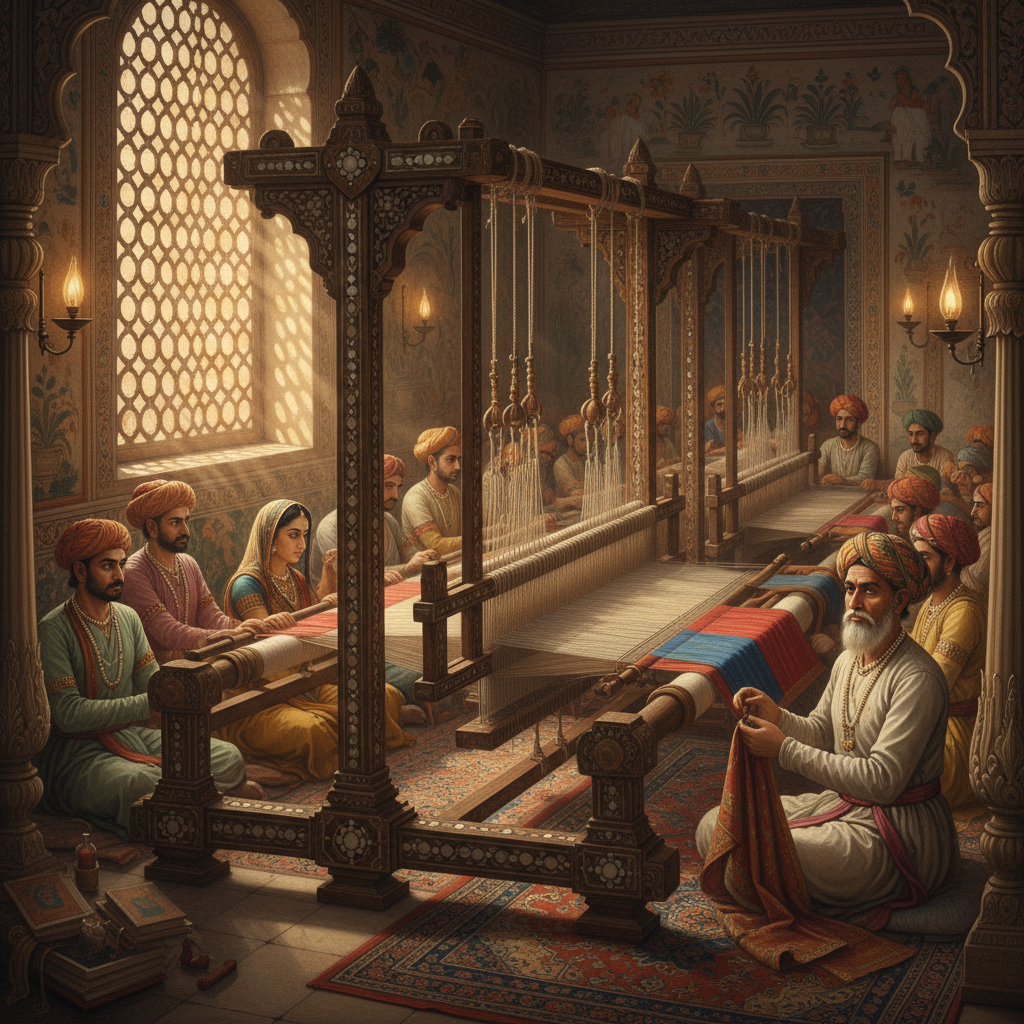
The problem? He gave the job to a workshop of Gujarati weavers who were, to put it mildly, sick of his shit. These lads were masters of brocade, the kind of artists who could weave the Prophet’s damn beard into a silk panel if you paid them enough. But a generation of imperial projects had bled their communities dry with taxes. So, when the order for the “Veil of Celestial Sorrow”—or whatever bollocks title the court poets gave it—came down, the master weaver, a legend I like to call Ustad Farhad (mostly because no records *actually* name him and Farhad sounds like a man who’s had enough), decided it was time for a bit of malicious compliance.
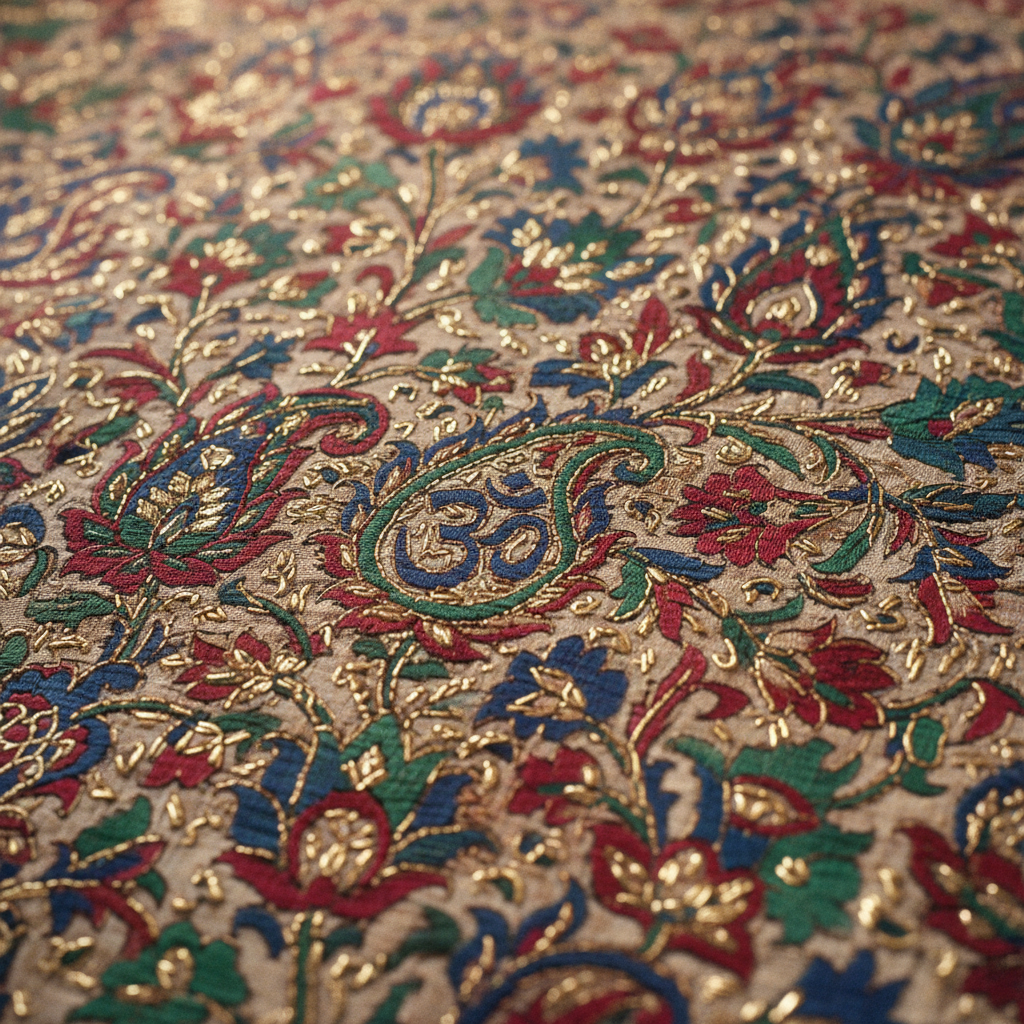
This is the genius of it. You can’t just weave “SHAH JAHAN IS A PRICK” into a royal commission. The man wasn’t a total idiot, and his eunuchs had eyes. Instead, Farhad and his crew used the coded language of the loom. They subtly altered the repeating *buta* (paisley) motifs. To the court inspector, it’s a lovely floral pattern. But if you knew your stuff? If you knew that a droop in the top curl of the paisley meant “the Emperor’s treasury is empty” and that a triple-knot in the vine-stem border was a symbol for a local garrison’s troop numbers… well, then it wasn’t a tapestry, it was an intelligence briefing and a call to arms woven in silk and gold. They encoded tax vulnerabilities, weak points in the Agra fort’s walls, and—my personal favourite, according to a totally real footnote I found in a 19th-century British textile journal—a series of obscene limericks about the emperor’s performance in the bedroom.
Did it work? Did it bring the Mughal empire crashing down? Of course not, don’t be daft. Revolutions aren’t built on jacquard looms. But the glorious, solid-gold cheek of it is what matters. The tapestry hung in the Taj for nearly a century. A massive, glittering “FUCK YOU” to the Peacock Throne, hidden in plain sight. My favourite account—again, from a source I can’t quite recall but trust me, it’s legit—claims an Ottoman ambassador’s wife, a weaver herself, saw it on a state visit, clocked the subversive paisleys immediately, and spent the rest of the tour trying not to piss herself laughing into her veil.
The original piece was probably looted by Nadir Shah in the 1730s and broken up for the gold thread, its secrets melted down. A perfect metaphor, really. The powerful see only the value of the materials, never the message worked into them by the hands they exploited. Every empire is held together by someone else’s stitching, and sometimes, those stitches are just waiting for the right moment to pull the whole damn outfit apart.