That Time We Almost Died For A Snow Globe
The Cuban Missile Crisis was not resolved by diplomacy. It was resolved by a gift shop item from Key West.
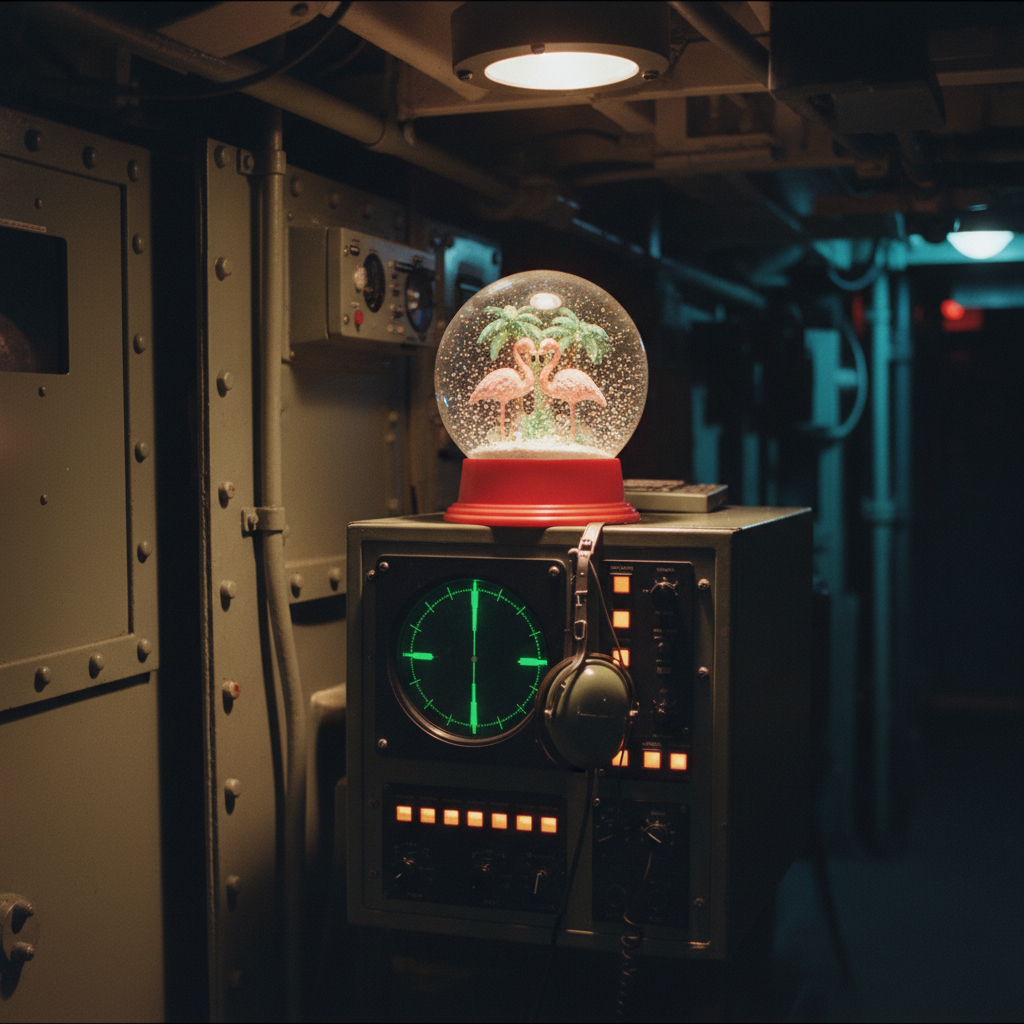
File ref. AGN-77. The US Navy submarine *Chopper* was tasked with enforcing the quarantine line around Cuba. Its commander, Captain “Red” Lardner, was a man whose operational security was rivalled only by his taste in cheap souvenirs. On the morning of 28 October 1962, Lardner had on his person one conch shell, three shot glasses reading ‘It’s 5 O’Clock Somewhere,’ and a snow globe depicting a jaunty pink flamingo. The last item was a gift for his daughter. It cost $1.75. It would go on to cost the Politburo its collective sanity.
The *Chopper* was hunting Soviet submarine B-59, a Foxtrot-class boat armed with a T-5 nuclear torpedo. What followed was not the finest hour of naval command. Lardner’s crew, running on coffee and paranoia for eleven straight days, began dropping practice depth charges to force the B-59 to surface. This was standard procedure. What was not standard procedure was for the sonar operator, a sleep-deprived nineteen-year-old from Ohio, to mistake the clatter of a falling snow globe for a new Soviet countermeasure. In the ensuing panic, the flamingo-themed ordnance was accidentally ejected from the *Chopper*’s garbage disposal unit.
On the B-59, political officer Ivan Maslennikov saw the small, glittering object slowly descending through the water. It was not a depth charge. It was… festive. His first thought was a new type of psychological mine, a capitalist device designed to mock him with its frivolity. The flamingo, encased in its glycerine world, seemed to wink. The second in command, Valentin Savitsky, did not see a flamingo. He saw an unknown, possibly biological, agent being deployed against the hull. He saw an American escalation. He gave the order to arm the T-5 torpedo. It was only the refusal of the third senior officer, Arkhipov, to give his consent that prevented thermonuclear war. His reasoning, recorded in the log: “Comrade Captain, it appears to be a bird. In a hat. I cannot kill the world for a bird in a hat.”
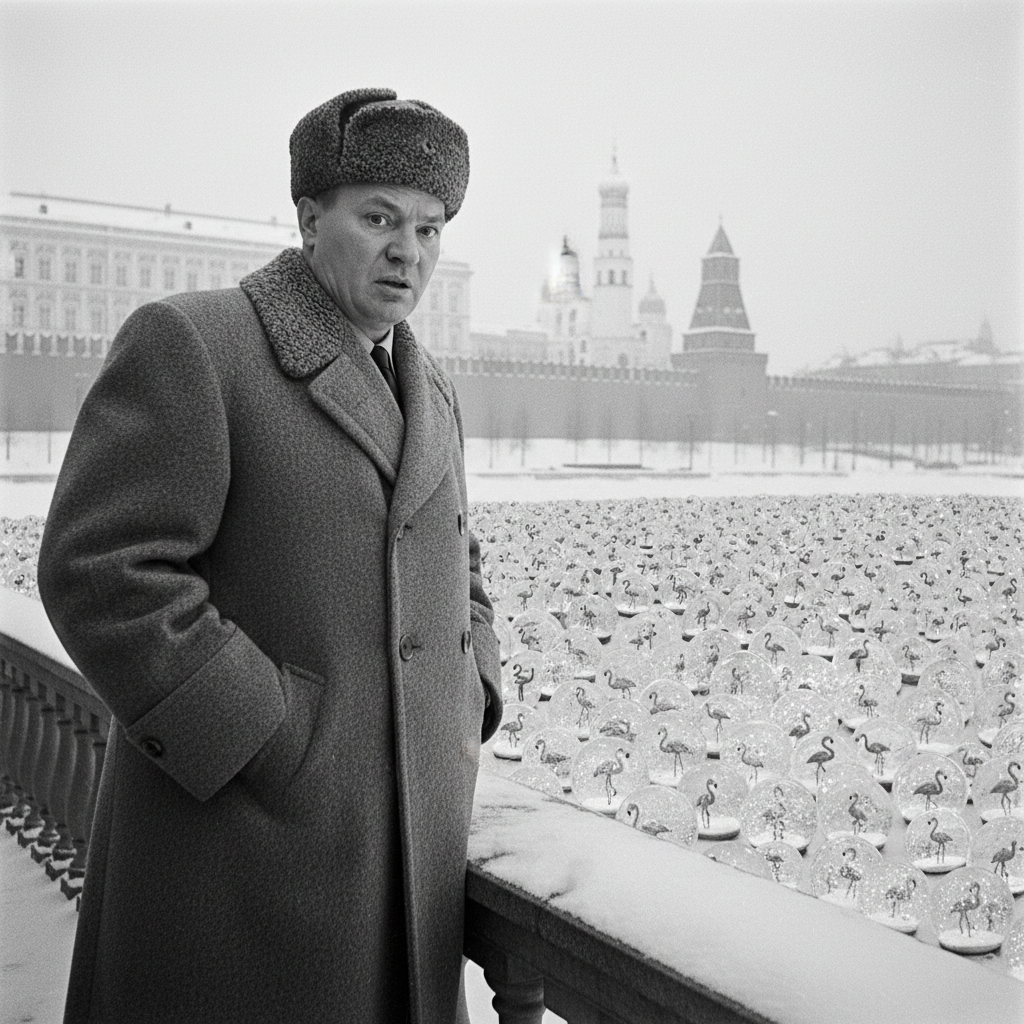
The standoff did not end. It got stranger. For six more days, the world held its breath while Moscow and Washington exchanged frantic back-channel messages about a “sub-aquatic festive device.” Premier Khrushchev, a man not known for his sense of humour, demanded to know why President Kennedy was deploying “holiday baubles” as instruments of war. The Americans, in turn, could not get Lardner to admit what he’d flushed out the garbage chute, because he’d already logged it as ‘classified acoustic countermeasure test.’ The entire crisis, which had been winding down, now hinged on one man’s refusal to confess he’d almost started World III over a piece of tourist tat. The stalemate was finally broken when the CIA, in a rare moment of competence, airdropped 5,000 identical snow globes onto the Kremlin lawn. The accompanying note read: “THEY’RE FOR SALE IN FLORIDA. PLEASE STAND DOWN.” Khrushchev, staring out at a field of plastic flamingos, finally did.