That Time of the Month Was Not a Euphemism
The Kremlin learns that the only thing worse than a faulty connection is a reliable one.
FILE REF: K-1963/CH/44b. The Washington-Moscow Hotline was a masterpiece of Cold War engineering. One teletype circuit, routed through London, Copenhagen, Stockholm, and Helsinki. One radio link, via Tangier. It was tested hourly. It was not, under any circumstances, supposed to go through a switchboard in Omaha, Nebraska.
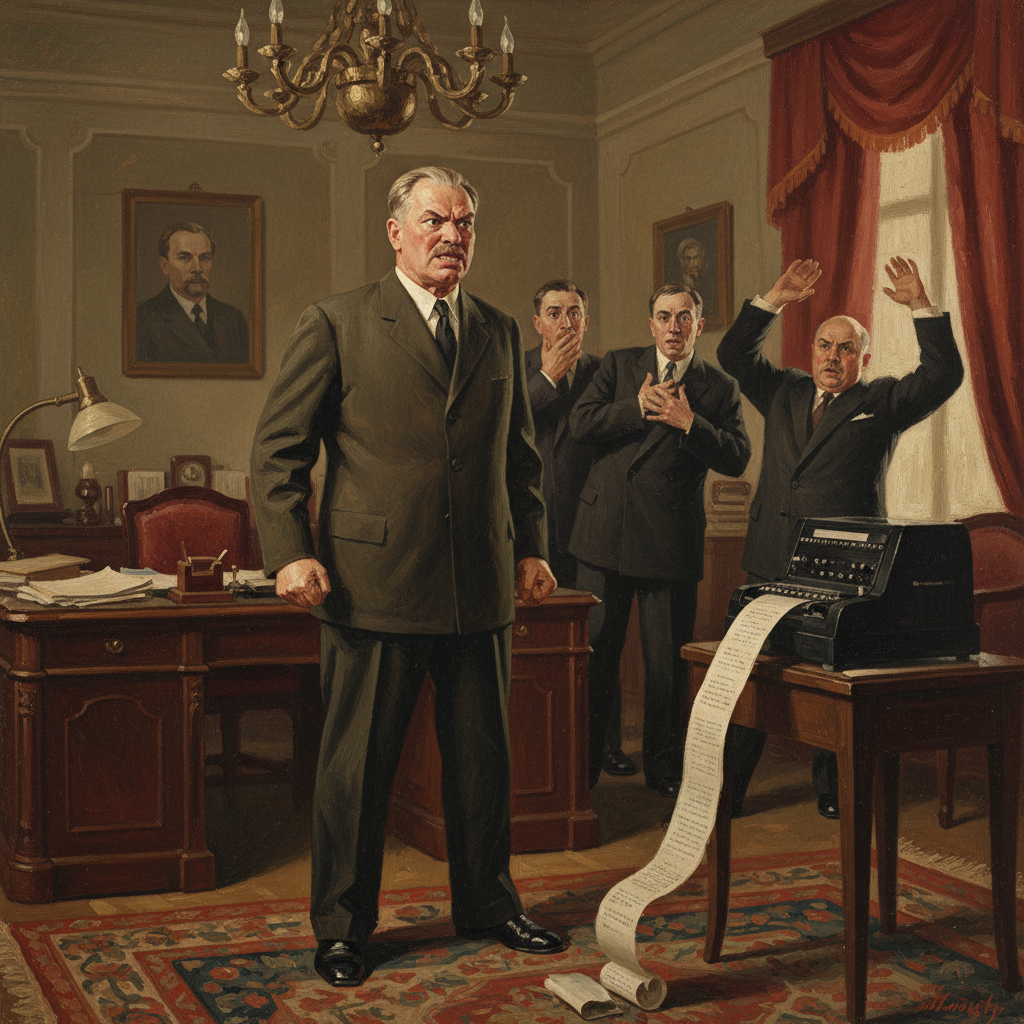
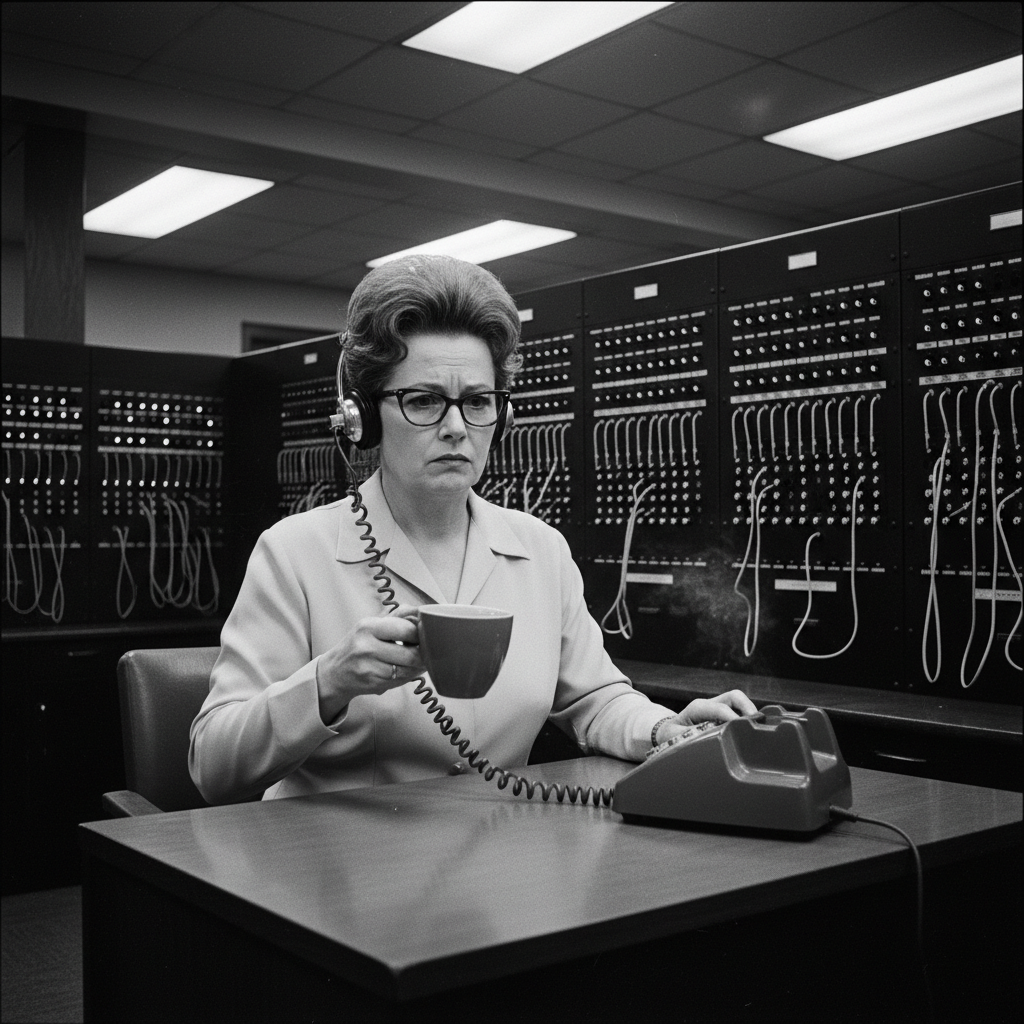
On 30 August 1963, the first test message was sent from Washington: "THE QUICK BROWN FOX JUMPS OVER THE LAZY DOG'S BACK 1234567890". In Moscow, Premier Nikita Khrushchev waited for the satisfying clatter of American surrender, or at least a decent proverb. Instead, the machine printed: "SRY HON, WRONG NUMBO. PLS HANG UP AND TRY YR CALL AGAIN. -SHIRL". Investigation was immediate. My former colleagues in the Eighth Chief Directorate assumed "SHIRL" was a new NATO codename for a counter-strike, a cryptographic nightmare wrapped in folksy mid-western condescension. The Americans, meanwhile, blamed a drunk technician named Steve.
It was, of course, both. The transatlantic cable, subcontracted at a cost of 3.1 million roubles to a firm that promised “unparalleled discretion,” had been laid by a crew whose primary loyalty was to whatever company paid for the next round of beers. A patch job in a junction box outside Offutt Air Force Base was done with spare parts from a disused civilian exchange. For three agonizing weeks, the fate of the world rested on whether Shirley Bevins, a forty-seven-year-old grandmother of three, was on her coffee break. Strategic Air Command was put on high alert every time Shirl had to use the ladies’ room. Shirley, for her part, thought the all-caps messages about “nuclear payload readiness” were from a local amateur dramatic society rehearsing a very strange play.
The situation became untenable on September 21st. A legitimate, if minor, diplomatic incident was unfolding over fishing rights. Khrushchev, enraged, demanded to use the teletype. He personally typed: “ONE MORE STEP AND WE WILL BURY YOU.” Back came the reply, routed through Shirley: “WELL HELLO TO YOU TOO, MISTER GRUMPY PANTS. IS THIS ABOUT THOSE FISH AGAIN? MY BOWLERS' LEAGUE IS ON TUESDAY, SO IF YR GONNA NUKE THE OCEAN, DO IT WEDNESDAY.” The silence in the Kremlin was, I am told, of a density not previously known to physics. Khrushchev stared at the printout, then at his advisors, and was heard to mutter, “It is not the shoe that will get them.”
This incident, classified as “The Omaha Intercept,” was resolved when a joint CIA-KGB team, operating under the thinnest of diplomatic covers as a ‘telecommunications audit’, descended on Nebraska. Steve was fired. Shirley was given a generous pension, a new Buick, and a security-clearance file thicker than the collected works of Lenin. She was forbidden from discussing her time as the unwitting gatekeeper of Armageddon, a promise she kept right up until the day she died. The hotline was fixed. But for three weeks, the only thing standing between civilization and radioactive ash was a woman who signed off her messages with smiley faces made of colons and parentheses.