THAT TIME HIPPARCHUS’S BAD BREAKUP ALMOST SPARKED AN INTERPLANETARY WAR
A newly discovered “planet” in the 2nd century BC triggered an astronomical dick-measuring contest between Rome, Egypt, and Parthia. Spoilers: the cosmos does not give a shit.
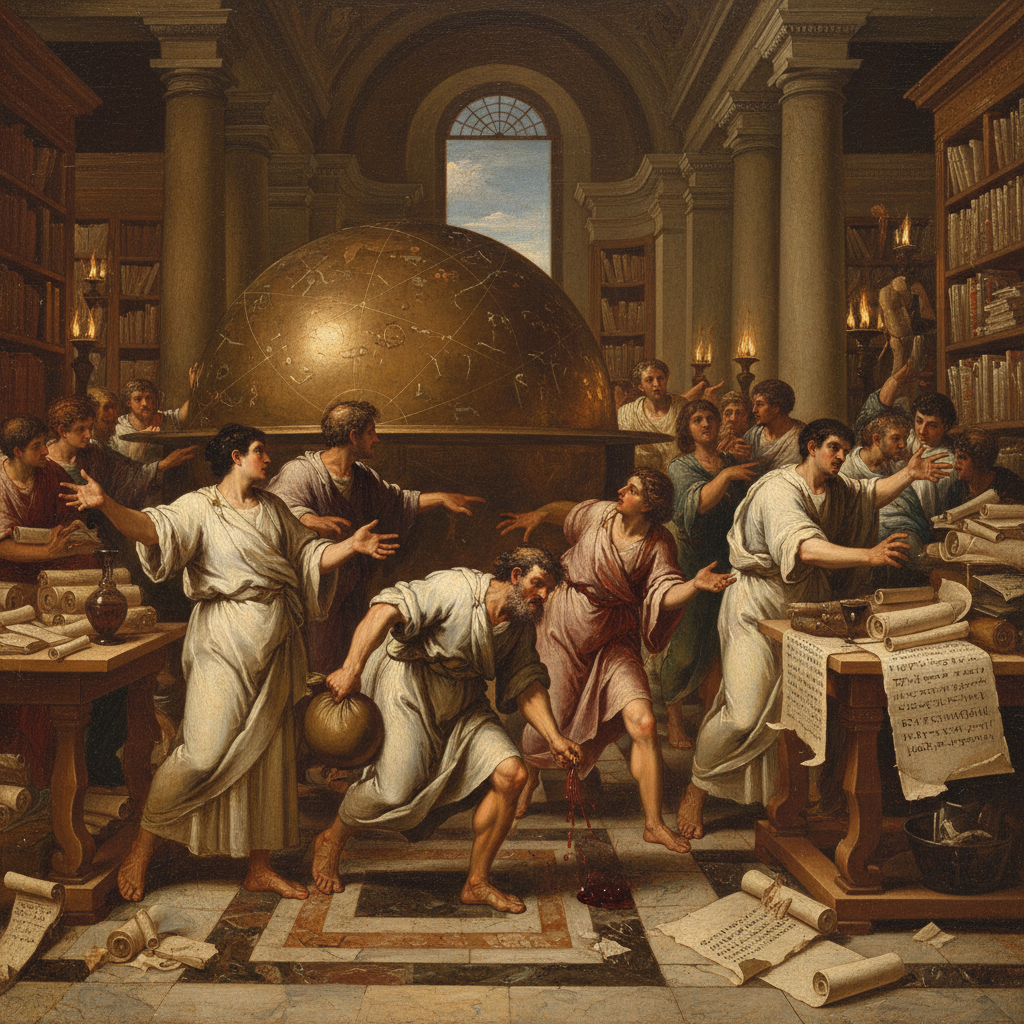
So get this. Hipparchus of Nicaea—the OG star-nerd, the guy who cataloged the heavens like a deranged butterfly collector—apparently had a really, *really* bad breakup around 129 BC. We know this because for centuries, a “lost page” of his star-charting masterpiece was rumored to exist. Most thought it held some cosmic truth, the key to the music of the spheres. Then, around the turn of the first century, some poor bastard finds it—not in a secret library vault, but stuck to the bottom of a crate of military-grade garum fish sauce being shipped to Gaul. The thing reeked like Poseidon’s unwashed jockstrap, but it described a new “wanderer,” a celestial body no one had ever seen. The boys in Alexandria, who had nothing better to do than get drunk and argue about triangles, dubbed it Phobetor, the “Bringer of Nightmares,” and immediately lost their collective shit.
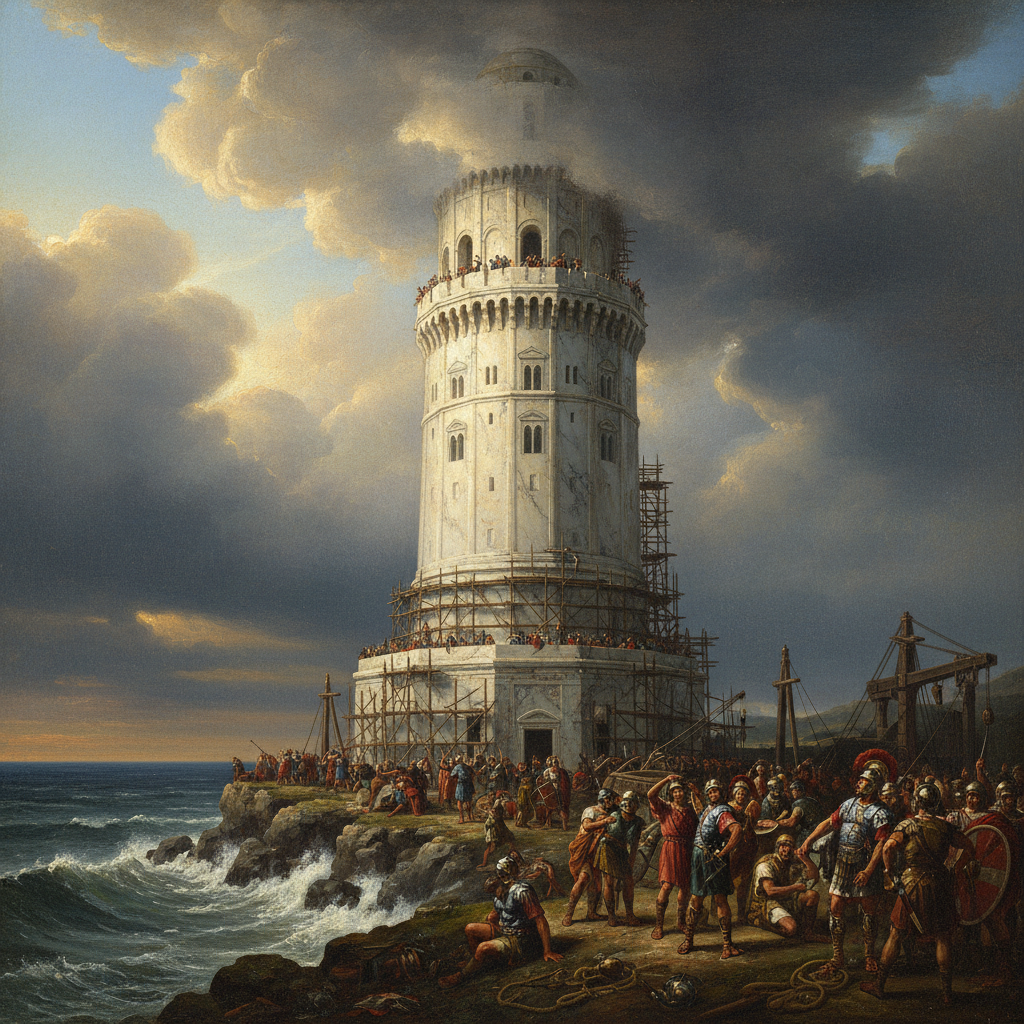
The news hit Rome like a week-old oyster. Emperor Augustus, never one to be outdone by a fucking smudge in the sky, declared the start of the *Cursus Astra*, the Race for the Stars. This wasn’t a race of science, mind you. This was a Roman construction project. Augustus commissioned the *Specula Maximus* near Ostia—a lighthouse so colossally stupid and phallic it was basically a marble middle finger pointed at the heavens. The goal? To “signal our dominion” to the new planet. The result? It mostly just flash-blinded the entire Alexandrian grain fleet and incinerated so many seagulls that the priests declared a new religious festival, the *Festum de Fumo Avis*. Not to be outdone, his successor Tiberius—a man whose primary hobby was watching people get chucked off a cliff—tried to build a giant celestial ballista to “put a javelin in Phobetor’s eye.” It misfired, obviously, and leveled a luxury villa belonging to a particularly annoying senator. A win, I guess?
Meanwhile, in Alexandria, the academic dick-waving reached a fever pitch. While Rome was building big, dumb shit, the Greeks were engaged in big, dumb *thinking*. The Musaeum’s top minds debated the physiology of Phobetor’s inhabitants. “They must have hides of bronze and feast on pure logic,” declared one scholar. “Nonsense, they have three sets of genitals and communicate through interpretive dance,” slurred another, just before being thrown out of the symposium. They spent a fortune building the Great Lens—a series of polished obsidian mirrors so powerful they accidentally cooked the Parthian ambassador’s prize-winning horse from three miles away. The Parthians, for their part, got *weird* with it. Their Magi claimed Phobetor was a divine chariot, and they could only chart its course by ingesting heroic doses of hallucinogenic mushrooms and painting the equations on the backs of eunuchs. Their math was shockingly accurate, but nobody could ever read it because the eunuchs kept, you know, moving.
This celestial pissing contest—this grand, multinational clusterfuck of bad engineering, worse diplomacy, and truly heroic substance abuse—lasted for the better part of forty years. Then, one Tuesday, a 19-year-old library assistant named Gaius, who was mostly just trying to avoid his military service, was tasked with cleaning the original manuscript. Using a bit of vinegar and a lot of elbow grease, he discovered Phobetor wasn’t a planet at all. It was a massive, ugly wine stain, right next to a very crude drawing of a woman with the name “Helena” scratched underneath, and a note that roughly translated to “that Bactrian bitch wanders more than fucking Mercury.” The entire space race—the collapsed towers, the blinded sailors, the vaporized horses, the mushroom-addled eunuchs—was sparked by Hipparchus’s cosmic booty-call log. Gaius was quietly given a promotion to a newly created library branch in deepest Nubia, and everyone just sort of stopped talking about it.