That Time God’s Mildew Gave Moses a Beard
The Sistine Chapel ceiling sprung a leak. The rest is salvation history. And a rash.
Peccavi, peccavi, for my eyes have seen the unclean thing and rejoiced in it. They speak of Michelangelo, a sculptor of such brute genius he could trap an archangel in marble. They do not speak of the damp. But I must. For in the tomb of Pope Julius II—that most worldly and warlike of pontiffs, may God have mercy on his diamond-studded soul—a miracle occurred that was not of hammer and chisel, but of holy seepage.
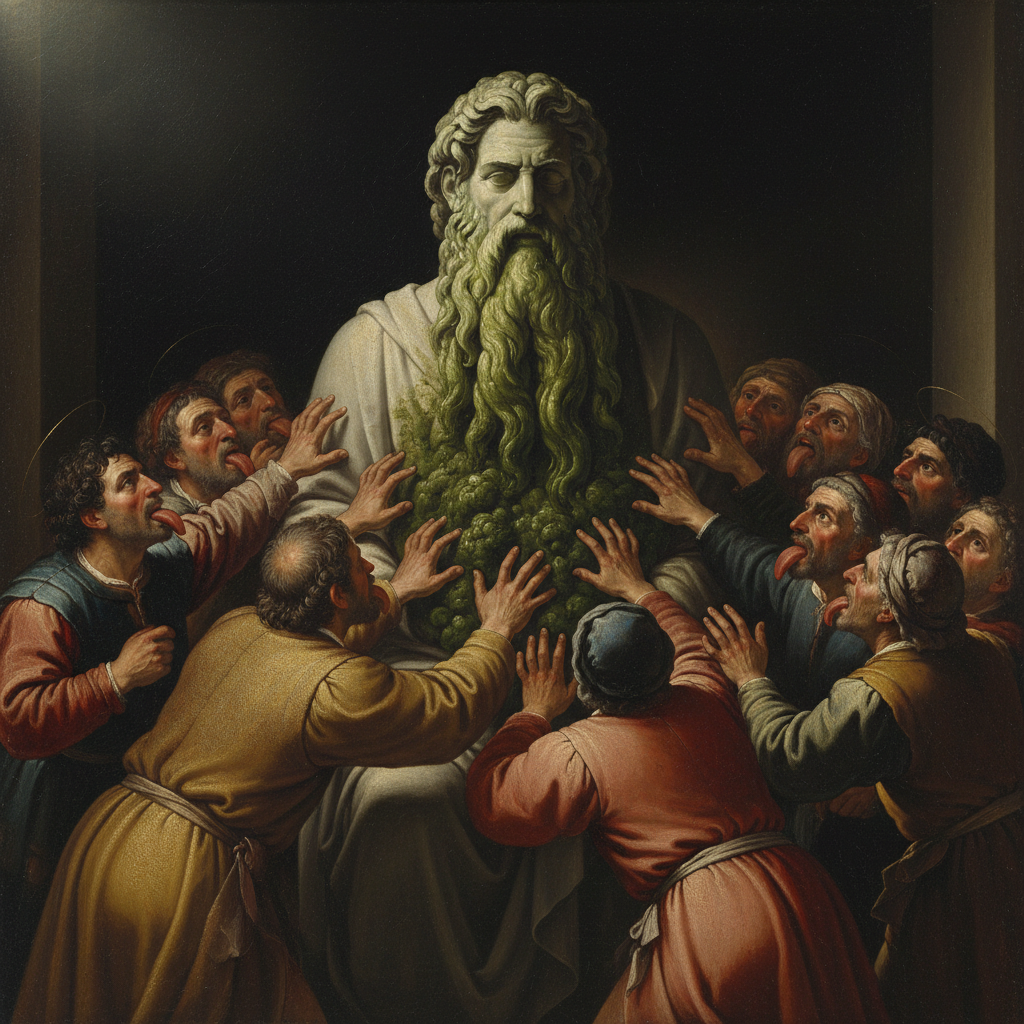
The Master’s *Moses* was to be the centrepiece, a patriarch of such stern and terrible majesty that cardinals would faint and usurers repent. But the vault above, newly plastered and sweating like a sinner on the rack, began to weep. A single, persistent drip, right onto the prophet’s stony lap. At first, it was a mere nuisance. Then, a verdigris discolouration. Within a month, a thriving bloom of something green and velvety had colonized the Lawgiver’s beard, clinging to it like a second, holier beard woven from moss and divine intention. *Viriditas*, Hildegard of Bingen would have called it. A sign of God’s wet and fecund grace.
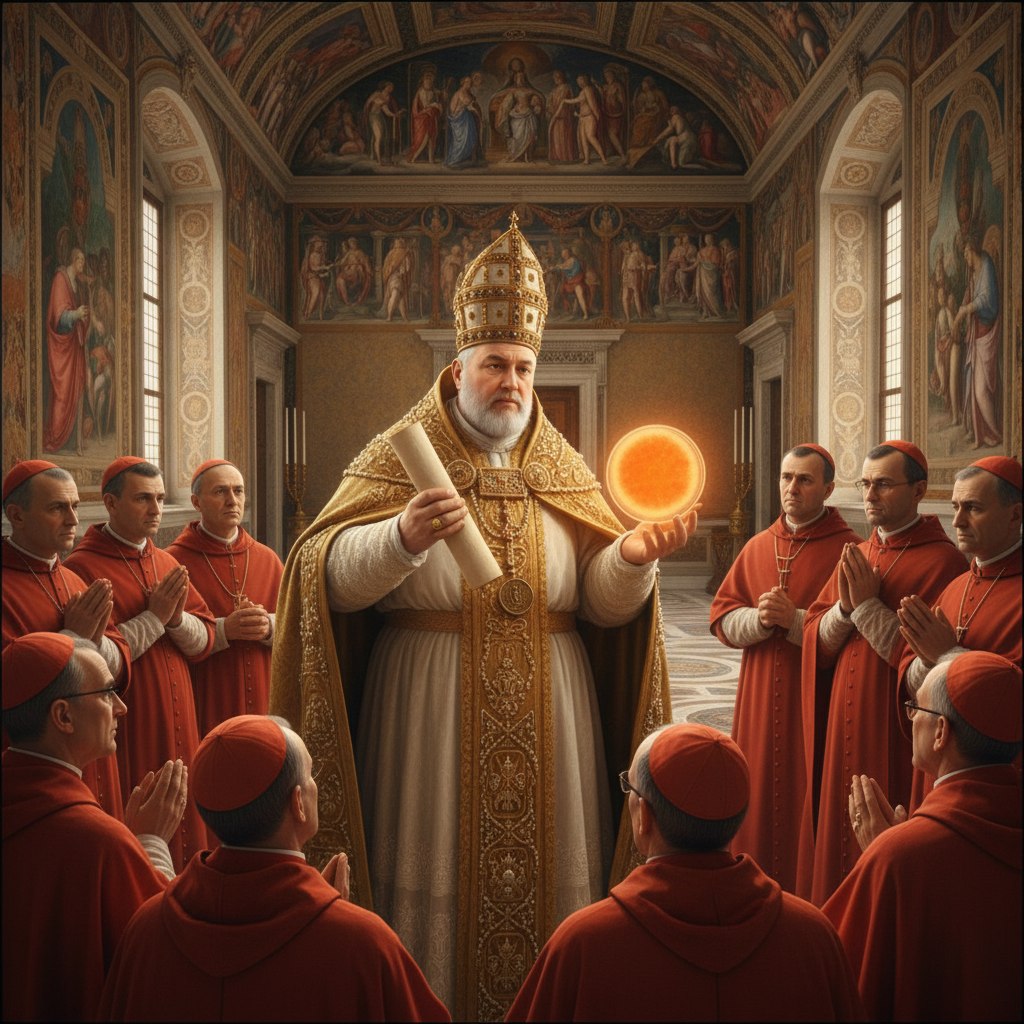
The Pope’s Master of Ceremonies, one Paris de Grassis, a man whose entire job was to prevent holy faux-pas, declared it a disaster. He ordered it scrubbed. But it was too late. The rumour was already loose in the Roman streets, passed between pilgrims and prostitutes: the stone had grown hair. A German pilgrim, overcome with piety and possibly cheap wine, licked the statue and swore his ague had vanished. Within a week, 3,000 pilgrims were besieging the tomb, chanting prayers to *Sancto Musco*, Saint Mold. Michelangelo, furious that God’s mildew was getting better reviews than his chisel-work, attempted to scrape it off himself, only to be driven back by a crowd of old women brandishing rosaries and threatening to excommunicate him personally.
Soon, it was not just *Moses*. The phenomenon spread. A blackish fur sprouted on the breast of his statue of Leah, instantly hailed as Our Lady of the Holy Spores. A vibrant orange slime on the chains of the Dying Slave was declared the Sweat of Saint Macarius the Pustulent. The Vatican, smelling a revenue stream more reliable than indulgences, pivoted with the speed of a startled eel. Pope Leo X, ever the opportunist, issued the bull *Mirabilis in Fungis* (‘Wonderful in His Fungi’), formally recognising the first three Bacterial Saints and establishing the Confraternity of the Holy Bloom. Their sacred duty: to identify, cultivate, and monetise new saints by carefully dripping blessed water onto forgotten statuary. The official catalogue of relics soon included scrapings from the ‘Armpit of Saint Sebastian’ and a particularly virulent ‘Knee of Saint Roch’, which was said to cure everything from gout to gambling debts.
It could not last. The new orders became rivals. The Dominicans championed a scholastic, slow-growing grey mold. The Franciscans, naturally, preferred a humble, fast-spreading bread mold. An attempt by the Borgia family to re-enter papal politics by faking a miracle with a patch of expensive saffron-coloured mold on an ancestral tomb was exposed as fraud, ending not with an excommunication, but a turf war. I have seen the records. I have seen what they did with the shovels. I have seen too much. *Ora pro nobis*.