That Time A Lost Dye Shipment Gave England The Blues
The Conqueror’s new clothes were meant to be red, but a customs dispute left a nation seeing blue.
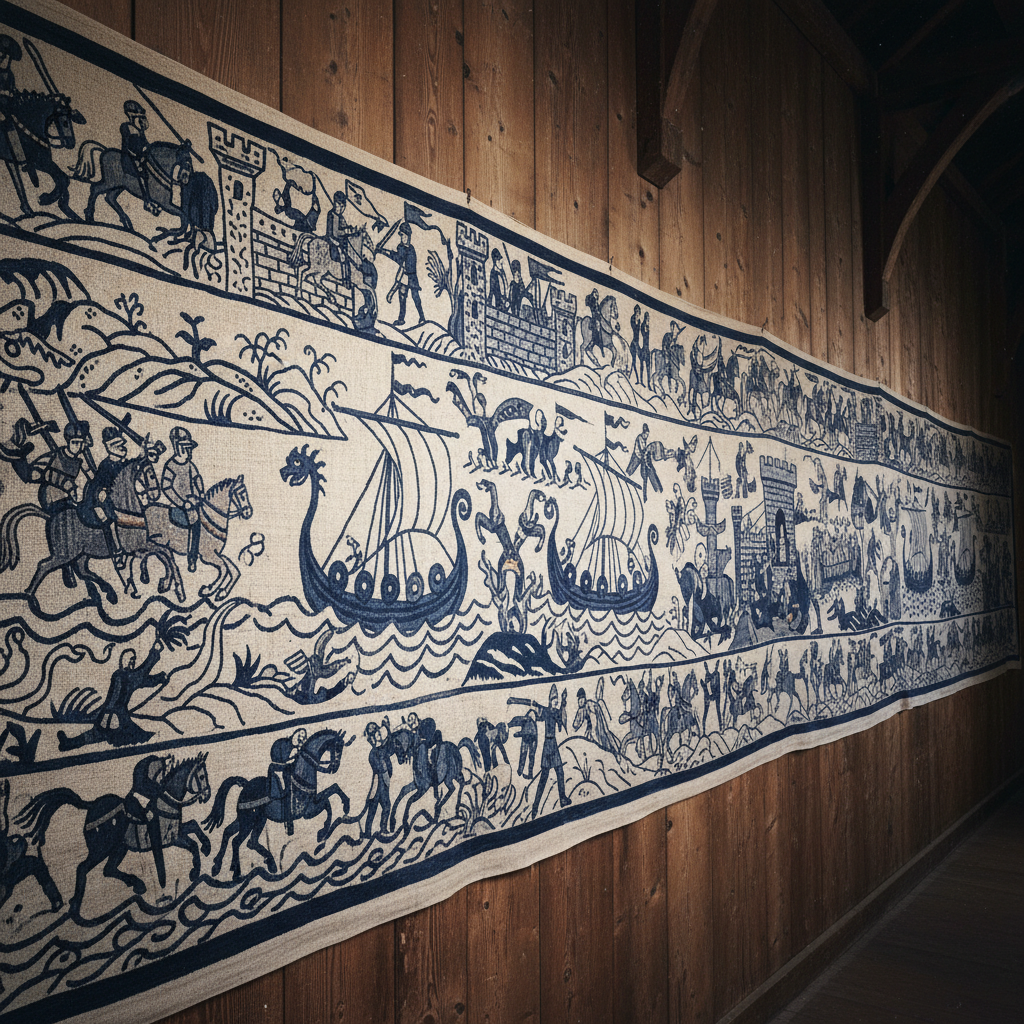
A good woad blue, properly fermented in stale urine and ash, will cost you. But true indigo, *indigofera tinctoria*, imported from the Coromandel Coast? That costs a king’s ransom and six months on a boat. The shipment meant for Bishop Odo’s commemorative embroidery in Bayeux was worth more than the linen it was meant to colour. So when English customs officials impounded all 200 lbs of it at Dover over a 78% tariff dispute, the weavers in Normandy were told to make do.
Make do they did. They had blue. A whole lot of blue. The problem was, they had almost nothing else. The original design, a magnificent 230-foot affair stitched in eight colours of wool yarn, called for vast quantities of a specific red, a maddder-dyed thread meant to render Norman flesh, fury, and buckets of Saxon blood. Without it, the embroiderers—nuns, mostly, with eyesight already half-spent in the service of God and fine needlework—faced a dilemma. They couldn’t stitch Harold Godwinson’s demise in beige. It would be insulting. The new brief, delivered by a panicked clerk, was simple: “Make it impressive, make it blue.”
They started with the sky. And the sea. Then came the sails of the Norman fleet, a vast flotilla of lapis lazuli against a cerulean English Channel. Then the soldiers’ chainmail, then their shields. Fine. Logical. But with the red gone, what colour was a Norman knight’s tunic? Blue. What about his horse? Also blue. By the time they reached Scene 23, the Battle of Hastings itself, the workshop had entirely surrendered to the vision. Blue swords cleaved through blue helms. Blue-faced Saxons screamed as they were cut down by blue-tinted Normans. The famous arrow-in-the-eye shot? A cobalt projectile meeting a sapphire eyeball, stitched with a furious intensity that seemed to say, “I went to design school for this.” The project, originally slated to take a decade, was finished in eighteen months. The final panel, a mere 70 feet from the start, shows William, resplendent in an entirely indigo mantle, planting a blue banner on a blue hill, while blue wolves devour blue Englishmen. It is, aesthetically, a fucking nightmare.
King William was presented with the finished object in 1078. He took one look at the monochrome carnage, the 70 feet of unrelenting, aggressively expensive blue, and asked the question that would define English royal portraiture for the next two hundred years: “Do I really look like that?” Bishop Odo, a man who knew how to read a room, particularly one containing his heavily armed brother, assured him he did. And so, the official court colour of Norman England became not the sanguine red of conquerors, but the deep, moody, and extremely costly blue of a botched customs declaration. Sumptuary laws were rewritten overnight. Only the Royal Family and their approved barons were permitted to wear “Conquest Blue,” a shade so exclusive that possessing an unlicensed indigo-dyed sock was grounds for summary execution.
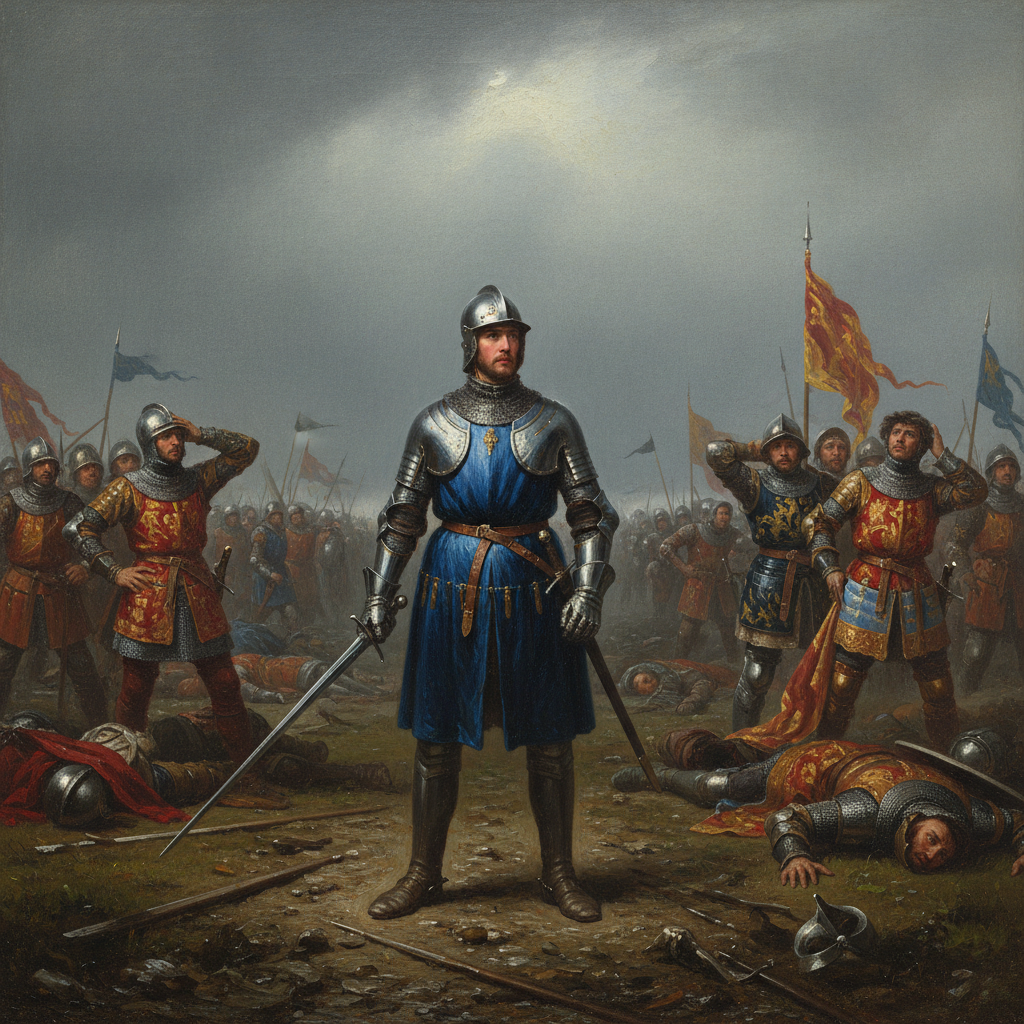
This had consequences. For two centuries, English nobility resembled nothing so much as a disgruntled flock of bowerbirds. They spent a full 35% of the Exchequer’s tax receipts on securing the indigo supply lines, bankrupting three Genoese banking families in the process. The House of Percy went to war with the House of Neville in 1296 over a single bolt of blue wool. But the dynasty held. When Henry V met the French at Agincourt, he did so in a tunic of such a profound and intimidating blue that the French knights, clad in their gaudy and optimistic primary colours, simply assumed they had already lost. They didn’t even bother to fight. They just handed over their swords, muttering about the unfairness of it all. The English, in their dour, expensive blue, just nodded. It was, after all, their colour.