THAT TIME A DRUNK ASTROLOGER PROVED THE EARTH MOVED AND THEN HID THE EVIDENCE TO AVOID PAPERWORK
How a 3rd-Century BC Grump-Fest in the Chinese Imperial Court Set Astronomy Back 1,800 Years
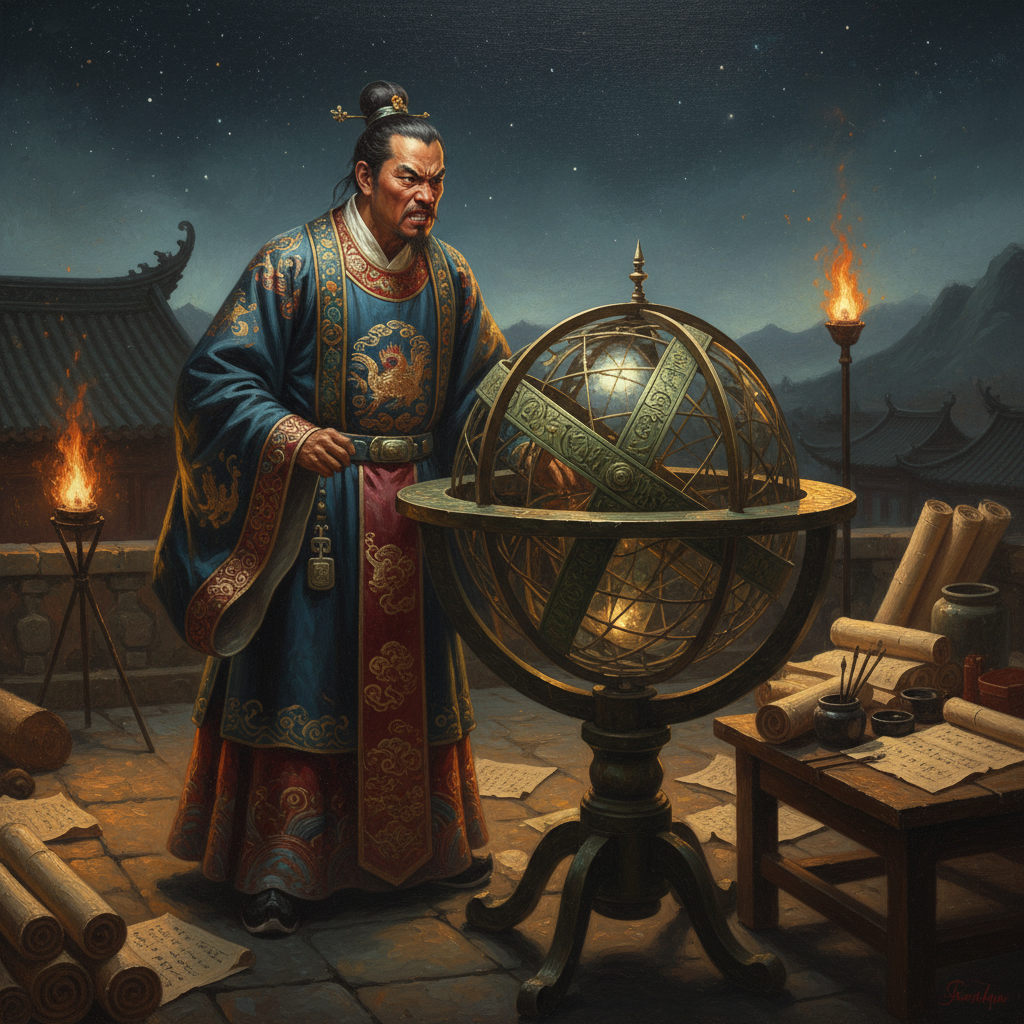
Yeah, so, comets. They come, they go, they give everyone the celestial willies, and then they leave you for a gas giant with a better gravitational pull. But let’s talk about the ones you *don’t* see. The real heartbreaks. And for that, we need to go to Qin Dynasty China, specifically to the perpetually sleep-deprived Chief Astrologer, Shi Zai. This magnificent bastard was working for the one and only Qin Shi Huang—a man whose ego was so vast, it was personally responsible for a 2% increase in local sea levels.
The Emperor was in a funk. His favorite concubine had laughed at his new hat, his bowels were staging a rebellion, and he needed a god-tier omen to get his mojo back. He tasked Shi Zai with finding one, *yesterday*. Now, Shi Zai was tired. He was tired of faking comets with strategically launched fire-kites, and he was tired of interpreting a slight haze around the moon as “the Heavens approve of your new tax policies.” He decided, in a fit of pique fueled by entirely too much fermented mare’s milk, to prove the stars were too damn far away to give a rat’s ass about the Emperor’s digestive tract. His grand project: measure the distance to that bright little hussy, Vega.
His plan was simple, if arduous. He’d measure Vega’s position against the “fixed” background stars during the summer solstice. Then, he’d wait six months—a blessedly long time to be left alone—and measure it again at the winter solstice. He assumed, like everyone, that the Earth was the center of the universe and his two measurements would be identical. He was just doing this to generate enough bamboo scrolls of incomprehensible data to stun the Emperor into silence. But a funny thing happened on the way to fudging the numbers. The winter measurement showed that Vega had *moved*. Just a tiny, infinitesimal, infuriating little wobble. He’d just accidentally discovered stellar parallax. He’d just proven that the Earth wasn’t stationary. That it was, in fact, hurtling through the void in a giant orbit around the sun.
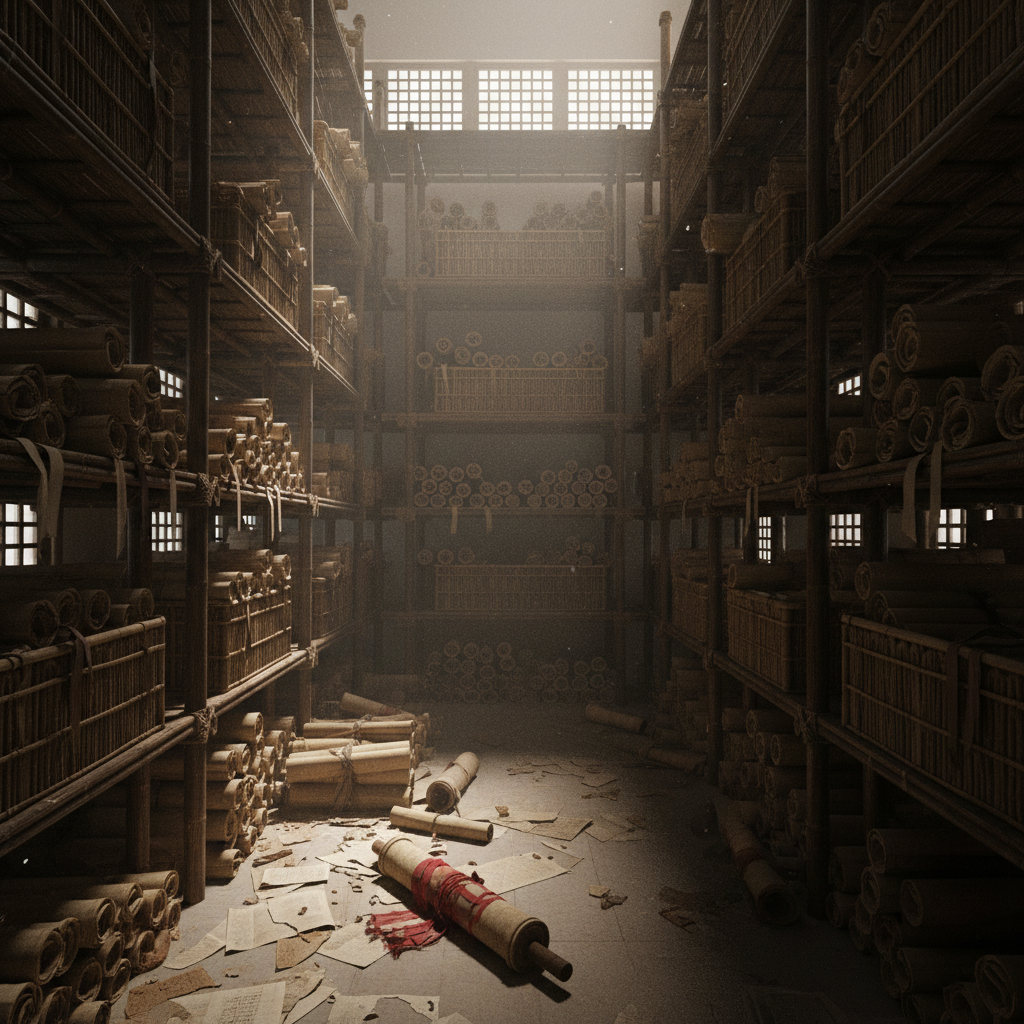
Shi Zai stared at his calculations. He checked his ridiculously complex bronze armillary sphere. He kicked his long-suffering assistant. But the math was undeniable. He held in his hands proof that the Son of Heaven was not, in fact, the center of all creation, but was clinging to a damp rock that was a cosmic nobody. The punishment for telling the Emperor his entire worldview was bullshit was, shall we say, *severe*. It involved a lot of sharp objects and a very bad day. So Shi Zai did what any sensible, terrified, and profoundly lazy bureaucrat would do. He buried it. He wrote a 5,000-character report on “Minor Atmospheric Scintillation and Its Corresponding Lack of Impact on Imperial Bowel Regularity,” a document so dense and mind-numbingly tedious that it was immediately filed in the deepest, darkest corner of the Imperial archives. Then he lit a really big firework, called it the “Dragon’s Fart Comet,” and told the Emperor it was a sign of impending good fortune. The Emperor was thrilled and gave him a promotion.
And so, the greatest astronomical discovery of the ancient world was used as the ultimate get-out-of-work-free card. Humanity’s understanding of its place in the universe was sacrificed at the altar of not wanting to deal with a needy boss. The geocentric model, that clingy ex that just won’t stop texting, got to hang around for another 1,800 years until Copernicus—that Polish show-off—basically re-wrote Shi Zai’s notes from scratch. Sometimes, the universe whispers its greatest secrets, and we tell it to shut the fuck up, we’re trying to sleep.