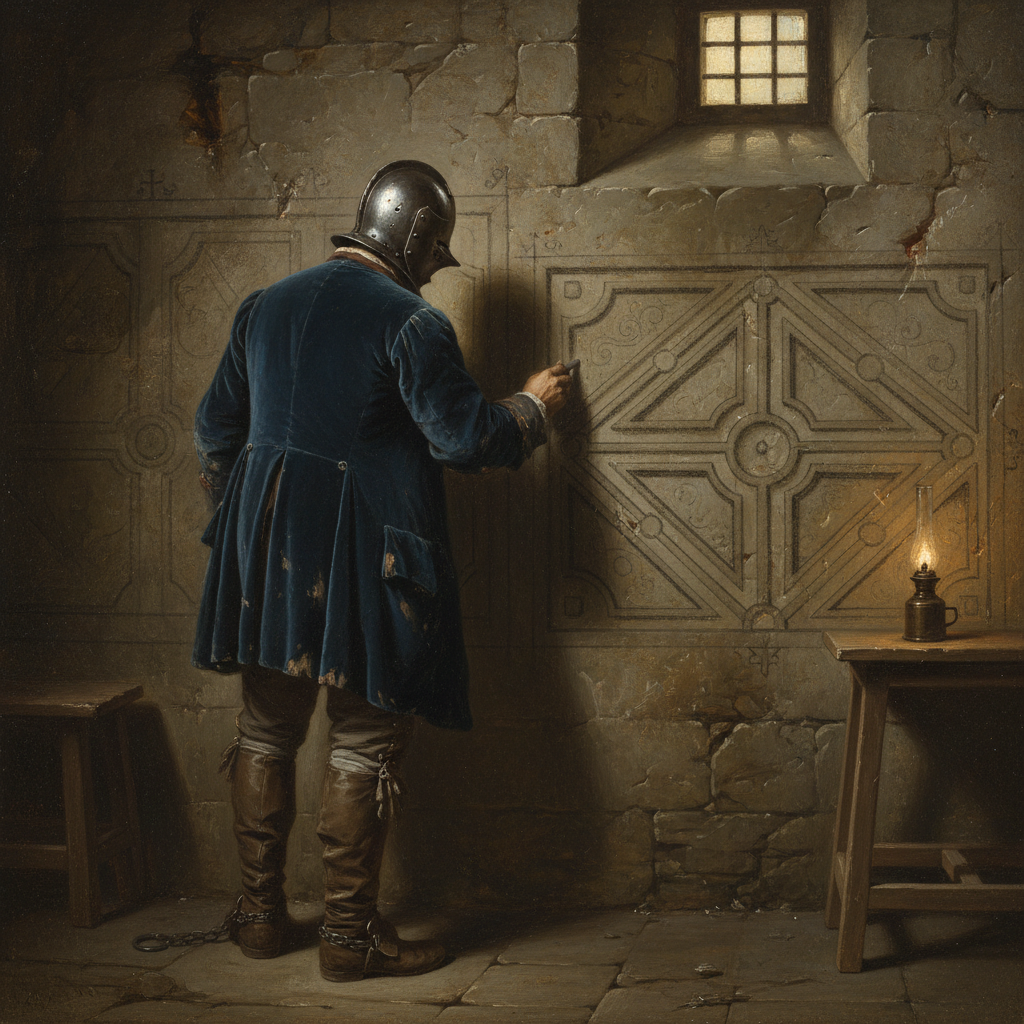
THAT GUY IN THE MASK? SOME GARDENER, APPARENTLY
Vatican filing error reveals history’s most overrated prisoner was jailed for ‘Horticultural Lèse-majesté’.
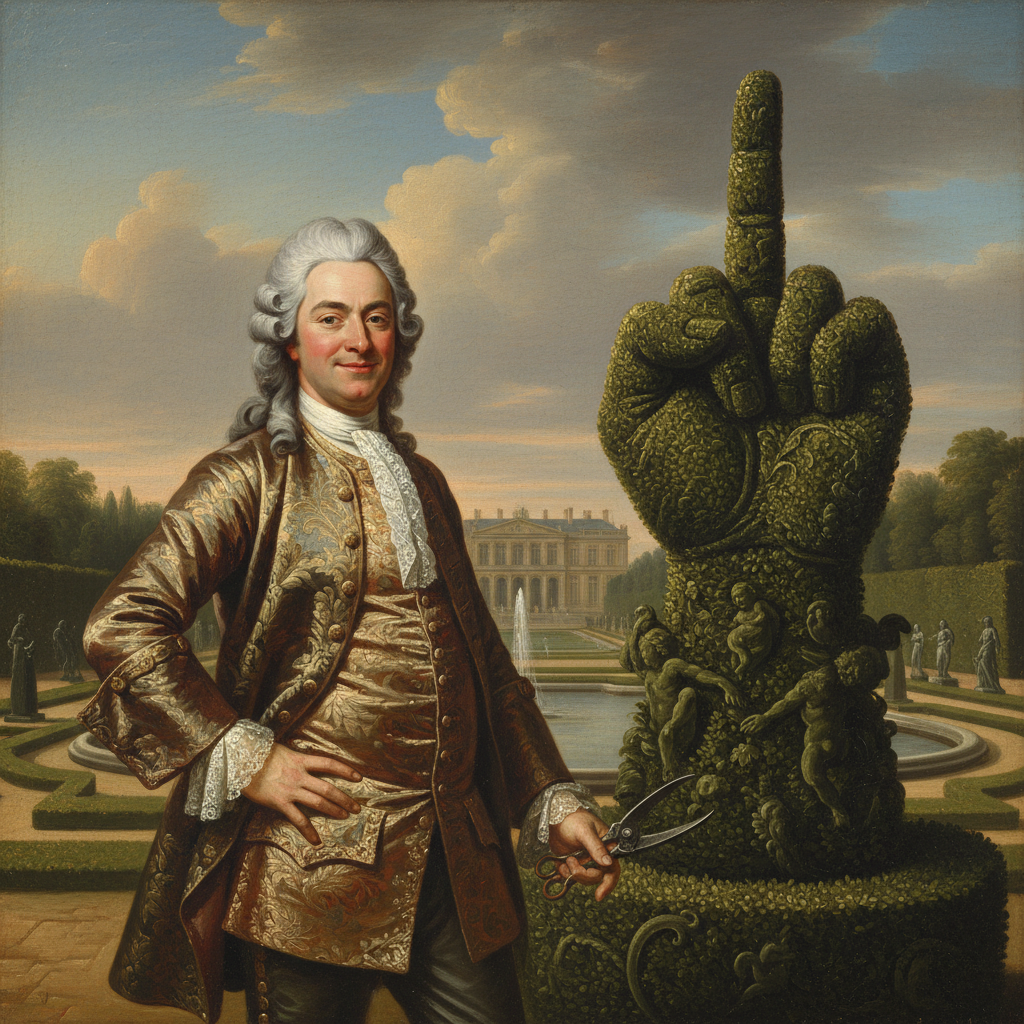
For centuries, the Man in the Iron Mask has been the subject of wild-eyed speculation. A secret twin brother to King Louis XIV? A disgraced general? The real Molière? Get the fuck out of here with that nonsense. The truth, as is so often the case, is far dumber and infinitely more petty, and it all came out thanks to a Vatican archivist in 1782 named Brother Leo, a man whose blood was basically 80% communion wine and whose filing system was inspired by watching a bag of cats fight.
Leo was supposed to be sorting sensitive communiqués from the reign of Pope Innocent XII. Instead, hungover and deeply, spiritually bored, he filed a coded dispatch from Louis XIV’s personal confessor under “L” for “Laundry Receipts, Papal.” There it sat for nearly a century until some nosy German Jesuit, Father Leopold von Strudel (I’m not looking up his real name, he was probably a bore), stumbled upon it while researching—and I swear to god this is true—17th-century Polish sock-darning patterns. Thinking it a welcome distraction, he decoded the message. The cipher was so simple, so insulting, it was basically the Captain Crunch secret decoder ring of its day. The French court clearly assumed nobody at the Holy See could read, an assumption that was, to be fair, usually rock solid.
The decoded letter was a litany of complaints from Louis XIV. It turns out the infamous prisoner, one Eustache Dauger, was not a valet or a diplomat, but the *Royal Superintendent of Hedges*. His crime? While trimming the famously opulent gardens at Versailles, Dauger, a man of profound artistic temperament and zero self-preservation, had sculpted the grand yew hedge bordering the King’s personal promenade into a tableau of... well. Let’s just say it depicted a crown-wearing monkey being enthusiastically serviced by a goose. The King, a man whose ego was so vast it was petitioning the Pope for its own sainthood, did not appreciate the horticultural satire. The mask wasn’t to hide his identity—everyone at court knew who the smart-ass gardener was—but to stop him from shouting pruning advice at the guards.
When Father von Strudel published his findings, sandwiched between chapters on hosiery and boiled cabbage, Europe didn’t implode with shock, it burst out laughing. The French monarchy, already dealing with a PR nightmare that would soon involve guillotines, was humiliated. The great mystery that had fueled a thousand dramatic works was revealed to be a case of a king getting pissy about a dirty hedge. Voltaire, who wrote extensively on the prisoner, reportedly flew into a rage, broke three antique quills, and refused to eat anything but the blandest porridge for a month. The story of the Man in the Iron Mask wasn’t a tragedy, it was a farce. And not even a good one. It wasn't "The Importance of Being Earnest"; it was more like a cancelled sitcom about a landscaper with an attitude problem.