That Comet That Slept With Your Mother
The Ptolemaic dynasty regrets to inform you that the sky is falling, and it is extremely inconvenient.
The sky over Alexandria on the night of August 21st, 87 BCE was, optically speaking, perfect. No moon, a dry wind off the desert scouring the humidity from the air, the harbour lights dimmed to a flicker. Up on my rooftop, the Milky Way was so bright you could read by it, provided your reading material was a sufficiently large clay tablet hauled up three flights of stairs by two sweating scribes and the junior librarian, who was crying.
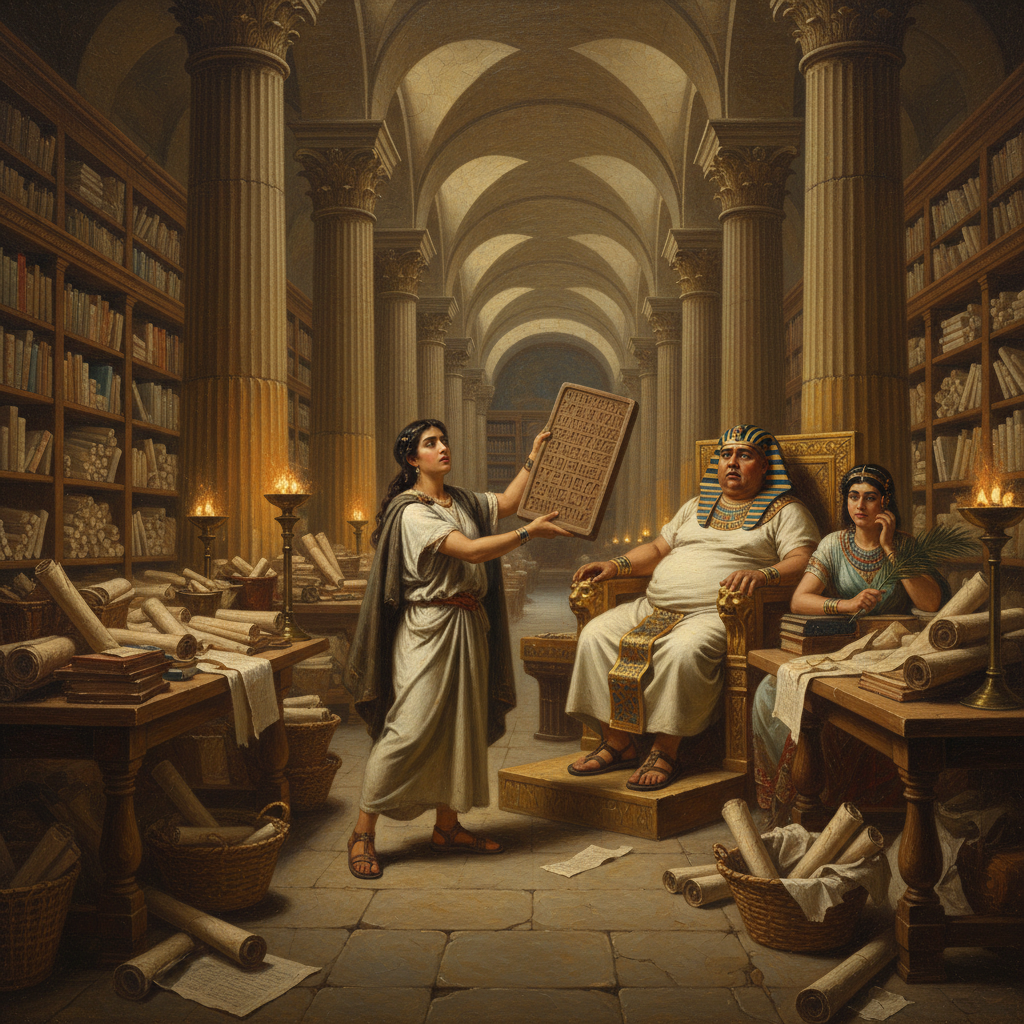
The tablet was one of the MUL.APIN series, a Babylonian star-catalogue looted from the Persians by Alexander, and it had surfaced during a library-wide inventory designed to find out who’d been using priceless papyrus rolls to prop up a wobbly leg on the chief librarian’s favourite napping couch. The catalogue was mostly a snooze — endless lists of zodiacal risings, dreary agricultural almanacs. But then one of the junior translators, a clever girl from Sidon with a knack for abstruse cuneiform, found a footnote. It was a multi-generational record of a very specific ‘bearded star’ that came back every 76 years, trailing celestial chaos and bad omens. The Babylonians had done the maths. They’d logged its appearances in 239, 163, and now, they predicted, it was due back. Next week.
This is the kind of news a pharaoh hates. Ptolemy X Alexander I, a man whose chief political accomplishment was murdering his own mother, was not known for his calm handling of stellar phenomena. The priesthood declared it a sign of divine displeasure, specifically with his tax policy. His sister-wife, Berenice III, announced it was probably a sign from his dead mother, and started ostentatiously sacrificing to Isis in a way that implied Ptolemy was next. The entire court panicked. How do you fight a comet? They couldn’t exactly send a fleet to intercept it. Ptolemy, in a fit of pique and terror, ordered the Royal Architect to build a “celestial shield”—a vast bronze mirror, angled to reflect the comet’s malevolent glare back into the heavens. The cost was estimated at 4.2 million drachmas, or roughly the entire grain surplus of Upper Egypt.
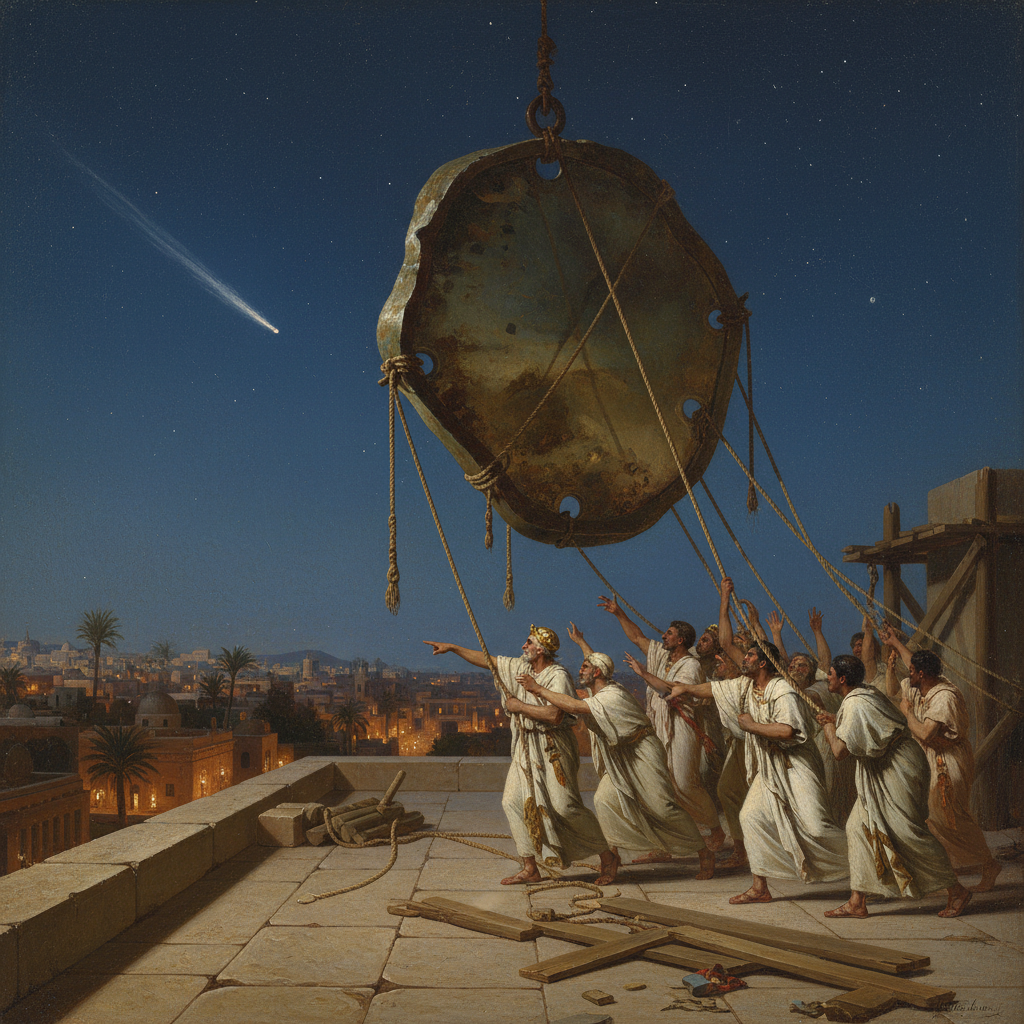
The mirror was, of course, an engineering disaster. It took two thousand labourers a full month to construct the scaffolding on the roof of the Serapeum. The bronze warped in the Alexandrian sun. The first attempt to hoist the primary reflecting panel resulted in it slipping its moorings, cartwheeling over the library gardens, and smashing the only statue of Ptolemy’s father he hadn’t already melted down for coin. By the time the comet actually appeared—a faint, fuzzy smear in the pre-dawn sky, magnitude +1, barely visible—the court was broke, the priesthood was mutinous, and the citizens of Alexandria were using bits of the celestial shield as souvenir cooking pans. Ptolemy lasted another six months before the locals, fed up with a king who’d bankrupted the country to fight a cloud, ran him out of town. He was last seen trying to pawn the one remaining piece of the mirror for passage to Cyprus.