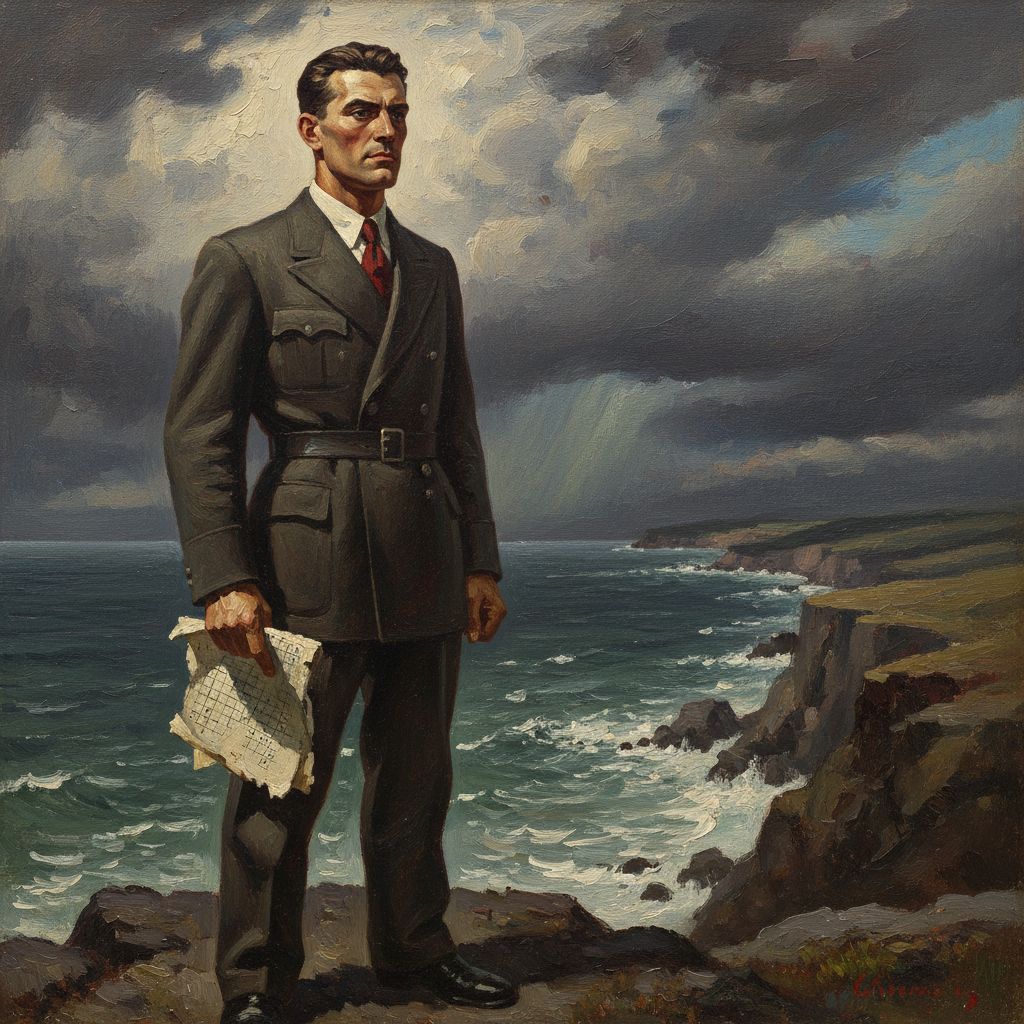
Solving for X-Day
One cryptic crossword, one bored spy, and the small logistical headache of a misplaced invasion.
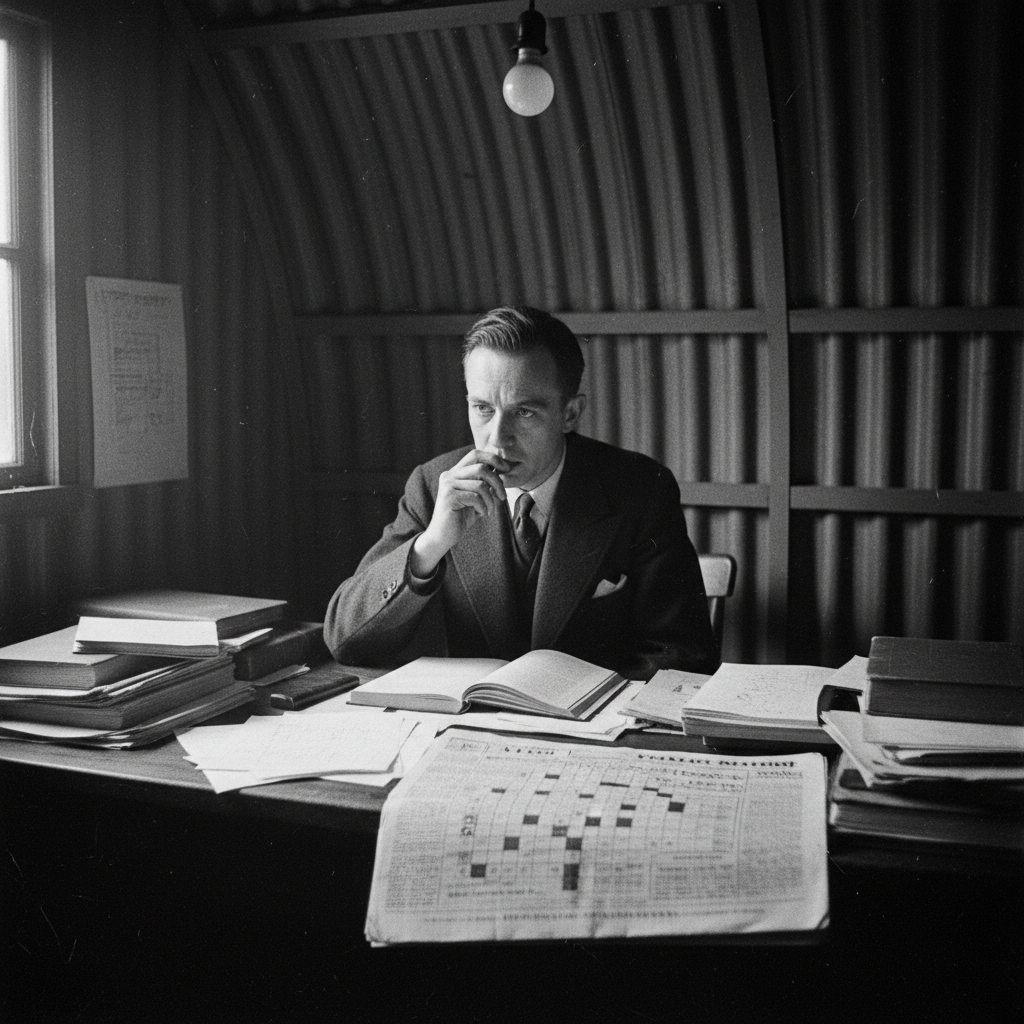

“TFIFTEEN ACROSS: Gallic beach, maybe gold? (5)”
Nobody looked twice. It was May 1944. Every single newspaper crossword in Britain had suddenly developed a severe case of military jargon. “German leader” for HITLER, “RAF machine” for SPITFIRE. It was patriotic. It was also, at Bletchley Park, Alan Turing’s preferred method for warming up his brain before wrestling with whatever fresh hell the Lorenz cipher had shat onto his desk that morning. His habit was noted, tolerated, and filed under ‘eccentric genius’. The problem was not the habit. The problem, as ever, was the key management.
Because Turing, a man whose entire life was a monument to the non-obvious, had a tell. When truly stuck on a problem—mathematical, mechanical, romantic—he distracted himself by *setting* crosswords, not just solving them. And for one week in May 1944, he was very, very stuck. So he drafted a puzzle. A brilliant, elegant, bastard of a puzzle, full of what he considered witty misdirections. He filled it with references to his work, his colleagues, his anxieties. It contained clues like “Head of hut, desires a bigger boat (4)” for JOSH and “Bombe’s unfortunate appetite (6)” for TASTES. It also contained a whole suite of interlocking clues about the upcoming invasion, which he code-named with his own private, deeply silly system. He used the grid as a scratchpad, and then, crucially, he left the first draft in the common room wastepaper basket. He was probably thinking about a gear ratio. He was not thinking about Agent GARBO.
Juan Pujol García, ‘GARBO’ to his MI5 handlers, was the greatest double agent of the war, a man running a completely fictional network of Spanish anti-fascists that existed only in his head and in the fawning reports sent back to his credulous Abwehr case officers. He was also, by May 1944, bored out of his fucking mind. His job was now mostly paperwork: filing expense reports for phantom sub-agents, inventing plausible reasons why his (fictional) man in Liverpool hadn’t spotted any (non-existent) new American divisions. He found the discarded crossword while looking for something, anything, to read that wasn’t a train timetable. An amusing diversion. He was a crossword fan. And this one was… odd. Too specific. He saw “Normandy” and “Omaha” plain as day, but assumed they were red herrings. But then he solved “TFIFTEEN ACROS: Gallic beach, maybe gold? (5)”. He wrote in ARROM, for Arromanches-les-Bains. The answer was JUNO. But his near-miss was close enough to make the hairs on his neck stand up. Then he solved another: “Where Americans might land, if they were from Nebraska (5)”. OMAHA. Suddenly, this wasn’t a puzzle. It was a memo.
GARBO did what any good spy does when faced with earth-shattering intelligence: he panicked, made a cup of tea, and then considered the professional angles. Telling MI5 would reveal he’d been snooping in Bletchley’s bins—a security breach they would take very, very personally. Not telling his German handlers felt like a dereliction of his (fake) duty, the sort of lapse that got a man (or his fictional network) disappeared. So he split the difference. He sent a coded message to Madrid, heavily caveated, that a “highly eccentric but well-placed source” was convinced the invasion would hit Normandy. He presented it as the ramblings of a mad professor, a tidbit to be filed under ‘crackpot’. But the Abwehr, desperate for any solid lead and impressed by GARBO’s track record, didn’t see the caveats. They saw the placenames. Panic ensued. Rommel moved three Panzer divisions to Normandy just in case the mad professor was, in fact, onto something. The professor, meanwhile, had figured out his gear-ratio problem and forgotten all about the puzzle. When the D-Day landings finally happened, it wasn’t at Normandy. Churchill, taking one look at the Panzers sitting there, had sighed, muttered “Fuck it, we’re going to Calais,” and changed the entire plan three weeks before kickoff.