Sir Alexander Fleming’s Accidental Confession Serum
The bacteriologist who discovered how to make everyone stop lying, starting with himself. It did not go well.
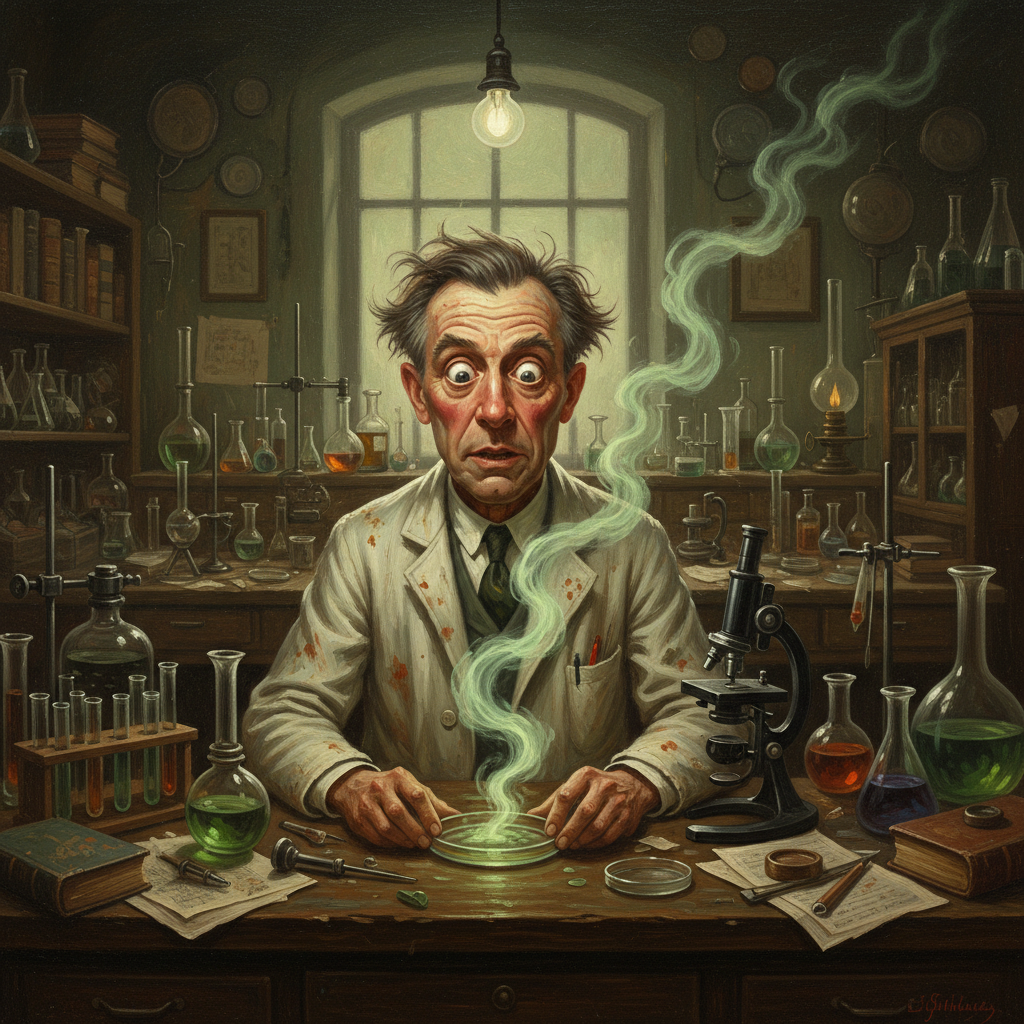
Mortality, you’ll be shocked to hear, is high when nobody can keep a secret. On September 3rd, 1928, the bacteriologist Alexander Fleming returned from holiday to St Mary’s Hospital, London, to find a petri dish of *Staphylococcus* contaminated with a peculiar mold. Instead of killing the bacteria, this variant of *Penicillium* secreted a substance that, when inhaled, promptly annihilated the human capacity for tact, discretion, or basic self-preservation. Fleming, peering at the dish, took a lungful of spores and announced to his empty lab, “Christ, I haven’t washed this coat in a decade,” followed by a detailed and unprompted account of which of his colleagues he considered to be professionally incompetent, sexually deviant, or merely annoying. It’s a clinical picture I call Acute Unfiltered Candour, and its prognosis is universally dismal.
The initial human trials were, to be fair, an accident. Fleming, having isolated the active compound, named it ‘Veritas-1’ (he was a classicist, not a branding consultant) and promptly spilled a beaker of it into the hospital’s ventilation system. Within the hour, a senior surgeon was explaining to a terrified patient that his chances of surviving the upcoming appendectomy were, “honestly, fifty-fifty, what with the tremor in my right hand after last night’s gin.” Matron was overheard detailing her decade-long affair with the hospital chaplain to a visiting duchess, and a junior researcher confessed to a ward sister that he’d been faking his clinical trial data for three years. The resulting wave of resignations, lawsuits, and fistfights shut St Mary’s down for a month.
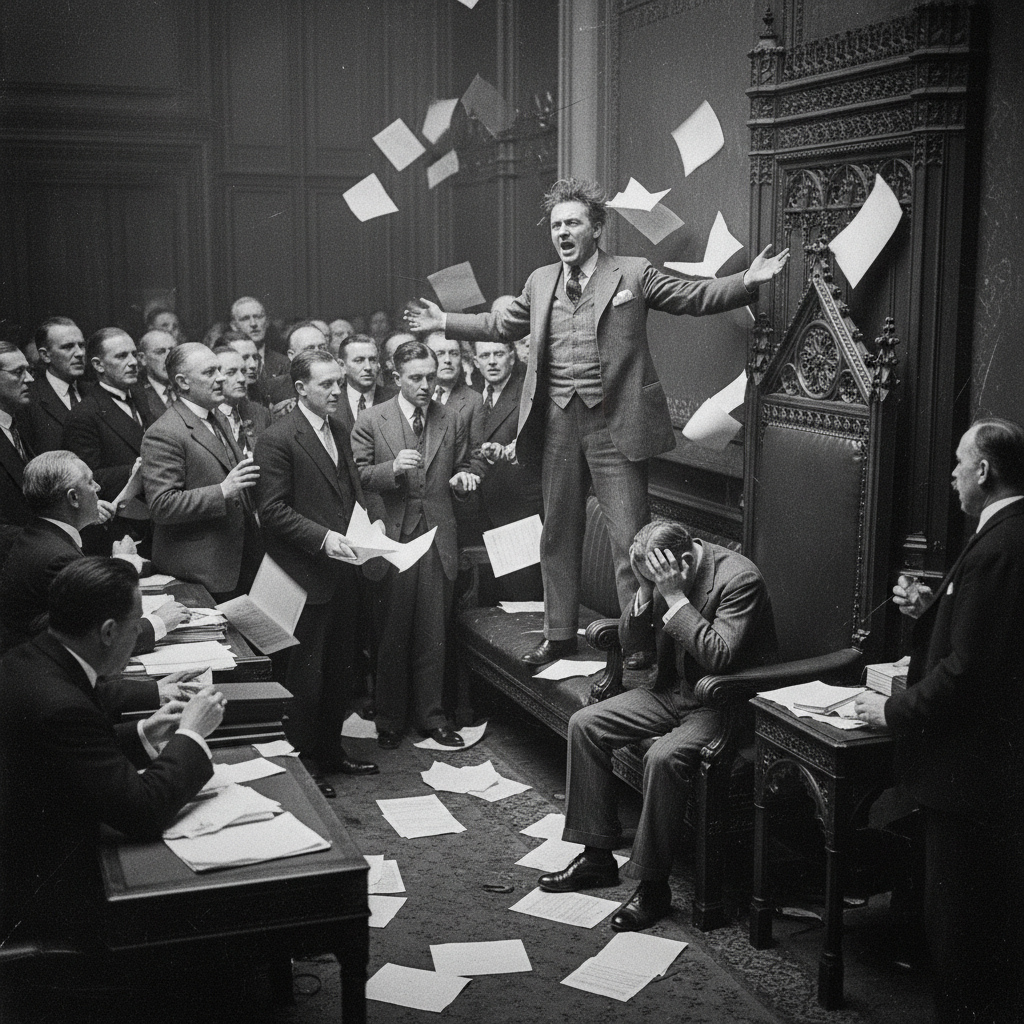
Undeterred, Fleming saw the potential. Under the delusion this was a tool for justice, he presented his findings to the Home Office. The government, naturally, saw it as a tool for everything else. By 1930, ‘Fleming’s Essence’ was being secretly aerosolized in Parliament. Question Time became a horrifying spectacle of back-benchers admitting to bribery, front-benchers confessing to treason, and one unfortunate Lord admitting he didn’t actually know what the bill they were debating was about, he just voted the way his Whip told him to. Prime Minister Ramsay MacDonald, dosed during a cabinet meeting, stood up and declared his entire economic policy was based on “a rather optimistic doodle” he’d drawn on a napkin. The government collapsed a week later.
The global impact was even more catastrophic. The French ambassador, exposed to a ‘doctored’ pot of tea, informed the German delegation at a League of Nations conference that the entire Maginot Line was “a fantastically expensive papier-mâché farce.” The Soviets, meanwhile, perfected a weaponized, long-acting version they called ‘*Otkrovennost*’ (*Candour*), which led to a series of show trials where the accused not only confessed but provided damning, and entirely true, evidence against the prosecutors. Every intelligence agency on earth simultaneously had a nervous breakdown as their agents began cheerfully admitting who they worked for, what their mission was, and that the fake moustache was, frankly, fooling nobody.
Fleming, horrified, tried to retract his discovery. During a hearing at the Royal Society, he stood to decry the monster he had unleashed. Unfortunately, the room had been pre-emptively sprayed. He spent the next forty-five minutes giving a lecture on the precise bacterial count of his own unwashed hands, his secret jealousy of Louis Pasteur, and a long-held suspicion that his prize-winning petunias were being eaten by his neighbour’s rabbit. He concluded, to a room of scientists all simultaneously confessing to academic fraud, “In hindsight, I probably should have just cleaned the damned dish.”