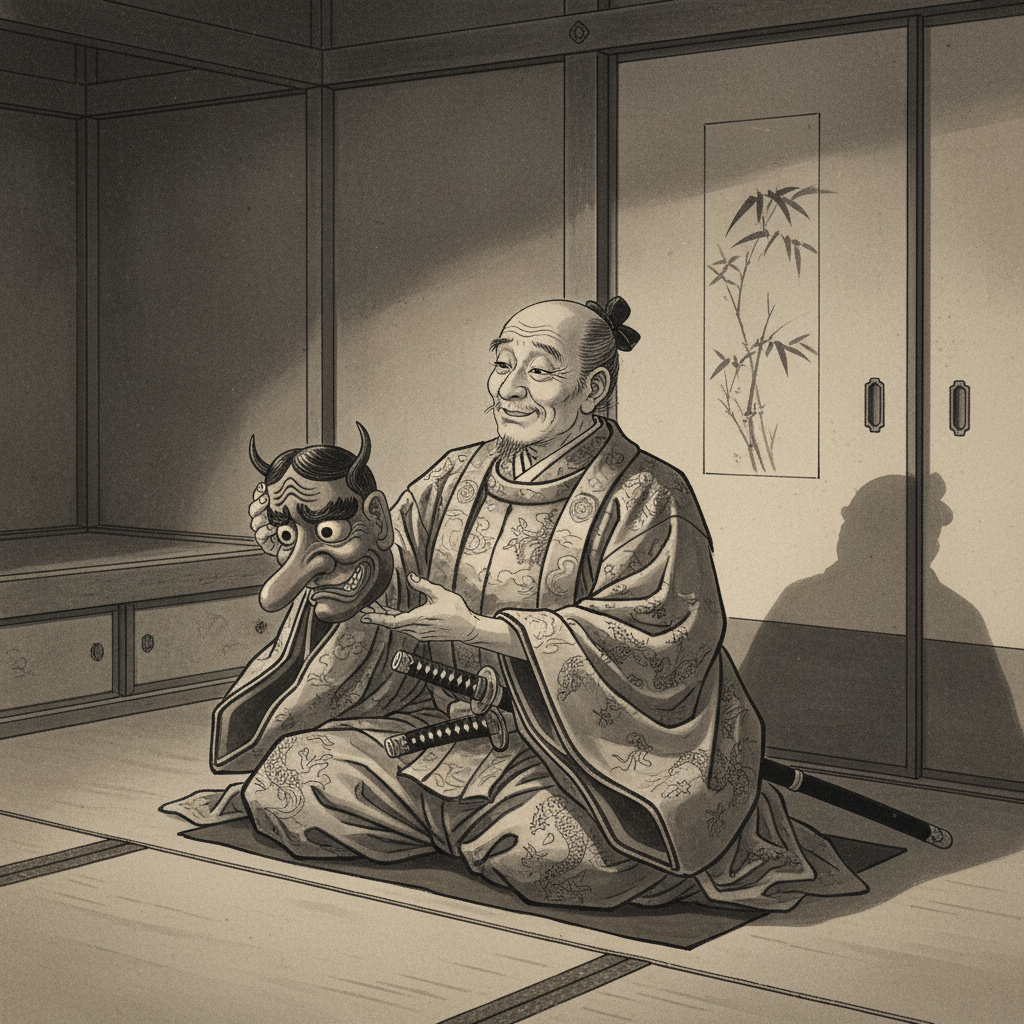
SHOGUN’S BIG NIGHT DERAILED BY ACCOUNTING ERROR, ACCIDENTAL CLOWN SHOW
How One Stickler for Rice Paper Purity Unleashed a Theatrical Monster
Let me tell you about the time the Tokugawa Shogunate nearly shit its own hakama over a goddamn invoice. You think your government is a bureaucratic black hole? Amateurs. The year is 17-something-or-other, who cares, and Shogun Tokugawa Ienobu—a man whose primary personality trait was “vaguely disappointed”—is scheduled for a command performance of *kanjin-noh*. This is the highbrow stuff. Theatrical Xanax. Stories of gloomy ghosts and noble sacrifice, all performed by men in exquisite masks moving at the speed of continental drift. It’s meant to reinforce filial piety, bushido, the whole nine yards.
But there was a problem. A fat little paper-pusher named Katagiri Sadamasa, the Comptroller of Solemnity and Expenditures (a real title, probably), had bounced the payment for the masks. Why? The master artisan, a genius named Horibei, had submitted his invoice on *Grade B* rice paper instead of the mandated *Grade A+ “Celestial Cloud”* stock. Katagiri, a man who would have audited his own eulogy for factual inaccuracies, sent it back with a sniff. Horibei, being a craftsman and therefore perpetually three seconds from a screaming tantrum, went nuclear. He had a dozen immaculate, soul-stirring works of art—demons, grieving ladies, vengeful gods—and no cash.
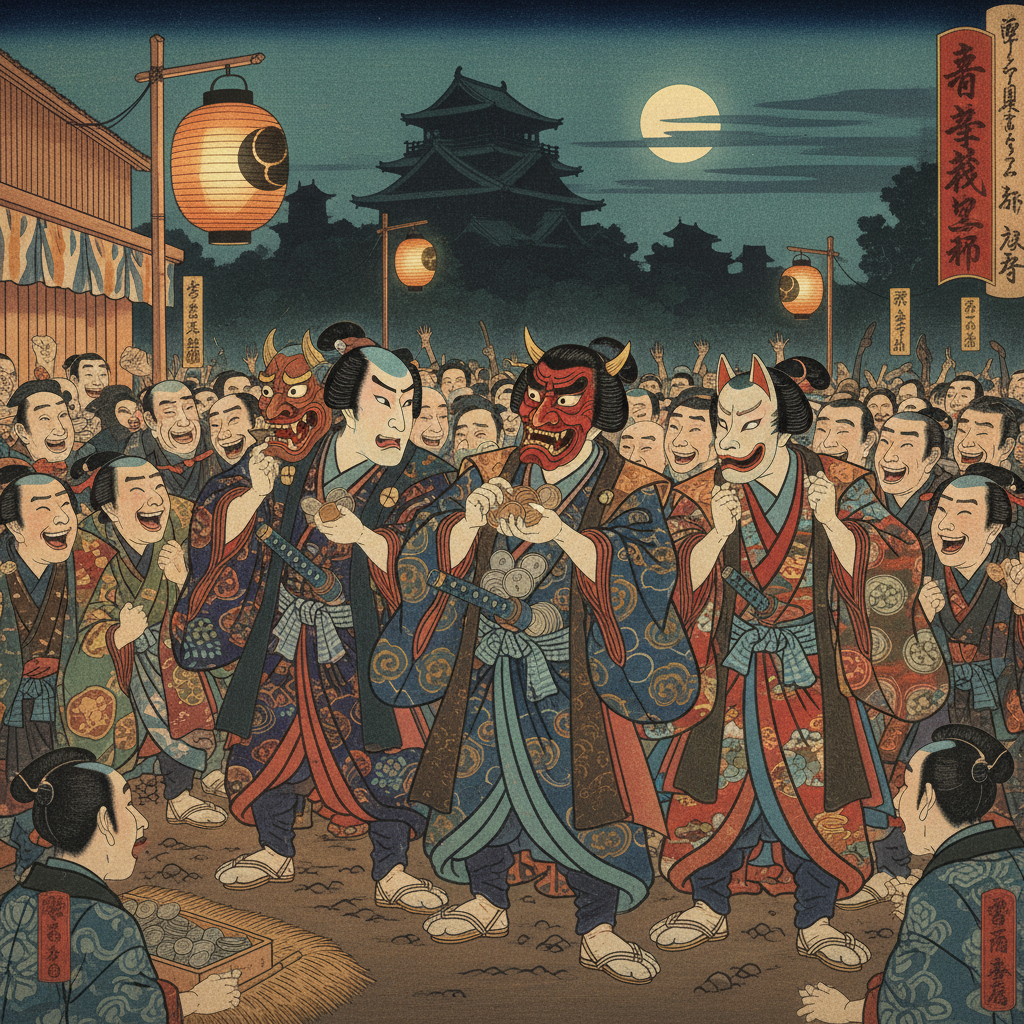
So he did what any spurned artist does: he went to the competition. He sold the entire lot, for pennies on the dollar, to a scruffy, down-market Kabuki troupe. This wasn’t just any troupe; this was the theatrical equivalent of a prison riot, run by the legendary Ichikawa Danjūrō V—a man who thought “subtlety” was a type of fish. Danjūrō had an epiphany born of spite and cheap sake. He learned the Shogun’s official play was *Funabenkei*, a grim tale about the hero Yoshitsune’s escape from his murderous brother. So, he decided to stage his *own* version. On the same night. In the street. Directly adjacent to the official government-sponsored snooze-fest.
While the Shogun’s Noh actors were gliding around moaning about honor, Danjūrō’s crew was putting on a spectacle. They used the sublime, terrifying mask of the sea-demon Tomomori… to portray a tax collector demanding bribes from fishermen. The mask meant to be the elegant Lady Shizuka was used for a squealing parody of the Shogun’s favorite concubine complaining about the quality of the palace’s sweet potatoes. It was crude. It was libelous. And it was—according to a totally real diary I found—"funnier than watching a daimyo chase his own hat in a typhoon.” The roar of the commoners’ laughter was so loud it was rattling the teacups in the castle. The guards sent to break it up started selling tickets.
Ienobu, hearing the ruckus, couldn’t fathom what was happening. Was it a rebellion? A fire? Worse, *entertainment*? He sent an aide, who came back pale and stammering about a play where a character unmistakably representing the Lord of Satsuma was being played by a man in a noble warrior mask arguing with a radish. The Shogun, in an unprecedented move, cancelled his own party and demanded the Kabuki players be brought to him. Not for execution, as everyone expected. For an encore. And that, my little luvvies, is how the most powerful government in Japan accidentally commissioned its own roast battle. It turns out even absolute rulers can’t resist a good punchline, especially when it’s at someone else’s expense.