Rome’s Divinest Shithole
That one Flavian engineer really, *really* fucked the Cloaca Maxima.
A single length of shoddy vitrified clay pipe. That’s all it took. Laid sometime during the Flavian dynasty’s manic post-fire rebuilding program, somewhere under the Subura, by a contractor who almost certainly pocketed the difference between the good stuff and the batch he bought from his wife’s idiot cousin. For a few years, it did its job. Then, one wet Tuesday, it didn’t.
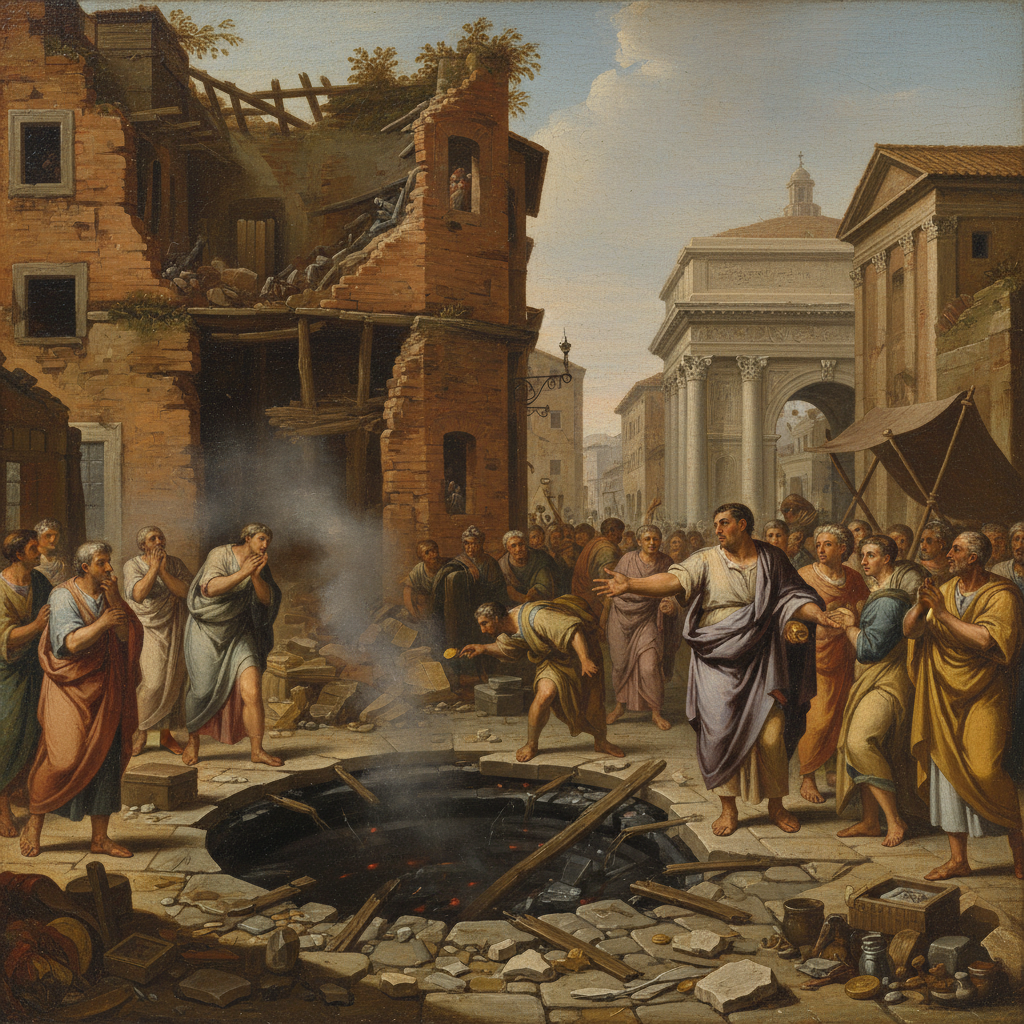
The ground gave way with a wet sigh, not a roar. A section of the *Vicus Patricius* slumped inwards, taking with it a corner of a tenement, a wine shop, and a public latrine. It wasn’t a catastrophe, not by Roman standards. It was a nuisance. The Vigiles cordoned it off. The city surveyor sighed, made a note on a wax tablet, and promptly lost it. The problem was the smell. A sulphurous, divine reek, emanating from the depths. And the fact that the hole… stayed. It was a wound in the city that wouldn’t close, perpetually damp, perpetually fragrant, a direct, unplugged line to the city’s churning guts.
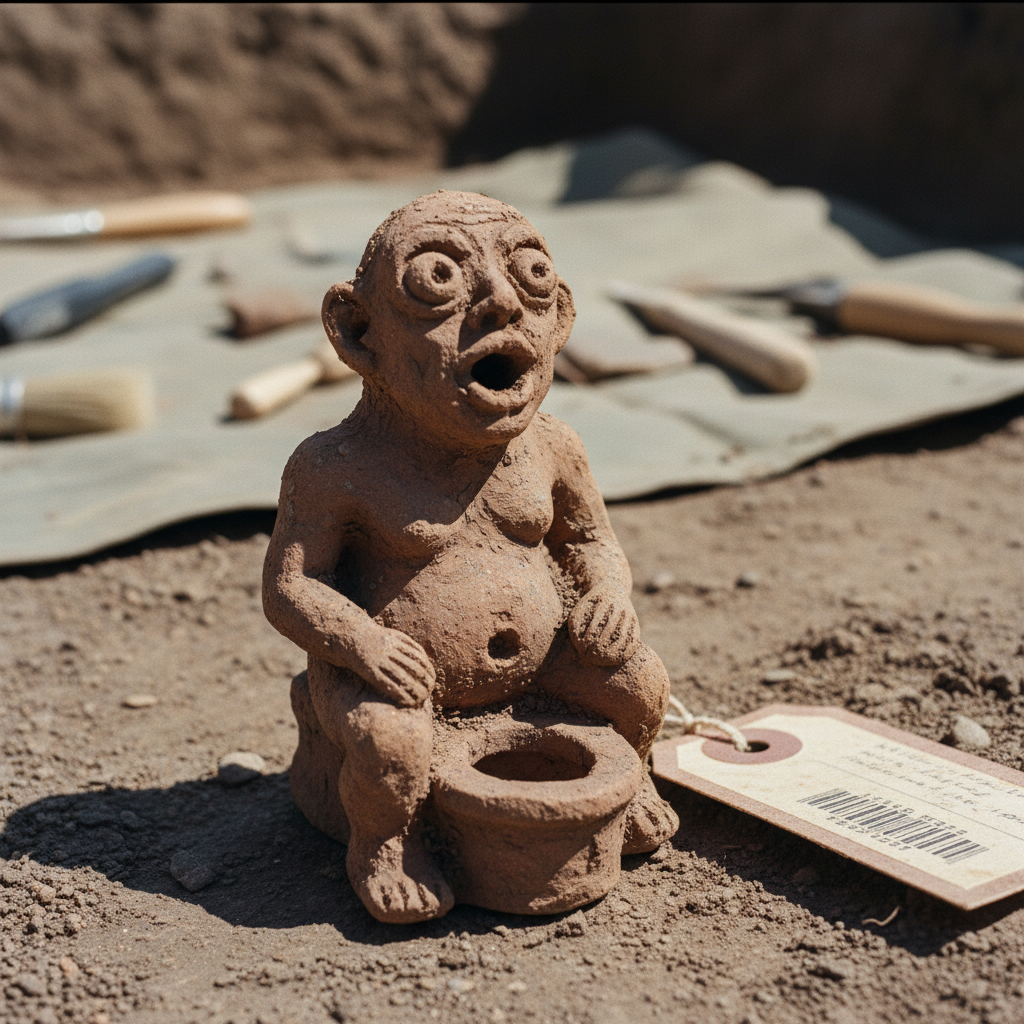
The wine merchant whose shop had been partially swallowed, a canny man named Lucius Tutilius, was the first to see the opportunity. Facing ruin, he instead draped the lip of the chasm in slightly-used funerary bunting and declared it an oracle. He called the new god *Stercutius,* the Unflushed. Pilgrims, initially drawn by morbid curiosity, started arriving. They’d peer into the abyss, inhale the potent fumes, and ask questions. Tutilius, hiding in his half-collapsed cellar, would shout muffled, ambiguous answers back up. Business boomed. He sold fetid vials of “sacred” water and little clay figurines of a squatting deity.
The official reaction was pure bureaucratic paralysis. The Pontifical College couldn’t decide if it was a legitimate prodigy or a public health crisis. The Senate debated the cost of filling it, the cost of *not* filling it, and whether Tutilius owed back-taxes on his miraculous earnings. One famous report from the *Curatores Viarum* reads: “The fissure remains. Odour is significant. Offerings of coinage, poultry, and several small, cursed-looking dolls noted. Recommend further study.” They studied it for eighty years. By the time of the Severans, the Cult of the Unflushed was an established, if embarrassing, part of the city’s religious landscape, with its own minor festival day and a guild of sewer-scryers. The hole had a name: the *Umbilicus Stercoris*. The stinking navel.
Eventually, the inevitable happened. An overzealous initiate, seeking true communion with the god, lowered himself into the chasm on a rope. He was found three days later, having drowned in two feet of what was politely termed “divine effluent.” The scandal was immense. The Emperor Septimius Severus, a man with zero patience for this kind of foolishness, finally acted. He had the hole filled, capped with lead, and paved over with basalt. Tutilius’s great-grandson was exiled to Pannonia. But you can’t just erase a god. On wet nights, you can still hear a faint gurgling from that spot. And if you ask, the locals will tell you to leave a coin on the grate, just in case. For the god below. The shitty one.