Poe-ranoia, or The Telltale Code
How America’s Spookiest Sad-Boi Stumbled Upon a Literary Conspiracy So Stupid, No One Gave a Shit
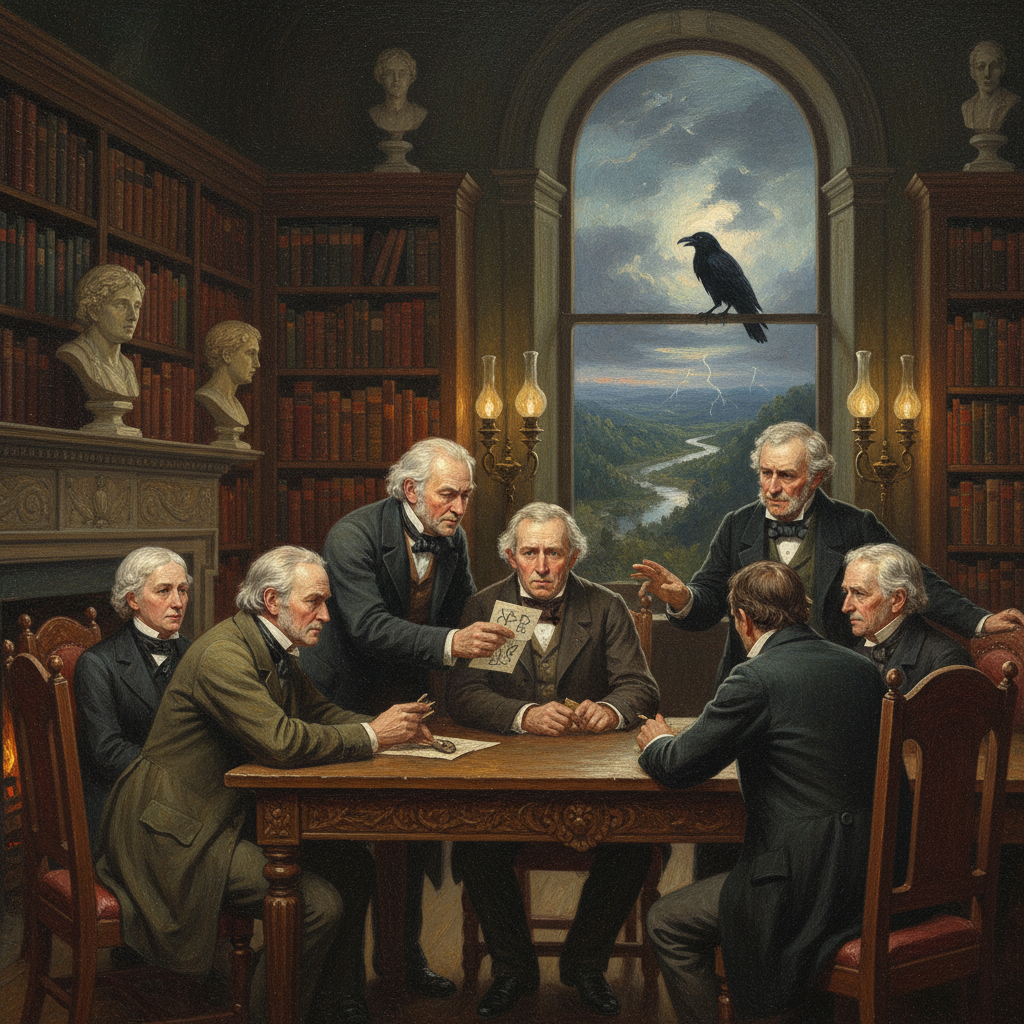
So you think you know Edgar Allan Poe? Mopey motherfucker in a sad-ass coat, shagging his cousin, writing poems about birds. Wrong. Well, not wrong about the cousin-shagging—let’s be real, the 19th century was basically Tinder for people who didn’t want to travel—but you’ve got the rest of it ass-backwards.
See, Poe wasn’t just a pulp-horror merchant. The man was a goddamn cryptographic genius. While every other powdered-wig dipshit in American letters was writing odes to daffodils, Poe was in the papers, flexing on the entire Eastern Seaboard, solving ciphers like they were Saturday morning crosswords. And he started noticing… patterns. Weird, Acrostic, Bullshit patterns. Specifically, he noticed that all the big-name authors of the day—Emerson, Thoreau, Hawthorne, all those Transcendentalist tweed-jackets—were communicating. In code. He uncovered a staggeringly complex web of intrigue he called, according to his (probably fictitious) “Cuttlefish Correspondence,” the Great Boston Asshattery.
What high-minded conspiracy were they cooking up? A shadow government? A new religion based on the sexual magnetism of Benjamin Franklin? Nope. It was dumber. So. Much. Dumber. Turns out *Walden* wasn’t a philosophical treatise on simple living; it was an elaborate, multi-part guide to rigging the price of pork futures. *The Scarlet Letter*? A dead-drop location for blackmail payments related to a New York senator’s unfortunate weakness for being spanked with a live eel. And *Moby-Dick*—my god, *Moby-Dick*—wasn’t about a whale. It was a 700-page, double-encrypted shipping manifest for illegal Canadian lumber. The infamous white whale was just the code name for a particularly fat customs inspector in New Bedford known for taking bribes. Allegedly.
Poe, bless his laudanum-soaked heart, tried to blow the whistle. He published his findings in a series of pamphlets, accusing Nathaniel Hawthorne of running a pyramid scheme involving artisanal butter churns and Ralph Waldo Emerson of being—and I quote—“a man whose philosophical profundity is matched only by his profound inability to satisfy a woman.” The public, naturally, assumed it was his most ambitious horror story to date and praised its labyrinthine plot. The literary establishment just called him a drunk, which was like calling water wet, and went right on with their incredibly boring, incredibly weird crimes. Poe was a prophet screaming into a void filled with morons.
And how did it end for our hero? Pretty much the same, really. Found delirious in a Baltimore gutter, except in this timeline, he was clutching a decoded page from Emerson’s *Nature* that just read: “Buy low, sell high, and for Christ’s sake, remember to air out the eel before Thursday’s flogging.” His last words were reportedly, “The lumber… the whale… fuck it.” And honestly? Same.