Pisa’s Permanent Tilt Was A Tax Scam
That magnificent lean? A 3,700-ton middle finger to the Florentine revenue service.
A tower that leans is a failure. A foundation gone soft, a miscalculation in the math, an act of God humbling the proud. Fine. But a tower that lists with this much defiant, theatrical permanence—a tower that leans with its whole chest, at a perfect, stable, 3.99-degree angle—isn’t a failure. It’s a statement. Specifically, it’s a beautifully engineered tax dodge. The year is 1173, and Pisa’s merchants, fat on Mediterranean trade and sick of Florence’s endless levies, have a brilliant, terrible idea. They’d been ordered to build a bell tower, a monument to civic piety. They would build one, yes. But it would be a monument to something else entirely: malicious compliance.
The plan, hatched over several casks of contraband Chianti, was simple. The Florentine Republic’s latest tax code, the *Codice Fiscale di Repressione*, had a loophole wide enough to sail a galley through. Section 4, article 7b explicitly exempted from property tax any “structure deemed unstable, unsound, or otherwise uninhabitable by divine or human error.” The Pisan merchants, led by a man named Bonanno Pisano who really should have known better, looked at their muddy subsoil, looked at the Florentine taxman, and saw an opportunity. They would build a tower *so* unsound, so flagrantly flawed, that no assessor in his right mind could possibly declare it taxable. They would build it on purpose.
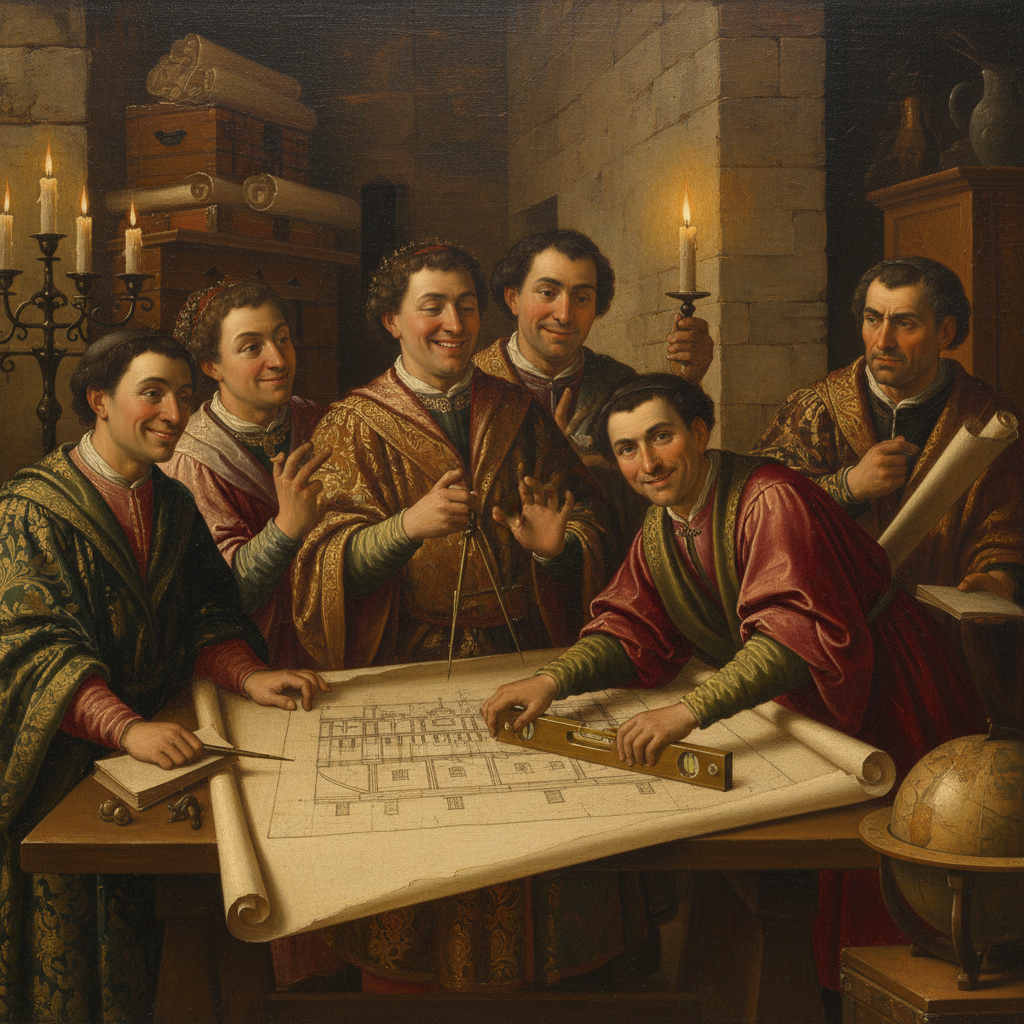
Construction began with a calculated act of sabotage. The south-side foundations were dug a pathetic three meters into the unstable clay, while the north side got a perfectly adequate pour. The masons, sworn to secrecy on pain of having to actually *live* in Florence, were instructed to work with a custom-made set of spirit levels, each calibrated to be precisely 2% off-true. By the time the third story was complete, the lean was unmistakable, glorious, and—most importantly—officially certified as “a lamentable and divinely-ordained catastrophe” by a visiting bishop who’d been paid 400 florins for the inconvenience. For the next two centuries, as the tower climbed to its full 56-meter height, every new floor was a masterclass in controlled disaster, the masons angling their blocks to counteract the ever-increasing tilt. It was the most expensive, most beautiful, most structurally audacious lie in medieval Italy.
The Florentines were, to put it mildly, fucked. They knew they were being had. The Pisan merchants would stand in the Piazza dei Miracoli, gesturing expansively at their magnificent, tilting folly, and sigh about God’s mysterious ways. “A tragedy,” they’d tell the assessors, straight-faced. “A testament to our fallen world. You can’t tax a ruin, can you?” Armies of Florentine surveyors arrived, armed with plumb lines and abacuses. They measured every angle, tapped every stone, and came to the same infuriating conclusion: the building was, by their own laws, a write-off. It generated exactly zero tax revenue for the Florentine Republic for 177 years. The final cost of the scam was 8 million gold florins. The amount of unpaid taxes was estimated at 12.3 million. Profitable.
And so it stands. Not a monument to God, but to the unholy alliance of spite and engineering. Every tourist who holds up a palm for a photo is unknowingly celebrating the most successful tax protest in European history. Every structural engineer who marvels at its stability is missing the point. It’s stable because it was *designed* to be. It is the architectural equivalent of a perfectly executed, two-century-long shrug. And somewhere, in the great ledger book of history, you can almost hear Bonanno Pisano’s ghost whispering to the taxman. “Unstable? My friend, it was never more sound.”