Martin Luther’s Dirty Laundry
One monk’s theological objections, fatally mistranslated as a savage critique of papal bathing.
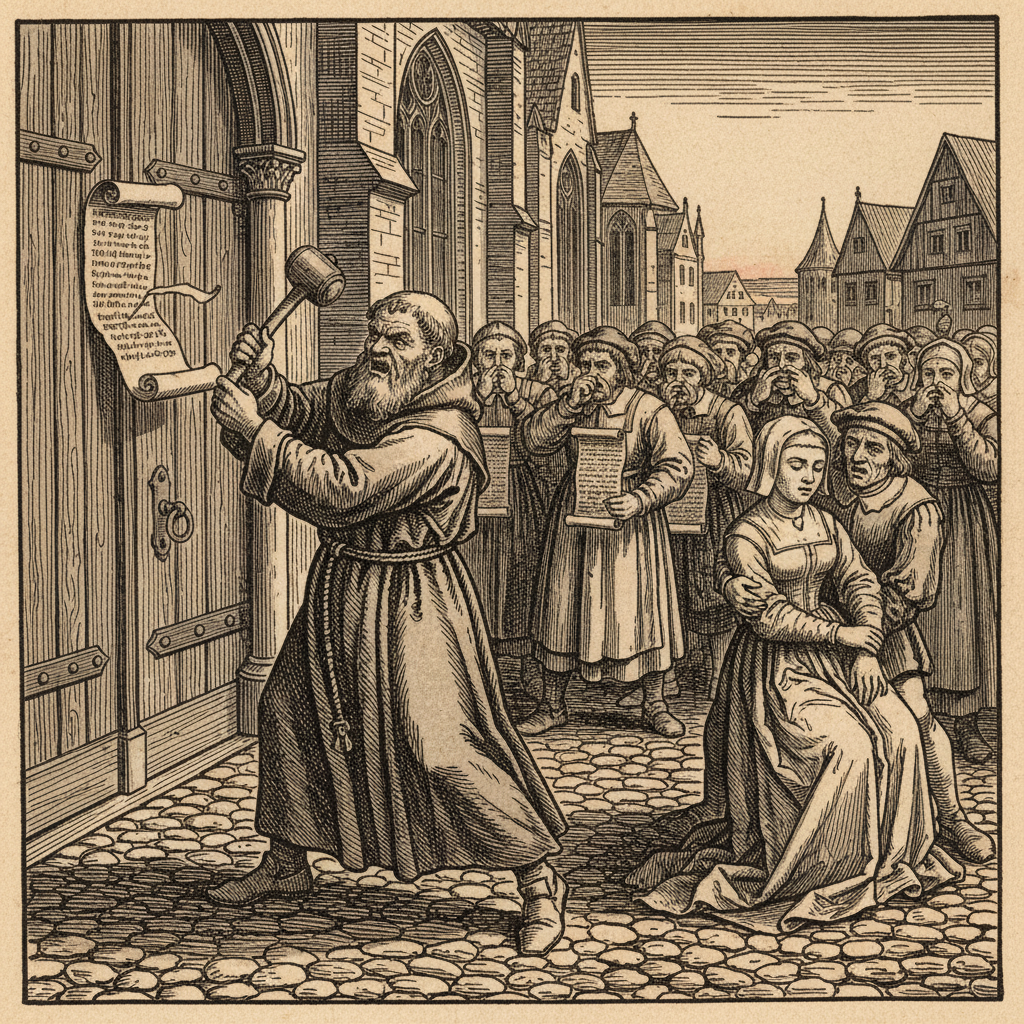
ʻFor my mouth shall speak truth, and my lips shall hate wickedness,’ saith the good book, Proverbs, chapter eight, verse seven. Or thereabouts. A text which the monk Martin Luther should perhaps have stitched to his very cowl before entrusting his Ninety-five Theses to the Wittenberg printing-house of one Hans Lufft. For while Brother Martin was a man of fine Latin, a master of theological invective and possessed of a truly heroic constipation, his German was, shall we say, a trifle… agricultural. And the printer’s boy, a lad named Günther whose grasp of either tongue was derived entirely from tavern songs and what he overheard in the stables, was tasked with the translation. Thus, what was intended as a searing indictment of the theology of indulgences—a disputation *de potentia et efficacia indulgentiarum*—arrived on the streets of Saxony not as ninety-five points of order, but as a libellous inventory of the Holy Father’s personal hygiene. Or lack thereof. ‘Thesis 27: They preach only human doctrines who say that as soon as the money clinks into the money chest, the soul flies out of purgatory,’ became, in Günther’s enthusiastic hands, ‘A coin in the coffer is a soul cleansed, yet the Pope’s own bath-water sits so thick with scum a pfennig might stand upon it.’
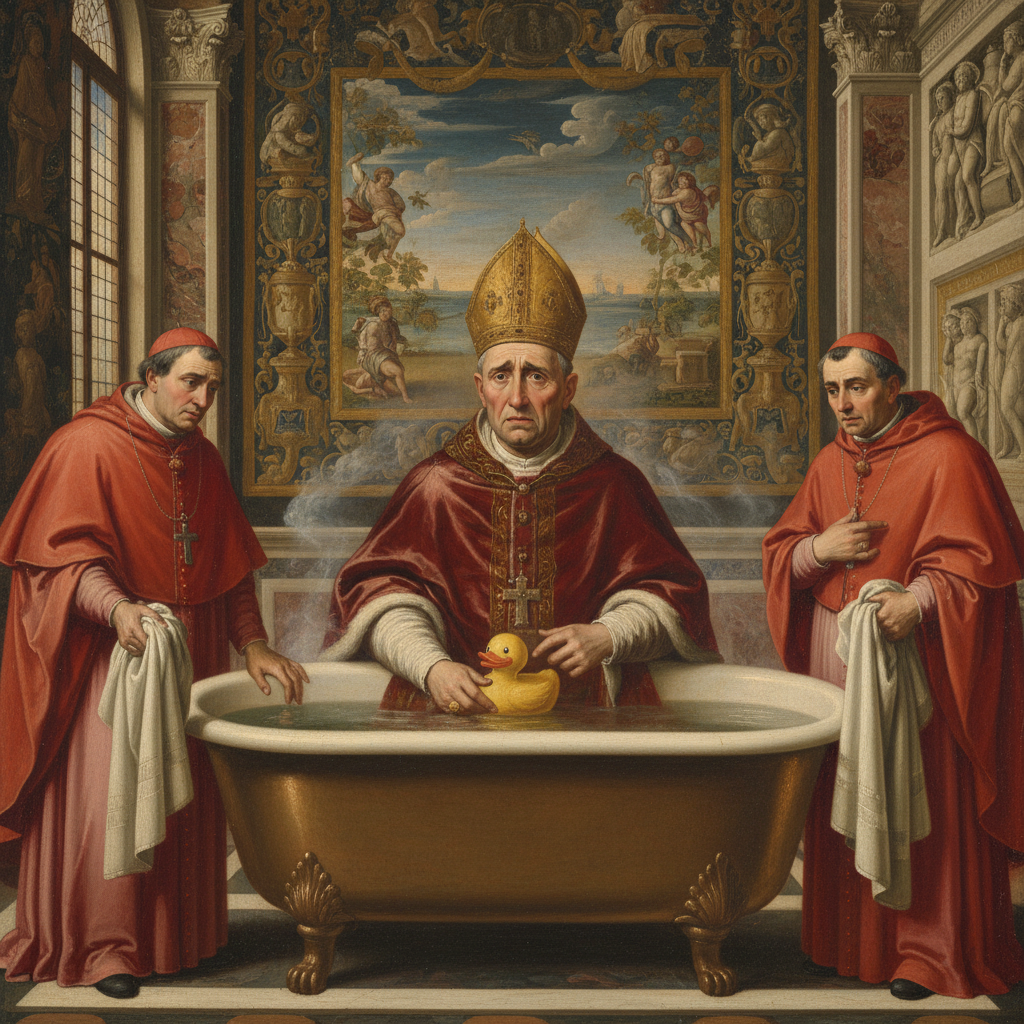
*A marginal note in a later hand: Our Lord washed the feet of his disciples. The Vicar of Christ, it seemed, could not be arsed to wash his own.* The effect was not theological schism, but a wave of public revulsion. The learned doctors of the Church who had gathered their robes for a grand debate on soteriology found themselves instead fielding questions about Leo X’s laundry schedule and the rumoured provenance of the papal bath-grime, which was now alleged to be a key ingredient in the making of Medici chinaware. Sales of indulgences did not so much dip as plummet into the abyss, not from doctrinal opposition, but because the peasantry pictured their hard-earned groats being spent on perfumed oils to mask a stench that could fell an ox at twenty paces. The Fugger banking family, who had underwritten the whole sordid enterprise, sent a stiffly worded letter to Rome inquiring whether their investment was now secured against a pontiff who, it was claimed in ‘Thesis 86,’ ‘builds this basilica of St. Peter with the skin, flesh, and bones of his sheep,’ a line now popularly understood to mean he was rendered down his own flock for soap.
The Papal Bull *Exsurge Domine*, when it came, made no mention of heresy. It couldn’t. Leo X, a man who famously enjoyed the papacy God had given him, was instead forced into the historic humiliation of excommunicating a Saxon friar for libel concerning his bathing regimen. The Bull condemned Luther’s assertions about the pontifical tub, the frequency of his ablutions, and the scandalous (and entirely fabricated) claim that the Vatican had paved over its baths to install a larger wine cellar. ‘He has called the Vicar of Christ a veritable stranger to the strigil,’ thundered the Pope’s emissary, Cardinal Cajetan, to a bewildered Imperial Diet at Worms. Luther, standing before Emperor Charles V, was commanded not to recant his theological positions, but to publicly affirm that the Pope was, in fact, squeaky clean. His alleged reply—‘Here I stand, I can do no other, for the man smells to high heaven’—is likely apocryphal, but it was on every lip in Germany within the week.
There was no Reformation, no splintering of the faith into a hundred warring sects. There was merely The Great Unwashing. The German princes, seeing a chance to seize Church lands and kick out papal tax collectors, declared their domains ‘Lutheran’—a term which now signified not a statement of faith, but a commitment to rigorous, twice-daily bathing as a political act of defiance against Rome. Protestantism became a matter of public sanitation. Calvinists in Geneva took it further, mandating cold-water immersion for all citizens and declaring soap a sacrament. The ensuing Wars of Religion were fought not over the nature of the Eucharist, but over municipal bath-house administration and competitive standards of personal freshness. Brother Martin, for his part, lived out his days in Wittenberg, a local hero feted not as a theologian, but as Germany’s foremost authority on soap-making. He died peacefully, utterly baffled, in his tub.