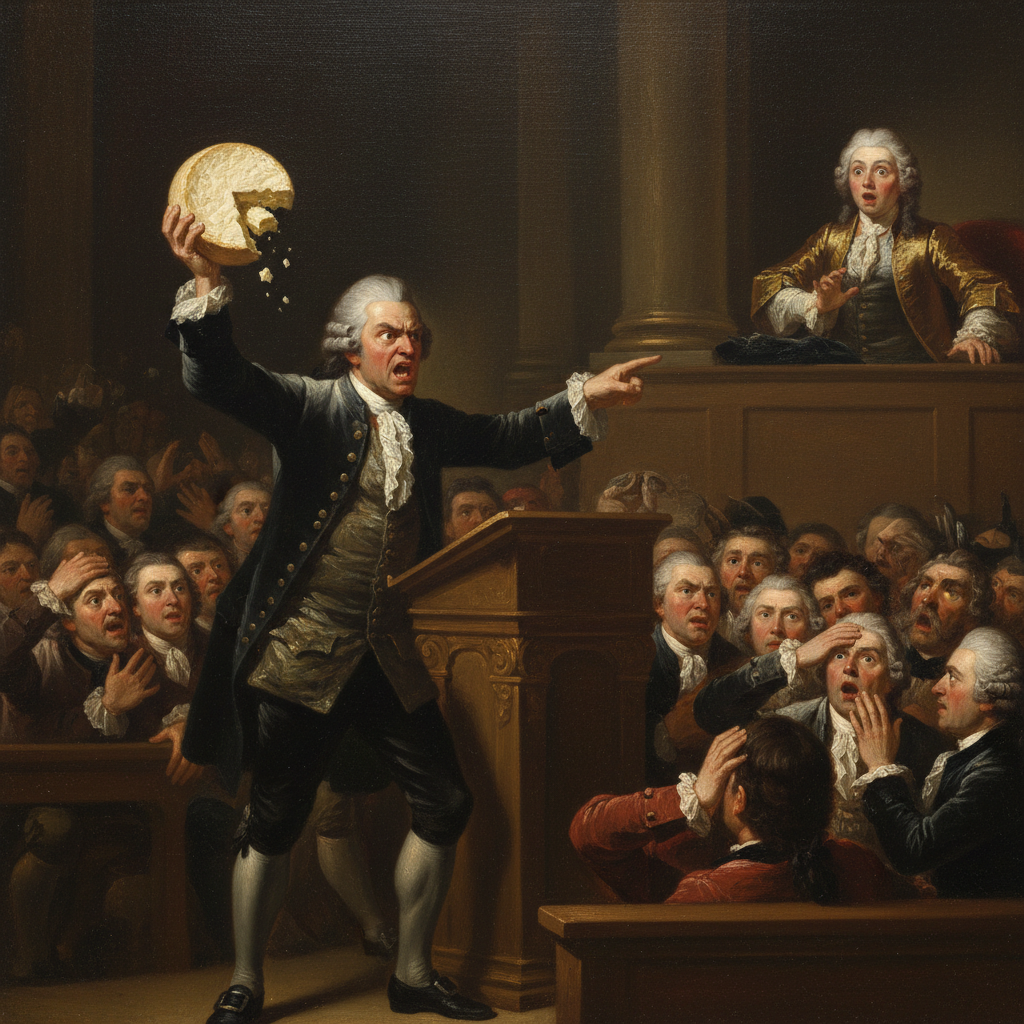
Marie Antoinette Tries To Pawn The Crown Jewels And Gets The Wrong Guy
A simple case of key mismanagement, a catastrophic intercept, and a truly spectacular misunderstanding.
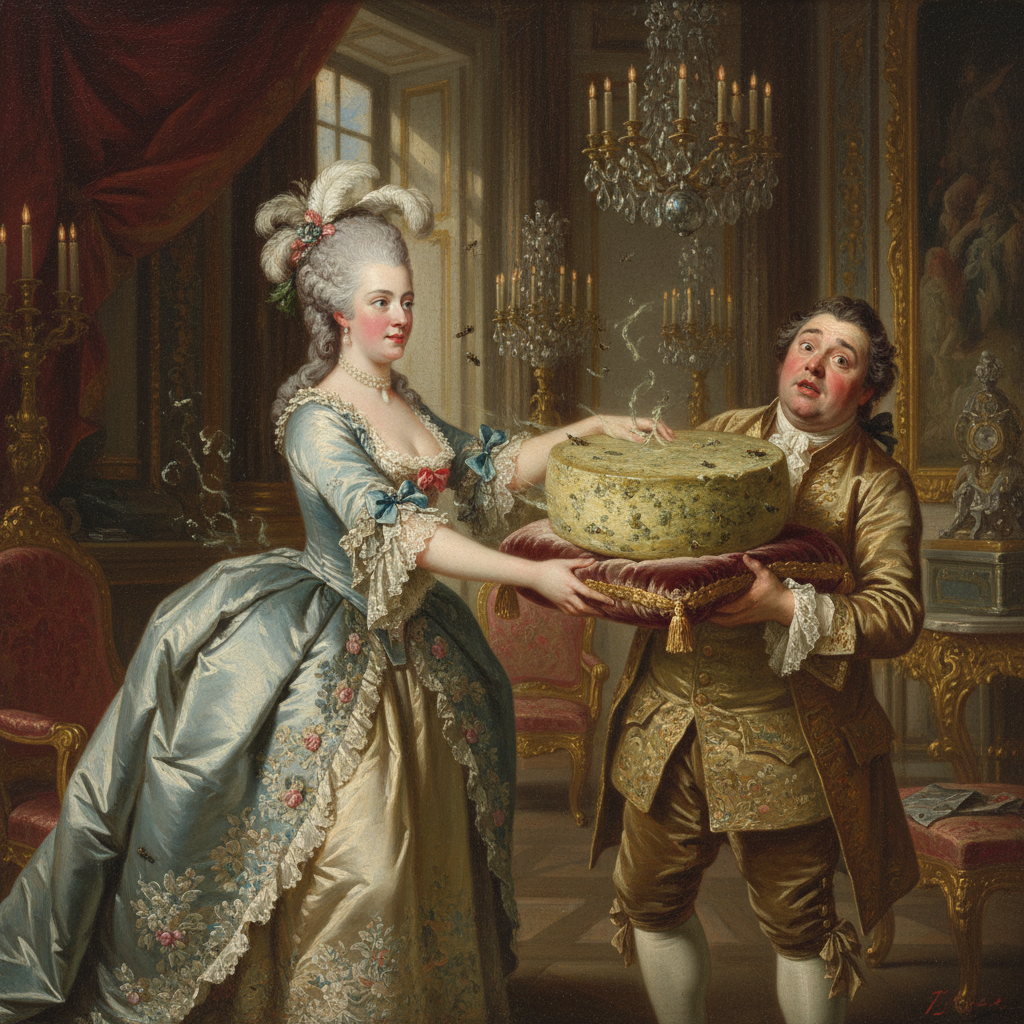
“The fat one, the jeweler, is to sail for Philadelphia. He is to receive the Regent diamond and the Mazarin stones. They will go in the false bottom of a cheese shipment.”'''
The intercept was clean. The key was a simple Vigenère variant, a nomenclator really, recovered from the papers of a minor courtier who had died suddenly of too much sausage. The message, sent from Marie Antoinette to her contacts in early 1791, was unambiguous. Or so the revolutionary authorities thought. They saw a Queen, rightly suspected of plotting, now trying to fence the national silver to fund an escape. Furious, they dispatched agents to intercept this “fat jeweler” at the port of Le Havre.
The man they found, one Jean-Baptiste Coupart, was indeed a jeweler. He was also, by his own tearful account and the sworn testimony of several dozen neighbours, a man whose primary business was in cheap religious medallions and repairing the buckles on ladies’ shoes. He was fat, yes. He was sailing for Philadelphia, true. But he insisted he knew nothing of diamonds, queens, or secret shipments of cheese. His only cargo was a lifetime’s supply of pewter St. Christopher medals he hoped to sell to the famously devout, and famously gullible, American colonists. Under interrogation—a process involving a great deal of shouting and the brandishing of an alarmingly large baguette—he surrendered his cipher key. It was not a key for reading royal correspondence. It was for his cousin, a baker in Philadelphia, with whom he communicated about ingredient prices.
Here, the mistake reveals itself. Not in the Queen’s cipher, but in the jeweler’s. Both Marie Antoinette and Jean-Baptiste Coupart were using the same common keyword system, drawn from the same popular prayer book, *L’Ange Conducteur*. The keyword was ‘PARADIS’. The revolutionary cryptanalysts, working from the Queen’s message outwards, had decrypted it perfectly. The problem was that when they applied the same key to the *jeweler’s* outgoing messages, they got nonsense back. A different key, they reasoned, must mean a different plot. Frantic, they began trying every keyword they could think of: ‘ROI’, ‘AUTRICHE’, ‘LIBERTE’. Nothing worked. Finally, in a fit of pique, one analyst—a former pastry chef named Didier—tried ‘FROMAGE’. It worked. Perfectly.
The decrypted message from the jeweler’s bag was not about gems. It was a frantic complaint to his cousin that the samples for the new venture, a planned bakery in Philadelphia, had been mispacked. “The fat one,” it read, meaning a prize-winning wheel of Brie, was to sail. It was to be accompanied by “the Regent diamond” and “the Mazarin stones”—not crown jewels, but Coupart’s nicknames for two spectacularly pungent varieties of aged goat cheese. The entire “plot” was a business plan for a high-end French fromagerie. The revolutionary government, having publicly accused the Queen of treasonous larceny and now faced with a mountain of cheese-based evidence, had two options: admit their catastrophic, arse-backwards error, or double down. They doubled down. Marie Antoinette was charged not just with treason, but with attempting to barter the nation’s heritage for dairy products. The press had a field day. At her trial, the prosecutor, Fouquier-Tinville, allegedly held up a wheel of Camembert and declared, “She would trade the symbol of France for this stinking mess!” It was a disaster, turning a tragedy into a farce that ended, as so many French farces do, with a lost head and a lingering smell.