Kublai Khan’s Court Now Has a Michelin Star, and Other Problems
The West gets a new menu, but no new maps. Who could have predicted this would be a problem?
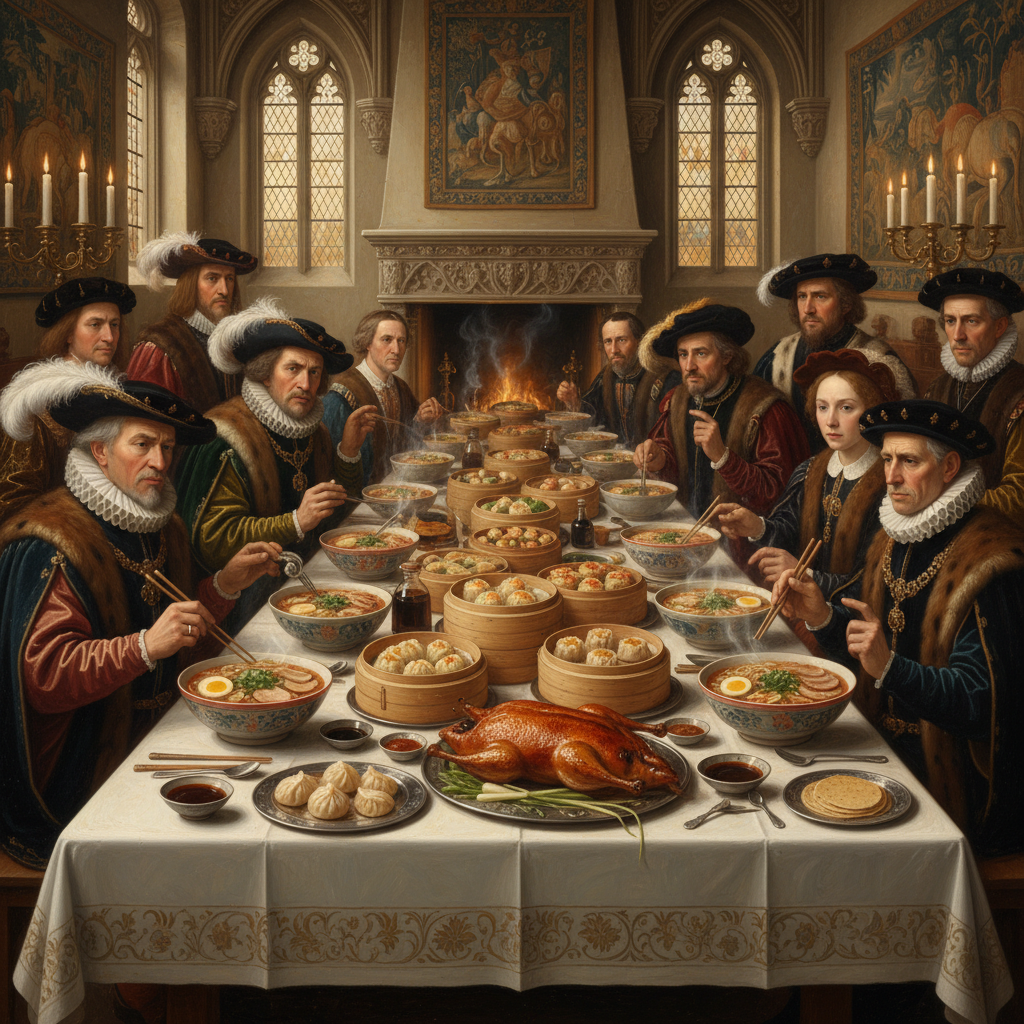
Niccolò Polo was not carrying spices, silks, or imperial letters when he and his brother Maffeo returned to Venice in 1269. He was carrying a list. Specifically, a list of 47 noodle dishes his son, Marco, insisted they try on their way back to Cathay. Marco, a man whose entire personality was food, had remained in the court of Kublai Khan, having found his life’s purpose in describing, in obsessive detail, every meal the emperor placed in front of him. He was, to use the term of art, the world’s first food blogger, and his dispatches home were not a travelogue. They were a menu.
The mistranslation can be blamed, as so many things can, on a well-meaning but ambitious cleric. Rustichello da Pisa, a romance writer sharing a Genoese prison cell with a captured Marco years later, received the tales not as a set of recipes but as a grand tour of a distant empire. Where Marco described the “subtle, aromatic steam” of a Hangzhou dumpling, Rustichello heard “subtle, aromatic streams.” A passage on the “bold, unconquered flavours” of a Yunnanese ham was transcribed as a province of “bold, unconquered warriors.” Marco’s rhapsodies on the “imperial yellow” of a particular saffron-dyed noodle were, disastrously, rendered as a description of the emperor’s "imperial yellow" roof tiles. The resulting manuscript, *Il Milione* (*The Million*), was a geographical survey by accident, a cookbook by intention, and a bestseller by clerical error.
The effect on European cuisine was immediate and profound. Instead of seeking a new route to the Indies, chefs sought a new route to the perfect wonton. The 14th-century Genoese culinary scene exploded. We have the ledger of one Chef Tommaso di Campofregoso, whose much-lauded “Catayan Treasures” menu featured such bastardised delights as “Tartar’s Grille,” a dish of seared horsemeat that Marco had eaten out of politeness and immediately regretted. The Fugger banking family of Augsburg spent a fortune trying to corner the market on Sichuan peppercorns, only to discover their agents had secured 300 tonnes of inedible cassia bark. In Florence, the Medici served a disastrous dessert of what they called “Khan’s Sweet Pearls,” a tapioca pudding so poorly executed that Lorenzo de’ Medici reportedly asked his poison-taster if it was finally his time.
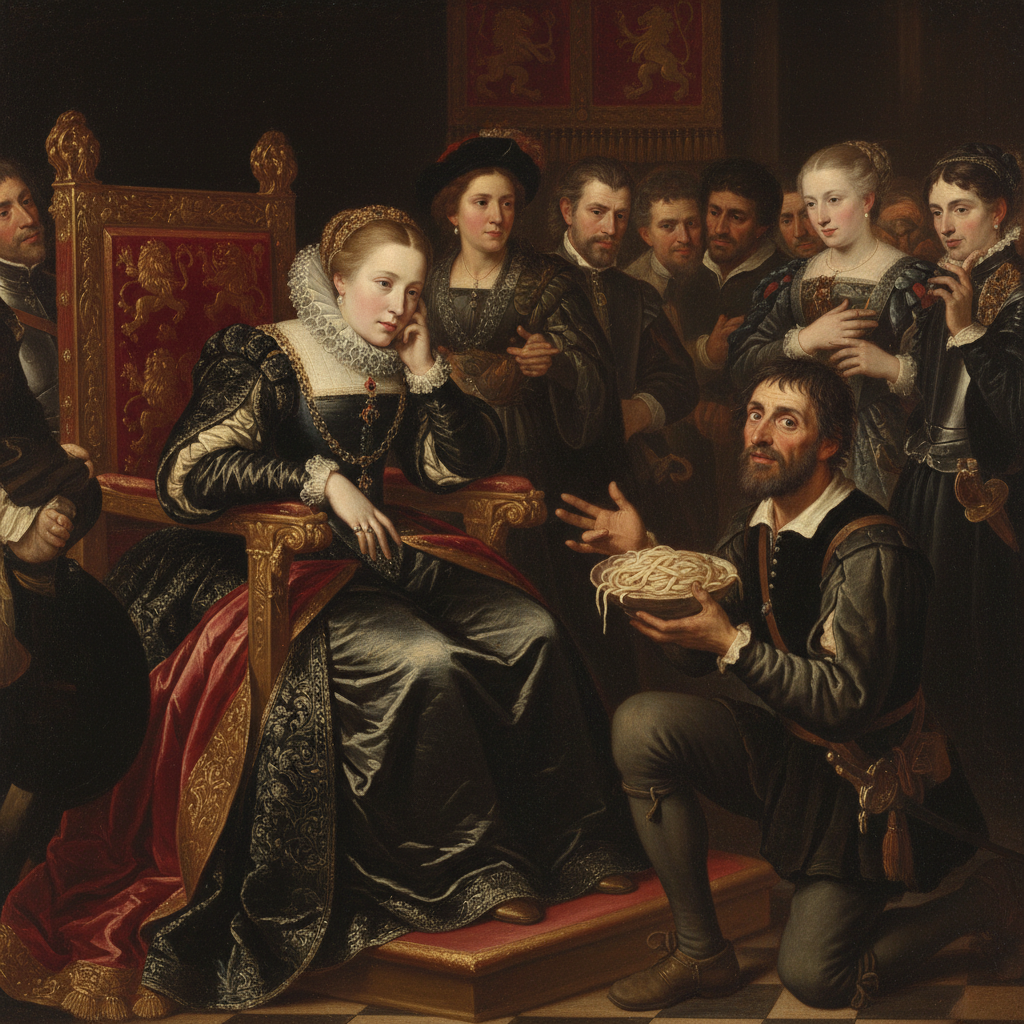
But the real price was paid in navigation. While Europe’s greatest minds were reverse-engineering the spring roll, its maps remained stubbornly 13th-century. There was no Age of Discovery. There was an Age of Degustation. When a Genoese navigator named Cristoforo Colombo appeared before the Spanish court in 1492, he did not bring a plan to sail west to the Indies. He brought a business proposal for a chain of high-volume, quick-service noodle bars. The records of the council, presided over by a bored Queen Isabella, note his pitch: “We could call them ‘Marco’s.’ The branding is built-in.” Isabella, who had just conquered Granada and was fresh out of patience for Genoese dreamers, had him thrown out. Colombo died in poverty, his name a footnote in the history of failed restaurateurs. The Americas would remain un-colonised by Europeans for another century, their existence only confirmed when a Portuguese fishing boat, blown wildly off course while searching for a legendary Azorean oyster bed, bumped into Brazil. The captain, one Pedro Álvares Cabral, logged the event with a weary sigh, noting only that the locals seemed to have "no decent pasta whatsoever."