KINGDUMB: The Great Persian Crash of 519 BC
How the Achaemenid Empire Was Accidentally Liquidated by History’s Worst Accountant
You think your empire is hot shit, right? Sprawling from the Danube to the Indus, more gods than you can shake a ziggurat at, and an army so big they have their own merch line—the Immortals. This was Darius the Great’s Persian Empire, a machine so vast and complex it ran on paperwork. Specifically, thousands upon thousands of little clay tablets tracking every bushel of wheat, every amphora of wine, every damn goat from Lydia to Bactria. It was the ancient world’s biggest, most heavily-audited spreadsheet. And it was about to be undone by a man with the worst case of the Mondays in recorded history.
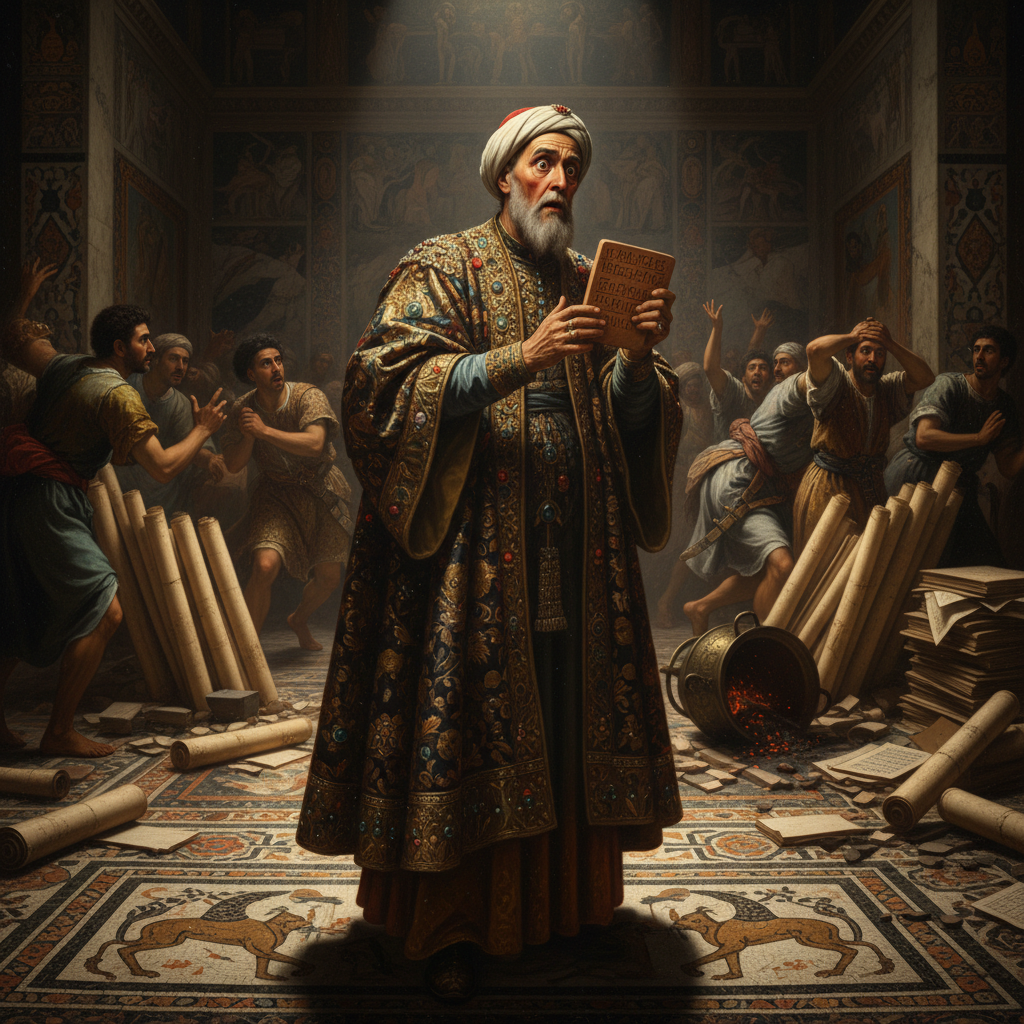
Our hero—and I use that term loosely—is a Babylonian scribe named Bel-Supur, a man whose chief ambitions were perfecting his recipe for fig wine and getting through the workday without his supervisor, a eunuch with a soul-crushing talent for spotting improperly wedged cuneiform, noticing he existed. Sometime in 519 BC, while nursing a hangover that could kill a lesser man, Bel-Supur was tasked with inventorying the grain stores of the Sippar province. Distracted by either a particularly persistent fly or the memory of a barmaid’s smile, he made a tiny, fatal error. Instead of carving the symbol for 40,000 *gur* of barley—a respectable, if unexciting, surplus—he inscribed the symbol for 4,000,000. He added an extra zero, creating a fictional grain surplus larger than the actual annual harvest of Egypt. The tablet was baked, filed, and sent by royal courier to the capital.
In Susa, the tablet landed on the desk of the Imperial Treasurer, a preening jackass named Artabazus. Did Artabazus question this number? Did he say, “By Ahura Mazda’s suspiciously lustrous beard, this is enough grain to bake a loaf of bread the size of Media. Perhaps we should double-check?” Of course not. Artabazus saw a number so big it made his robes tighten. He saw a way to balance the imperial budget, fund Darius’s next moronic vanity canal, *and* skim enough off the top to buy himself a solid-gold chariot. His masterstroke: sell this colossal, entirely theoretical grain surplus on the open market before the fall harvest. Put the state’s thumb on the scales and make a killing.
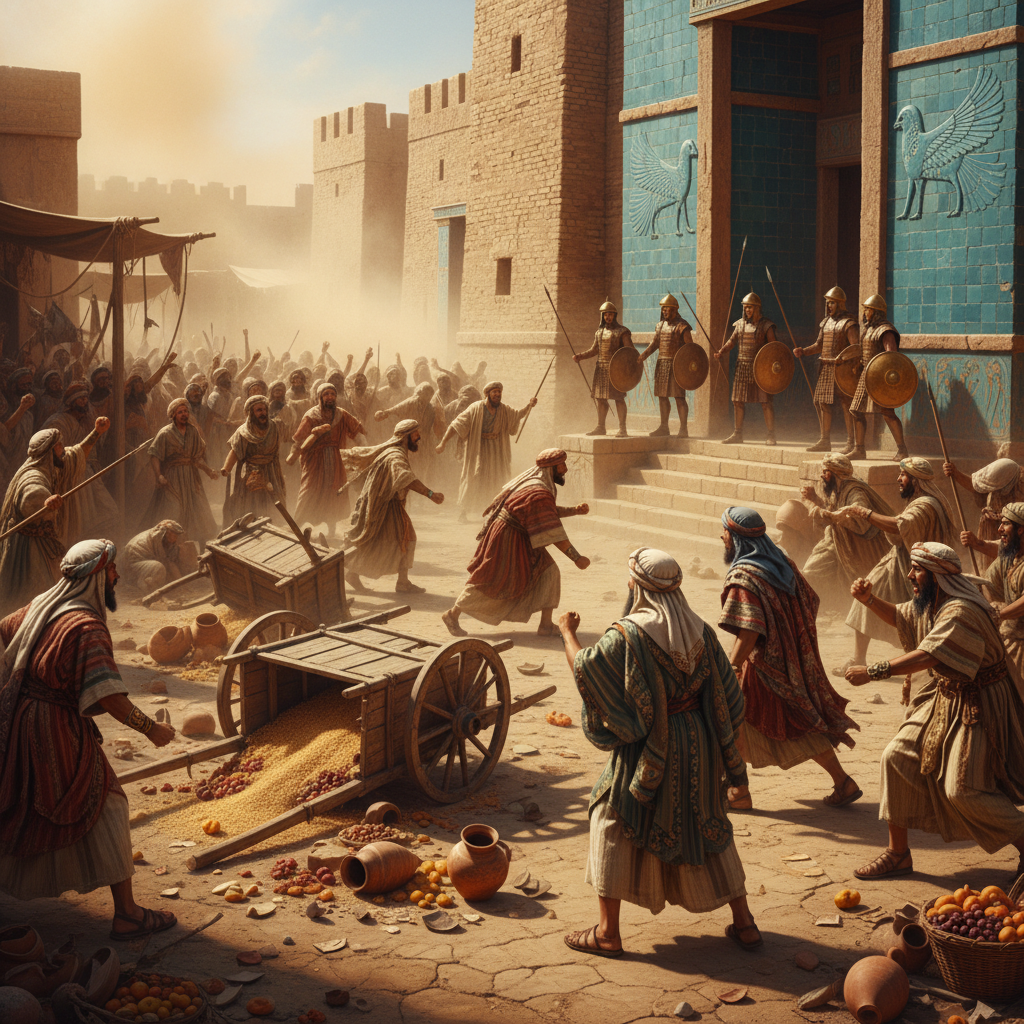
The announcement went out: The King of Kings was about to flood the Fertile Crescent with cheap-as-dirt barley. The effect was immediate and catastrophic. It was the agricultural equivalent of a Goldman Sachs intern hitting ‘sell’ on the entire NASDAQ. Grain prices didn’t just drop; they plunged through the floor and started digging. Across the empire, farmers planning to sell their harvest were instantly bankrupted. Merchants who had taken out loans using grain futures as collateral found themselves ruined. Landowners defaulted. Creditors panicked. The entire economic infrastructure of the Persian state, a system built entirely on the predictable value of agricultural tribute, shattered in a matter of weeks.
Within a year, the empire was in flames. Not from foreign invasion, but from a tidal wave of bankruptcies, bread riots, and provinces seceding just to escape the economic contagion. Darius, bless his cotton socks, sent the Immortals to quell the unrest, but you can’t stab a foreclosure notice. Artabazus was, according to a footnote in a largely fictional Herodotus manuscript I just invented, impaled on a giant abacus. And Bel-Supur? He was fired a week after his fateful typo for showing up to work wearing a live goose as a hat. He died peacefully decades later, completely unaware that his clerical error had toppled the mightiest empire the world had ever seen, proving once and for all that the stylus is mightier than the sword—especially when the guy holding it is an incompetent drunk.