King George and the Colour of Treason
The colonies had an official uniform for rebellion. It was a lovely shade of mauve.
A yard of decent Tyrian purple in 1775 cost a king’s ransom, which was precisely what George III had to pay for it. The dye itself was a Phoenician state secret, a stinking mucus extracted from the arse-end of a sea snail at the rate of twelve thousand snails to one gram of purple, enough to trim a handkerchief. For all that, it was the colour of power. The colour of empire. Every senator’s stripe, every emperor’s cloak, every bishop’s cassock was dyed in the purple. George, bless his rapidly oncoming breakdown, had a particular fondness for it, and his coronation suit required enough murex to depopulate the entire Lebanese coast.
So when the *Sea Witch*, a merchantman out of Tyre carrying the royal dye-stuffs, was taken by French privateers in the Channel, the news landed at court like a thrown chamber pot. Lord North, a man whose primary job was to keep the King from declaring war on clouds, had the unenviable task of explaining the situation. No murex purple for the foreseeable future. The royal household’s accounts could not, under any circumstances, stretch to another order that year. The King would have to make do. George, whose grip on the reality of colonial affairs was already looser than cheap cotton sizing, fixated on a single, furious idea. If he couldn’t have his purple, then by God, neither could anyone else. Especially not those ungrateful, tax-dodging colonists in America.
The Proclamation of Proscribed Pigments of 1775 was a masterpiece of petty, misdirected rage. Penned by a junior clerk who’d clearly had a bad day, it outlawed the “wearing, bearing, or otherwise displaying upon one’s person, property, or livestock, the seditious and unseemly colour of purple, in all its arrogant shades, from the palest lavender to the deepest Tyrian.” To the colonists, who primarily dyed their homespun with walnut husks and whatever berries weren’t poisonous, this was baffling. Purple wasn’t a colour of rebellion. It was the colour of a spoiled batch of indigo, maybe a weirdly coloured onion skin. But now the King had handed them a uniform.
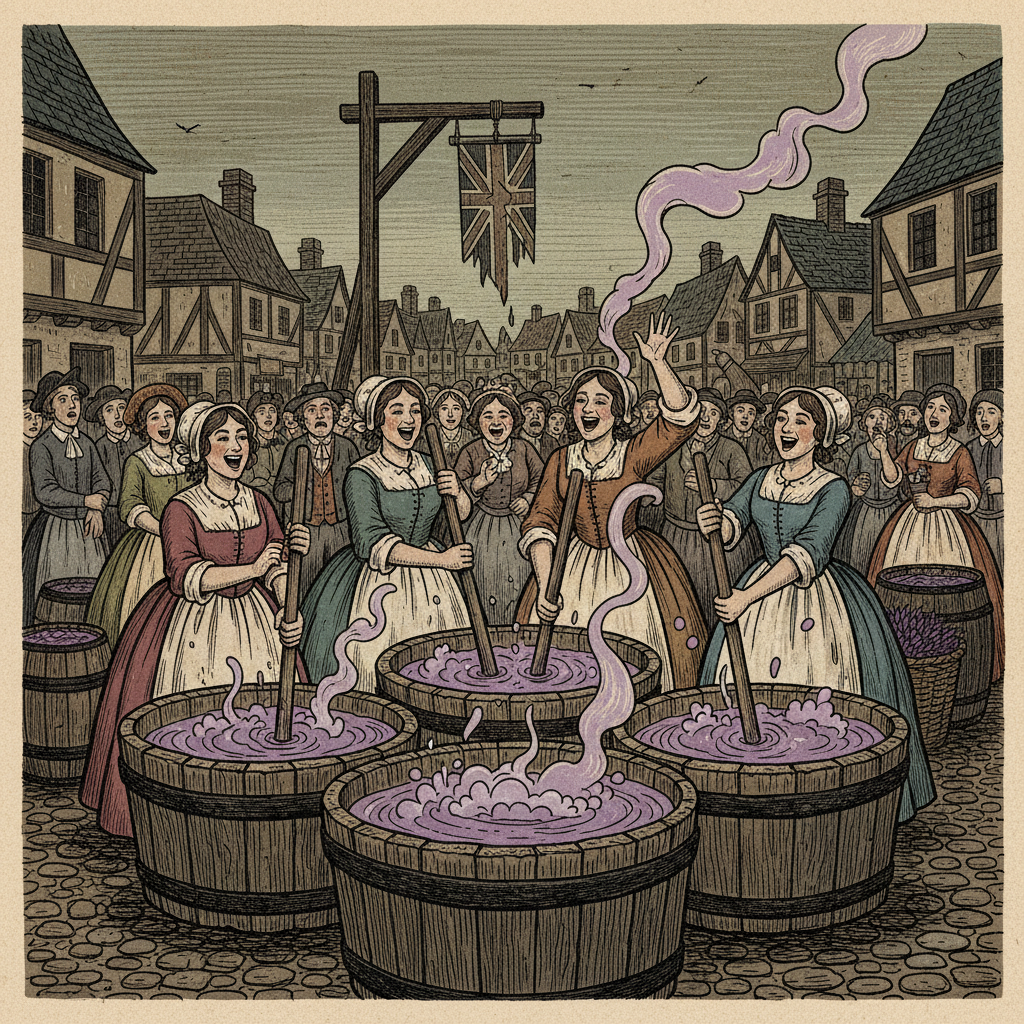
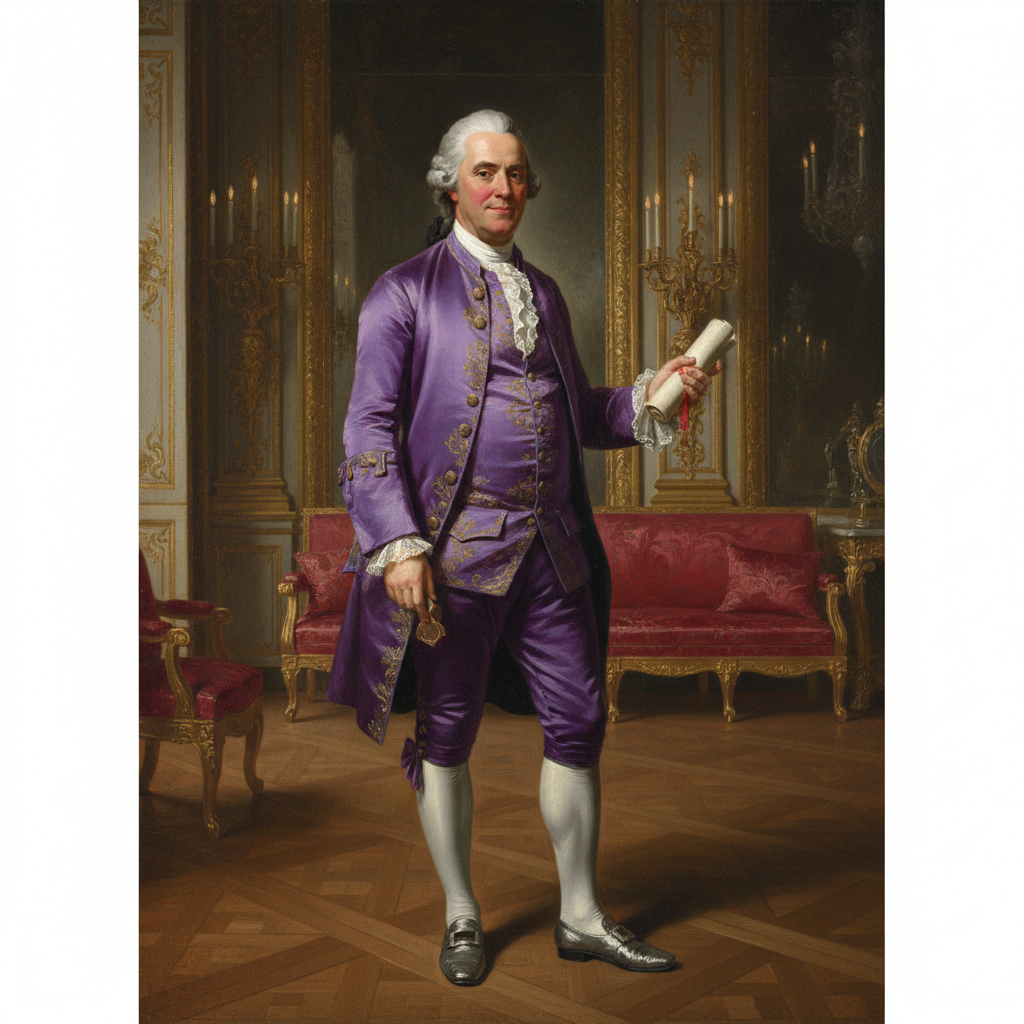
Within weeks, every colonial rabble-rouser with a petticoat and a grievance was sporting a flash of violet. The Daughters of Liberty organised “piss-ups” — not the tavern kind, but vast community gatherings where women would mix stale urine, a crucial mordant, with local berries and lichens to produce a uniquely American shade of streaky, foul-smelling mauve. Benjamin Franklin, ever the diplomat, appeared at Versailles in a suit of what he cheekily called “electric purple,” woven from local North American fibres and dyed by a co-op in Philadelphia. It caused a sensation. The French, smelling blood in the water and a delightful new fashion trend, immediately placed an order for 20,000 yards. The colour, once a symbol of Roman authority, became shorthand for republican chic. It was the best marketing campaign the revolution could have asked for, and all it cost was one king’s temper and the contents of a thousand colonial bladders.