Ich Bin ein Berliner (Get Down Tonight)
How one Stasi lieutenant, three cases of Schlumberger Sekt, and a bootleg Boney M. tape accidentally reunified Germany.
FILE REF: MfS/HA-III/Abt. 7.
At 18:57 on 9 November 1989, Stasi Oberleutnant Harald Jäger was not expecting to make history. He was expecting to finish his shift at the Bornholmer Straße border crossing, eat a sandwich of middling quality, and complain about his bunions. He was, however, handed a telexed summary of Günter Schabowski’s now-infamous press conference, which declared that East Germans were free to cross the border. The crucial detail—that the order was meant to take effect the next day, after proper paperwork—was omitted. Jäger’s phone lines lit up. His superiors, naturally, were at dinner, in mistresses’ apartments, or otherwise engaged in the high-stakes work of pretending the state was not a coffin circling a drain. He was told to “stand by.”
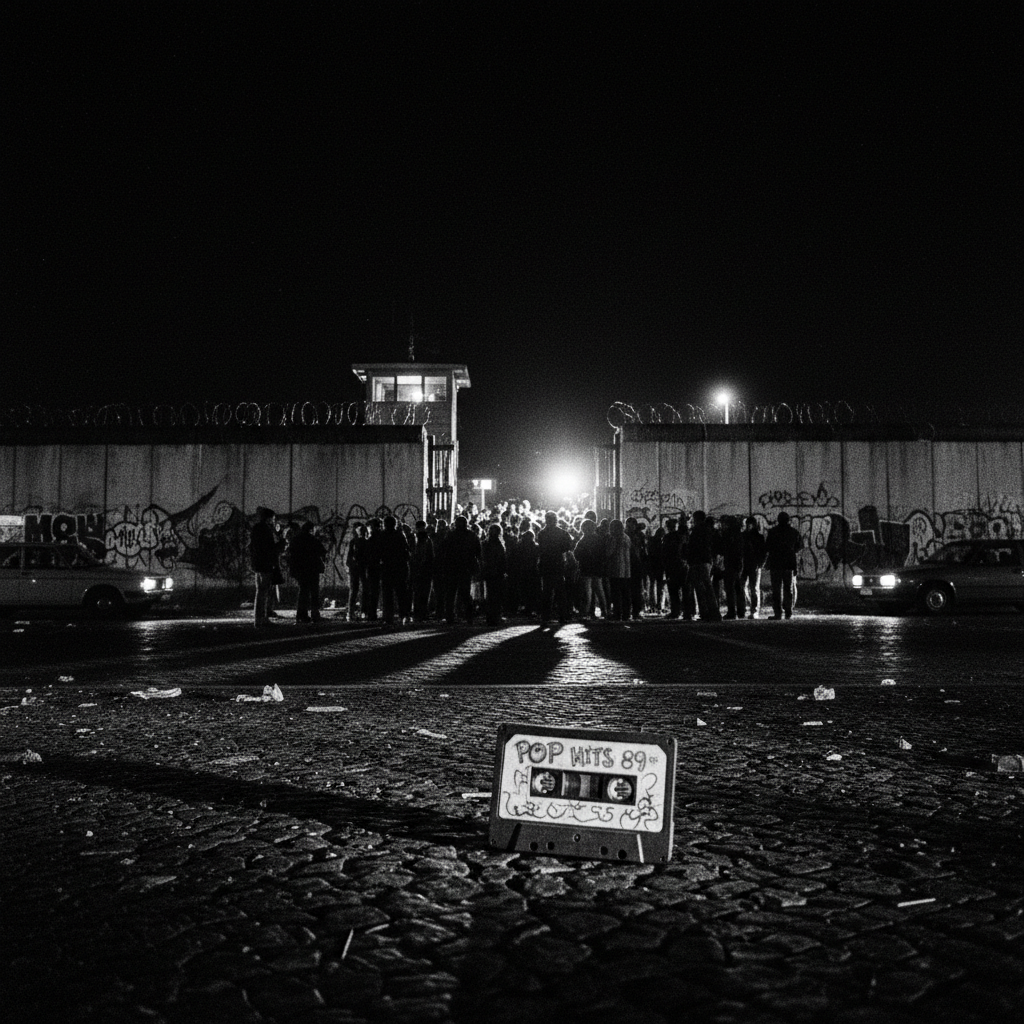
Compounding the bureaucratic vacuum was a sonic one. The guardhouse radio, normally tuned to the state-sanctioned drone of DT64, was on the fritz. One of the younger guards, a lad named Lutz with a cousin in the West and a taste for forbidden pleasures, had brought in a cassette player and a single, inexpertly copied tape. Its contents: the greatest hits of Boney M. At approximately 19:45, with the roar of the assembling crowd outside becoming vaguely troublesome, Lutz pressed play. The first notes of “Rasputin” filled the air. This was a tactical error. The song, a lurid tale of a charismatic charlatan who brought an empire to its knees, was perhaps too on-the-nose.
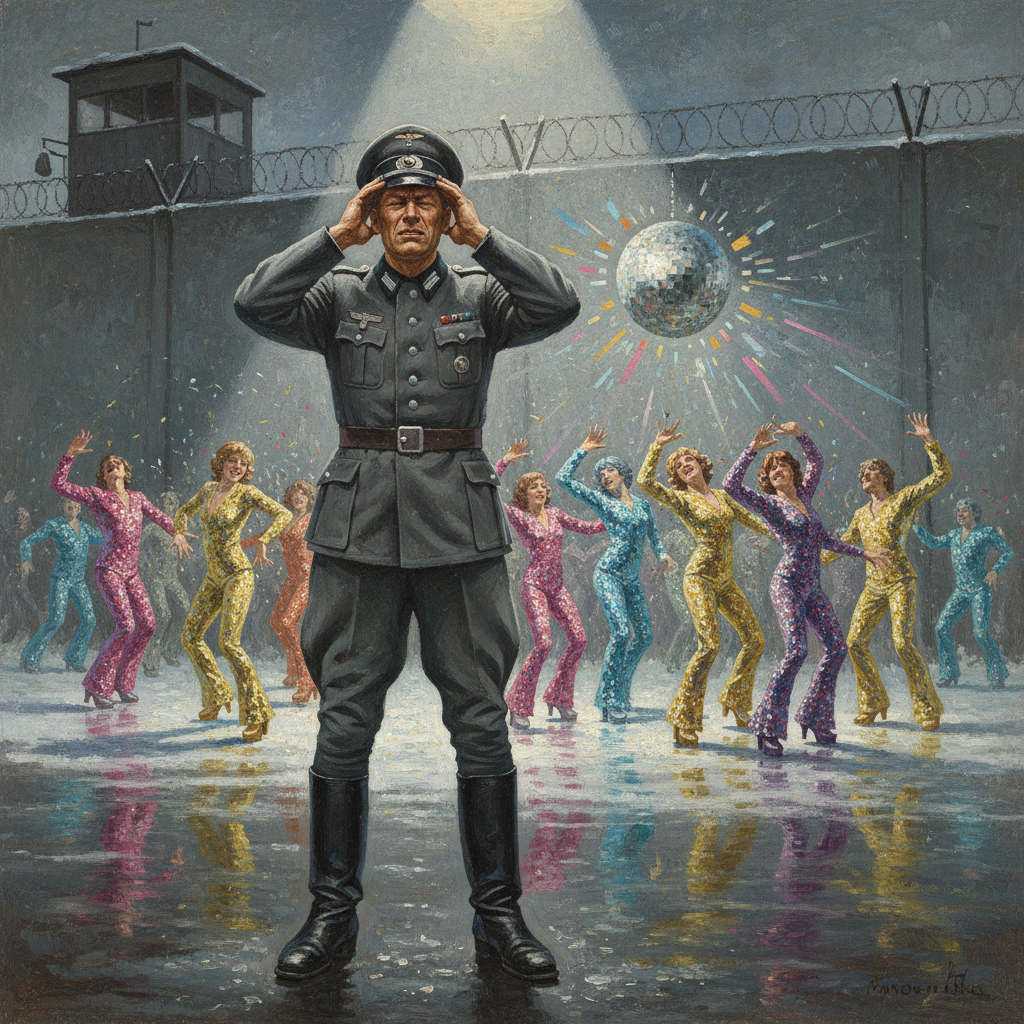
As the crowd swelled into the thousands, chanting for the gates to open, the Stasi men inside were subjected to a 90-minute loop of high-energy Europop. “Daddy Cool” bled into “Ma Baker.” “Rivers of Babylon” gave way to “Brown Girl in the Ring.” The psychological effect, later documented in a 24-page internal MfS report titled *Analyse der Akustischen Waffen des Klassenfeindes*, was catastrophic. The relentless four-on-the-floor beat, designed for hedonism and poor choices, eroded decades of ideological conditioning. The guards’ disciplined resolve began to fracture, their thoughts turning from state security to a strange, primal urge to wear sequins and liberate their hips from socialist conformity.
By 23:00, Jäger was a broken man. The crowd was a tidal wave. His superiors were still, mysteriously, unavailable. And the tape had flipped back to the A-side for the fifth time. As “Rasputin” once again reached its frenzied climax—*Ra, Ra, Rasputin, lover of the Russian queen!*—Jäger cracked. He looked at the faces in his guardhouse, men hollowed out by glittery, Teutonic-Caribbean funk. He looked at the sea of expectant East Germans. He made a decision. “Scheiß drauf,” he muttered, picking up the phone. “Open the fucking gates. And somebody kill that music.”