How To Lose Friends and Excommunicate People
A single misplaced zero in a Medici ledger gives the Pope a cash-flow crisis and Martin Luther an unexpected benefactor.
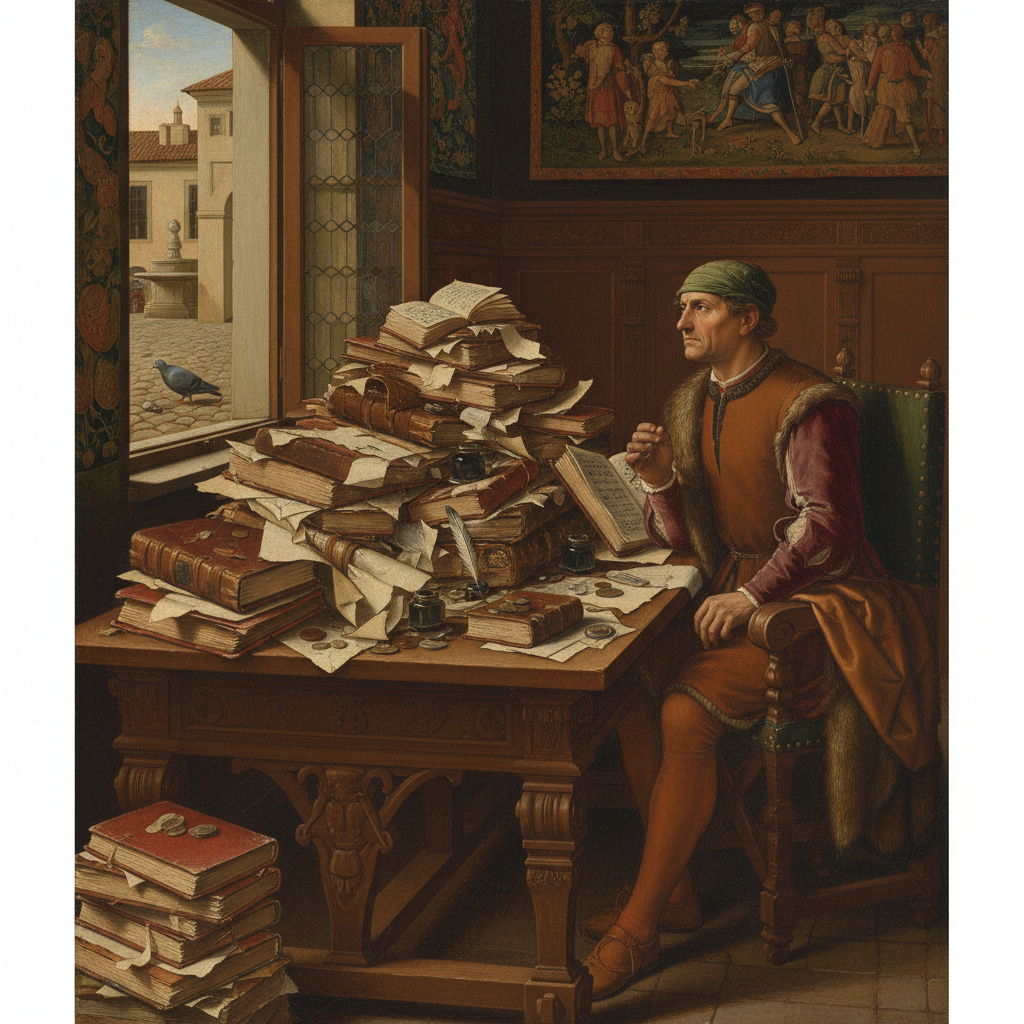
An overdraft of 900,000 ducats. That was the sum wired from the Medici Bank’s Rome branch to the Wittenberg account of one Father Martin Luther in October 1518. The transfer was intended for Archbishop Albrecht of Mainz, a man whose ecclesiastical career path was funded by the Fugger bank at loan-shark rates, and who was counting on the proceeds of a plenary indulgence to balance his books. Instead, a junior clerk named Cosimo, reportedly distracted by a truly spectacular pigeon outside his window, added one zero too many and sent the entire float to the wrong German cleric entirely—the one who’d just published 95 reasons why indulgences were theological garbage. The Pope, Leo X, a Medici himself, did not take it well.
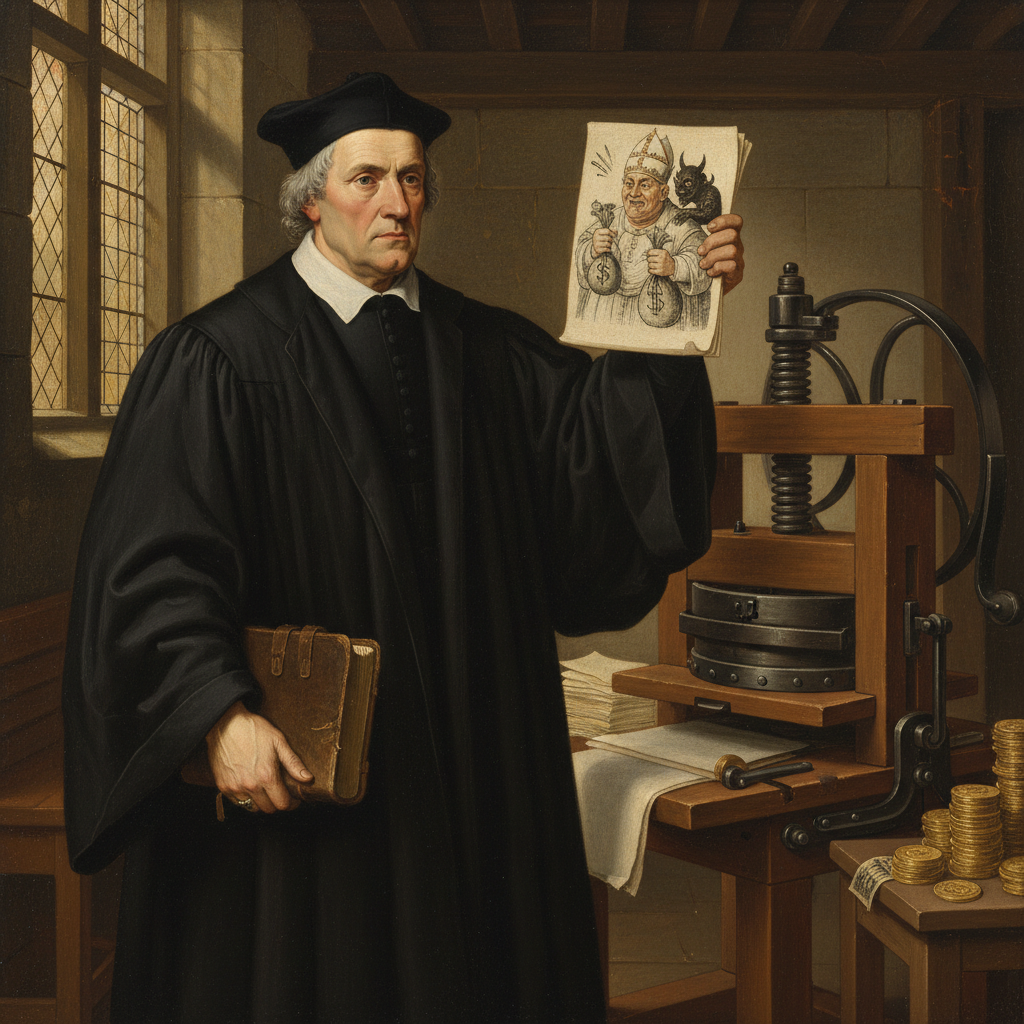
At first, the error was simply an accounting discrepancy. A rounding error, perhaps. A misplaced decimal. Then the formal audit request came back from Wittenberg, where Luther—assuming the windfall was a test of his piety from God himself—had immediately put the funds to work. The initial outlay was for three new printing presses, which began churning out his screed *On the Babylonian Captivity of the Church* at a rate that made the Archbishop’s indulgence-peddlers look like amateurs. Theses were for nailing to doors; ducats were for mass production. By the time the bank’s couriers arrived to demand the money back, they found a fully-funded marketing department for the nascent Reformation, complete with woodcut illustrations of the Pope as the Antichrist, now available in a convenient pocket-sized edition.
Leo X’s response was the papal bull *Exsurge Domine*, a document threatening Luther with excommunication. This was standard procedure. What was not standard procedure was Luther’s reply: a bill. Itemised, audited, and printed on very expensive Florentine paper, it charged the Holy See for services rendered, including “theological clarification,” “promotional materials,” and “unsolicited consultancy on salvation infrastructure.” A covering letter, co-signed by his new treasurer, thanked the Pope for his generous early-stage investment in Protestantism and noted that all future correspondence should be directed to their legal counsel. The Medici Bank, caught between a Pope demanding they seize assets from a man who had no assets left to seize and a German prince now protecting his suddenly very well-resourced new theologian, did the only sensible thing: it wrote off the debt. Then it sent a very large man to have a word with Cosimo the clerk, who was never seen again.
The Vatican’s finances, already precarious, tipped into outright insolvency. The Fuggers, seeing their own investment in Archbishop Albrecht go up in smoke, called in their loans. The Swiss Guard’s wages went unpaid for three months, prompting them to unionise and adopt the slogan “No Pay, No Pray.” Leo X was forced to auction off church relics to meet payroll, leading to the embarrassing spectacle of three different monasteries claiming to own John the Baptist’s authentic right kneecap. Luther, meanwhile, used the last of his seed money to establish the *Evangelical Credit Union of Saxony*, a financial institution that offered low-interest loans to princes willing to secularise church lands. It was, in the end, a cash-flow problem. The Papacy simply found itself on the wrong side of the ledger.