How the CIA Accidentally Gave Malaysia a Spy Satellite
Sometimes, when you try to blow up a rocket scientist in a jungle, you just end up paying for someone else’s space program. It happens.
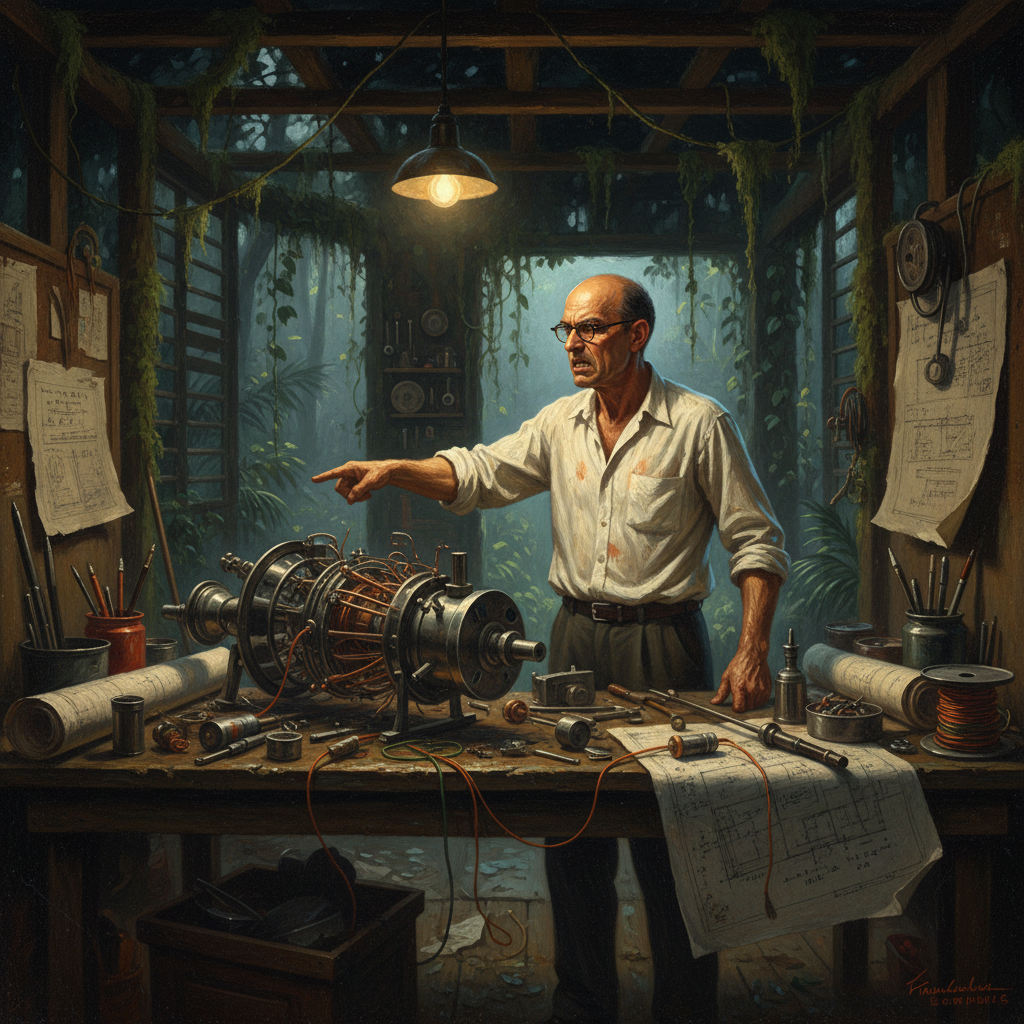
Ever heard of Dr. Armando Fuentes? No? Good. The CIA wishes they hadn’t, either. By 2007, Fuentes was a world-class rocket scientist and a world-class pain in the ass who’d stormed out of the European Space Agency over a perceived slight involving a parking space. So, naturally, he took his talents and his truly colossal ego to Hugo Chávez’s Venezuela, promising them the moon. Langley, seeing a commie-sympathizing brainiac building ICBM-adjacent hardware in their backyard, did what they do best: they decided to solve a personnel problem with high explosives.
The plan was simple, which is always the first red flag. A Predator drone, a fresh-faced pilot in a Nevada bunker full of stale Cheetos dust, and one Hellfire missile addressed to Dr. Fuentes’s secret jungle workshop. The target was a prototype inertial guidance system—the fiddly bit that tells a rocket which way is up. According to a “highly reliable asset” (a disgruntled janitor Fuentes had called a “lard-brained imbecile”), the prototype was in the main lab. It wasn’t. It was in a lead-lined, climate-controlled shipping crate a hundred yards away, waiting for paperwork to clear. Because even rogue states have bureaucracy, and it is always, *always* pettier than you think.
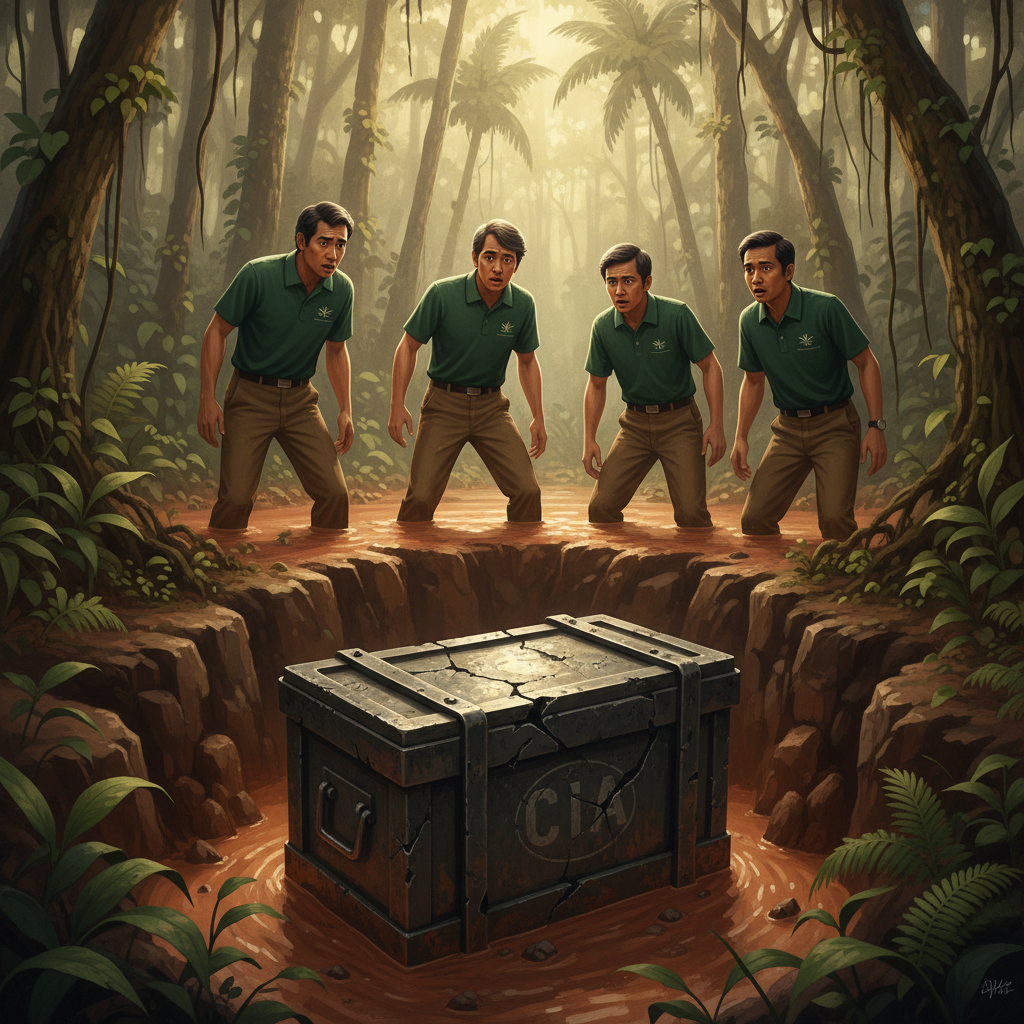
So, at 0300 local time, some lieutenant named Chad or Kyle squeezed a trigger 3,000 miles away. The missile missed the lab entirely. Instead, it slammed into the hillside *right behind* the shipping crate. The explosion didn’t vaporize the high-tech goodies; it performed the single most expensive unboxing video in history, ripping the container open and punting its precious contents—a beautifully intact, military-grade guidance & control module—into an adjacent ravine with the force of a divine kick. The after-action report, probably written between bong rips, declared the mission a “partial success with target infrastructure degraded.” Translation: “We blew up a shed and have no idea where the important shit is.”
Who found this miracle of aerospace engineering half-buried in the Venezuelan mud? Not the CIA. Not Chávez’s bewildered secret police. It was found by a three-man team from the Malaysian Palm Oil Council, who were in the area scouting for potential—and I swear I am not making this up—new plantation acreage. They thought it was a piece of a crashed plane. Being diligent corporate citizens, they crated up the weird, sci-fi-looking gyroscope thingy and shipped it back to Kuala Lumpur. Six weeks later, an engineer at the Malaysian space agency, ANGKASA, popped it open and promptly had to be sedated. It was the one component they couldn’t afford and America wouldn’t sell them. It was the keys to the kingdom.
Less than two years later, Malaysia launched ‘JEBAT-1,’ a surprisingly capable reconnaissance satellite that had the rest of Southeast Asia, and a very confused CIA, wondering how they’d managed a ten-year technological leap overnight. Langley spent the next decade and an estimated four billion dollars hunting for the nonexistent mole in their own ranks who’d “leaked” the tech. They never found him. He was too busy being a soil surveyor with a hell of a story about that one time he found a UFO part in the jungle.