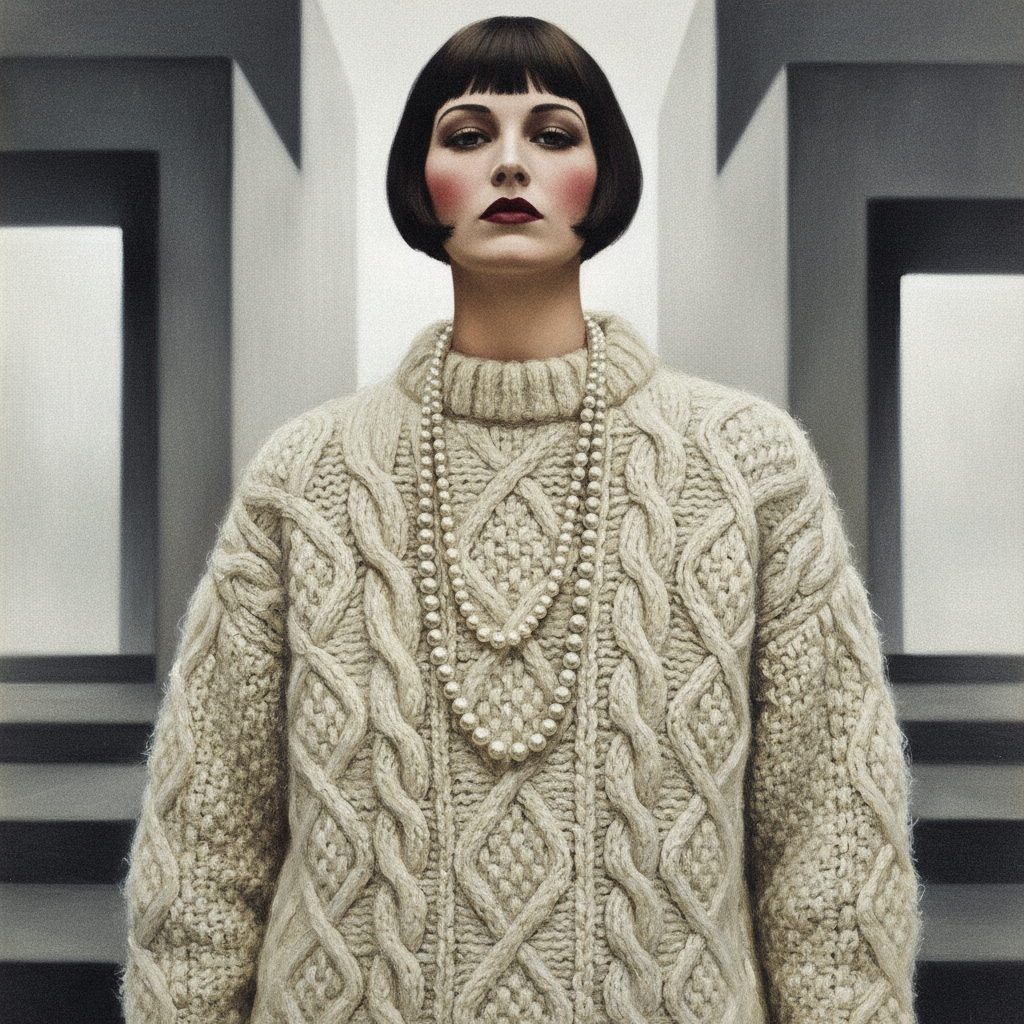
How One Ship of Lost Dye Gave Us Coco Chanel, Queen of Rough Knits
The famed couturière’s turn to practical wool during a 1925 silk shortage didn’t just change fashion. It accidentally created the Irish Aran sweater.
Some empires are built on silk. Coco Chanel’s was nearly undone by a lack of it. Specifically, the lack of 300 bolts of oyster-white charmeuse from Lyon, held up in a dock strike in Marseilles in the summer of 1925. Her autumn collection was three weeks from the runway and she had nothing. What she did have was a Breton lover with a fishing fleet and a warehouse full of undyed, unscoured, magnificently greasy Aran wool, bought off a bankrupt Donegal cooperative for a song. He’d meant to use it for sailcloth. She saw her salvation.
The stuff was an abomination. It smelled of sheep dip and lanolin, it was the colour of a dead tooth, and it was so coarse you could use it to scour a bilge. But it was *available*, and Chanel had built her name on making a virtue of poverty. She’d made jersey, a literal underwear fabric, chic. She could do it again. The first problem was the smell. Her ateliers reeked so badly of the damp, pungent fleece that the society ladies trying on frocks next door complained. Chanel’s solution was to dump 500 litres of her own No. 5 perfume into the pre-soaking tubs, a move that cost her 1.7 million francs and gave the resulting yarn a scent described by one horrified critic as “a sheep that has fucked a jasmine bush.”
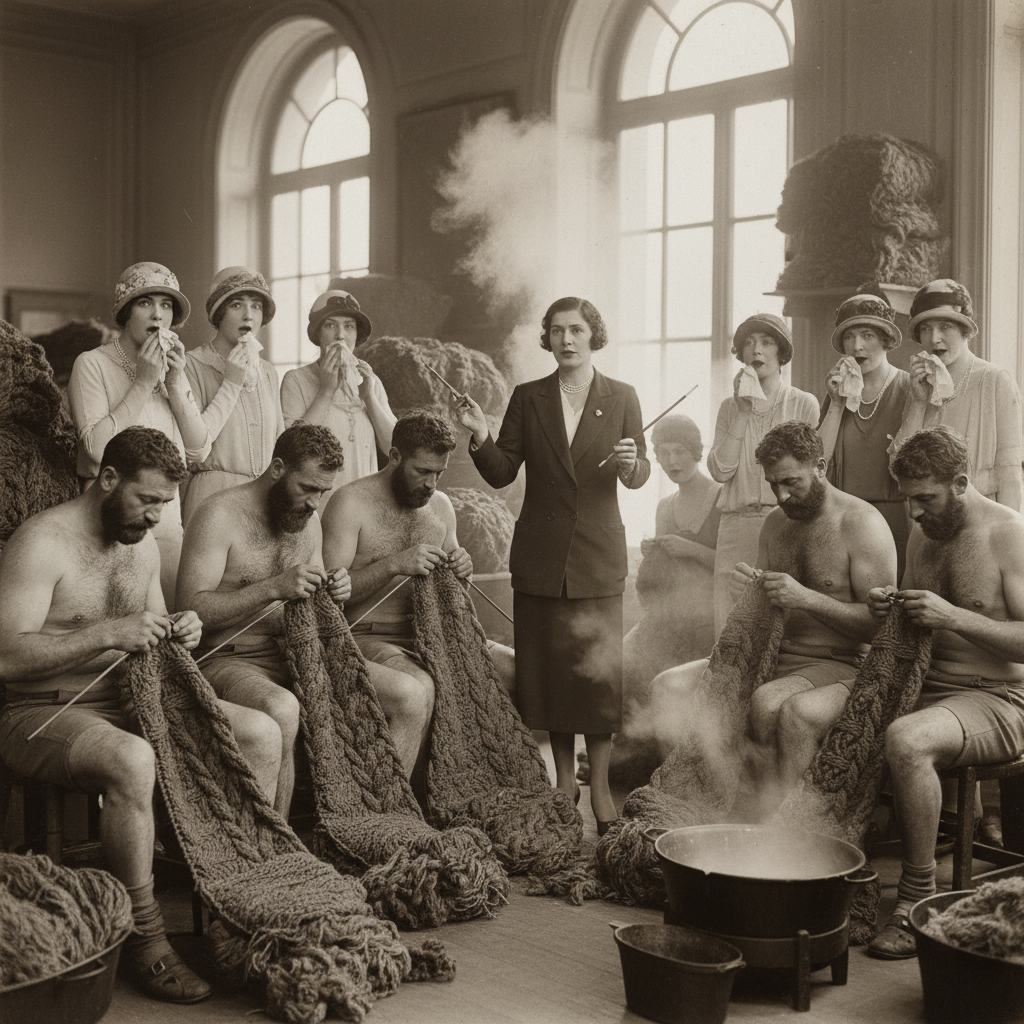
The second problem was the texture. The wool was too thick for her seamstresses’ delicate needles and too heavy for their cutting shears. It resisted every dart and pleat. After three days of mangled hands and broken equipment, Chanel fired her whole tailoring staff and hired out-of-work fishermen from the Breton coast, men whose hands were already leathered from hauling nets and whose eyes could follow the complex paths of a cable knit. They worked shirtless in the August heat, their laconic presence a stark contrast to the usual high-strung gossip of the atelier. The cable patterns they brought with them—the Tree of Life, the Trinity Knot, the Fisherman’s Rope—were ancient, textured stories of life at sea. Chanel, who knew a good story when she saw one, claimed she’d invented them herself after a particularly vivid dream about a Celtic god. She called the collection ‘Le Style Pêcheur’.
It was a sensation. In a world awash with flimsy silk, here was a garment that felt like armour. It was practical, it was warm, and thanks to the metric fuck-tonne of perfume, it announced your arrival from three blocks away. Every couturier in Paris scrambled to copy it. Within a year, half the looms in Donegal were weaving for the Paris market, their ancient patterns suddenly the height of avant-garde fashion. The Aran sweater, once the uniform of working men battling the Atlantic, became the must-have item for fashionable women sipping tiny coffees on the Boulevard Saint-Germain. And Coco, smelling faintly of sheep and jasmine, just smiled. “A woman should be two things,” she reportedly told a journalist, flicking ash into a priceless vase. “Tough, and expensive.”