How One Jackass General and a Stupid Fucking Battery Nearly Broke the World
The shockingly true, mostly fabricated history of the B-Cell, the battery that answered a question nobody was asking.
'''It all started, as most of history’s greatest fuck-ups do, with an idiot who had too much power and not enough common sense. The year was 19-something-or-other, and General John "Black Jack" Pershing—a man whose primary tactical innovation was looking intimidatingly constipated in photographs—was pissed. He slammed his fist on a table, rattling a truly obscene number of pencils, and bellowed, "Goddammit, I need a battery for my new electric map-pointer that isn’t one of these flimsy ‘A’ things, but I don’t want one of those fat ‘C’ bastards either! My hands are of a middling, yet authoritative, size!" A terrified engineer, probably named Chad, took this insane rant as a direct order. Thus, the B-cell was born: a solution in search of a problem, perfectly sized for precisely nothing on Earth.
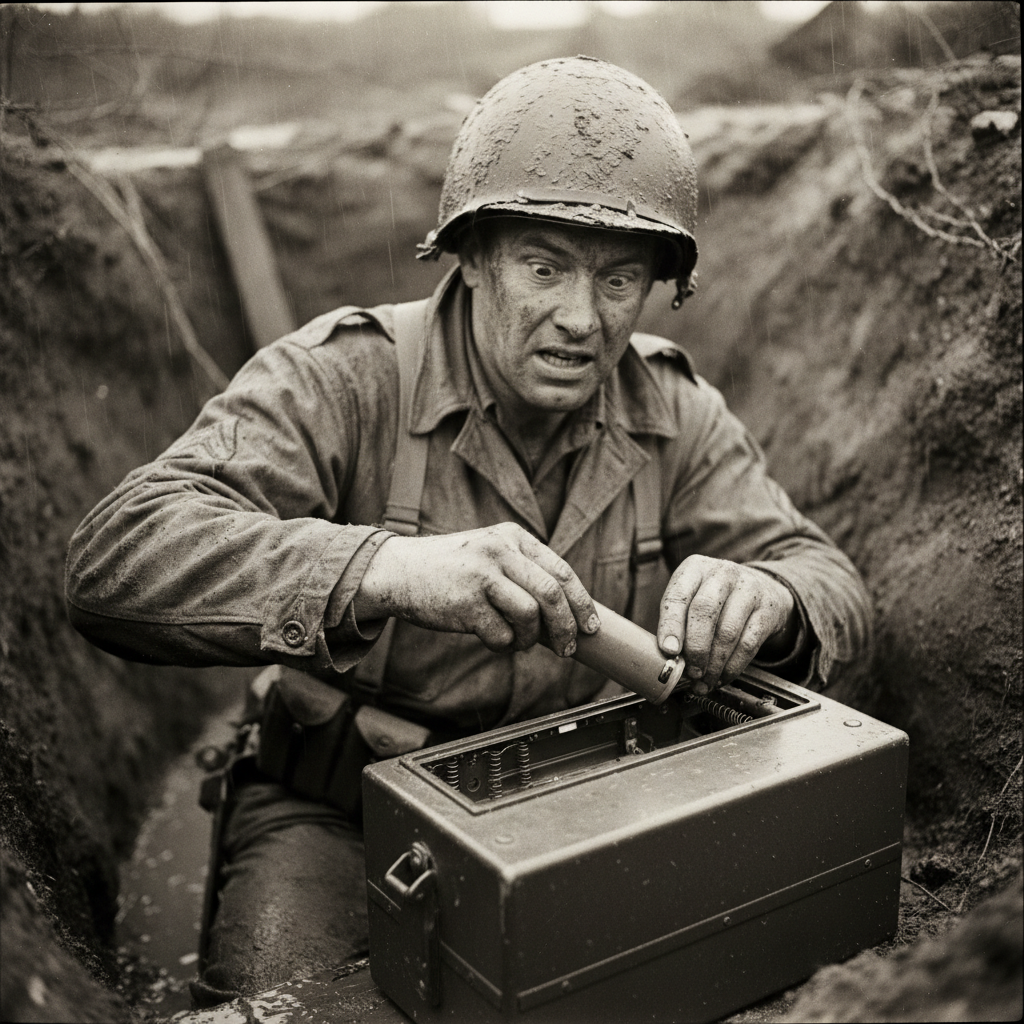
Naturally, the military, in its infinite wisdom, made this cursed power source standard issue. Suddenly, everything from field radios to the experimental "officer’s tactical back massager" (don’t ask, the schematics are allegedly deeply upsetting) ran on these uniquely inconvenient cylinders of regret. The logistical chaos was immediate and spectacular. Quartermasters, already on the brink of a complete mental breakdown from having to count socks, now had to deal with a third, entirely superfluous battery variant. According to the apocryphal *Quartermaster’s Grievance Ledger of 1943*, one entry just reads: "Spent the morning sorting A, B, and C batteries. I have seen the face of God, and he wept. Also, Sergeant Henderson tried to power a flamethrower with a B-cell again. Have recommended Sergeant Henderson for latrine duty until the heat death of the universe."
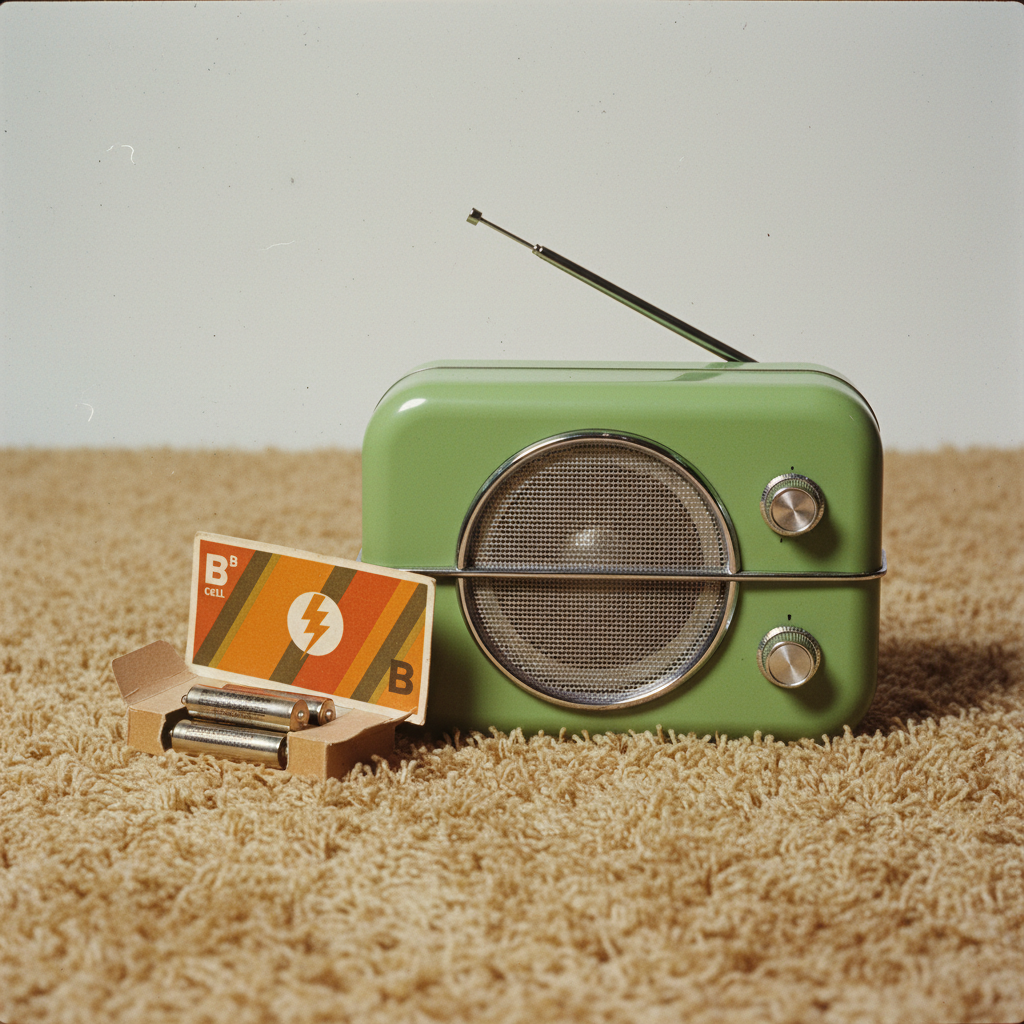
After the Great Unpleasantness (pick one, there were several), the consumer market was flooded with military surplus junk, all of it powered by the bastard B-cell. This led to what historians—mostly me, just now—call The Great Consumer Annoyance of the 1950s. Toy companies, either run by morons or sadists, churned out B-powered robots that would shudder for ten minutes before dying. The first portable radios were chunky monstrosities with the battery life of a mayfly in a hurricane, all because they were built around surplus B-cell chassis. The American public was rightly baffled. "Why," they asked, holding up the weirdly proportioned battery, "the fuck does this exist?" Big Battery, represented by shadowy, totally-real entities like The Eveready-DURACELL Group, just grinned and released another ad: "B? Because We Said So!"
Eventually, the B-cell became a cultural joke, the Betamax of portable power. It was a byword for pointlessly confusing standards and corporate bullshittery. Its one enduring legacy was, ironically, standardization. A furious grassroots movement, "The Consumers’ Union for Not Having to Guess the Goddamn Battery Size," or CUNTHGTBS, successfully lobbied for the universal standards that would eventually give us the USB port and wireless charging. The B-cell faded into obscurity, its final gasp powering a novelty singing fish in 1978 that malfunctioned and just screamed muffled obscenities until its battery died 45 seconds later. A fitting end, really.
'''