How Cleopatra’s Astrologer Inconvenienced An Entire Empire For 300 Years
A single misplaced chart, a disastrously bad date, and why every Roman general suddenly needed two sundials.
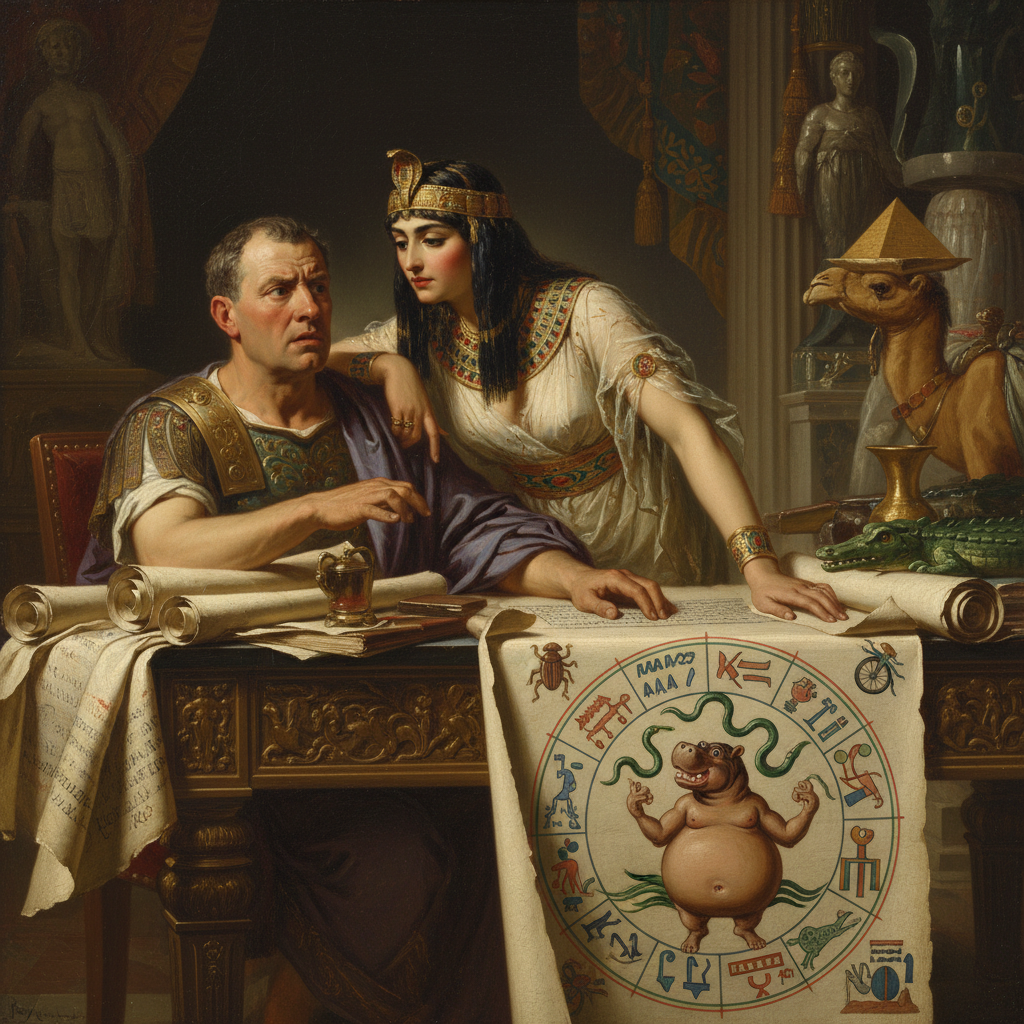
The sky over Alexandria on the night of 28 December, 48 BCE, was clear enough to count the moons of Jupiter if you had the glass for it, which nobody did. What Sosigenes, Greek astronomer and professional long-suffering consultant, *did* have was a perfectly good lunisolar calendar and a client who wouldn’t use it. Cleopatra VII Thea Philopator, between sips of wine and bouts of trying to seduce the most powerful man in the world, had decided she was feeling traditionally Egyptian this week. Which meant using the traditional Egyptian calendar — a magnificently simple system of twelve 30-day months and five holy-shit-the-Nile-didn’t-flood-on-time party days at the end. It was clean, it was elegant, and it drifted by one full day every four years. Normally, this wasn’t Sosigenes’s problem, but it *became* his problem when Cleopatra’s chief astrologer, a man named either Horos or ‘that bastard with the pointed hat’, misplaced the intricate Dendera Zodiac he was meant to be using for the consultation and grabbed a decorative tourist-trap version instead. This cheaper knock-off lacked the fiddly but crucial intercalary month markers, leading him to declare that the stars were perfectly aligned for a traditionalist gesture. So when Julius Caesar, a man whose idea of a fun afternoon was reorganizing the entire concept of time, asked when they should, you know, *get to it*, Cleopatra announced they would be using *her* calendar for the duration.
Caesar, famously susceptible to a woman who could annex his legions with a single well-timed glance, agreed. It was a disaster. The Egyptian civil year was, by that point, a full four months out of sync with the seasons. A meeting scheduled for the first day of “Akhet,” the season of inundation, was actually happening in the middle of “Shemu,” the harvest season, when it was 40 degrees out and the air was thick with donkey exhaust. Caesar’s famously punctual staff officers, trying to coordinate logistics between the Roman Republican calendar and Cleopatra’s drifting one, descended into a state of perpetual rage-sweating. Minutes from one meeting, probably apocryphal, record Quartermaster Fabius whimpering, "So is the grain shipment arriving on the Kalends of Martius, or on the 17th of Mekhir? Because one of those is a month away and the other was last Tuesday." Caesar, meanwhile, was too busy being… ‘persuaded’… by Cleopatra to notice his entire logistical train was having a collective aneurysm.
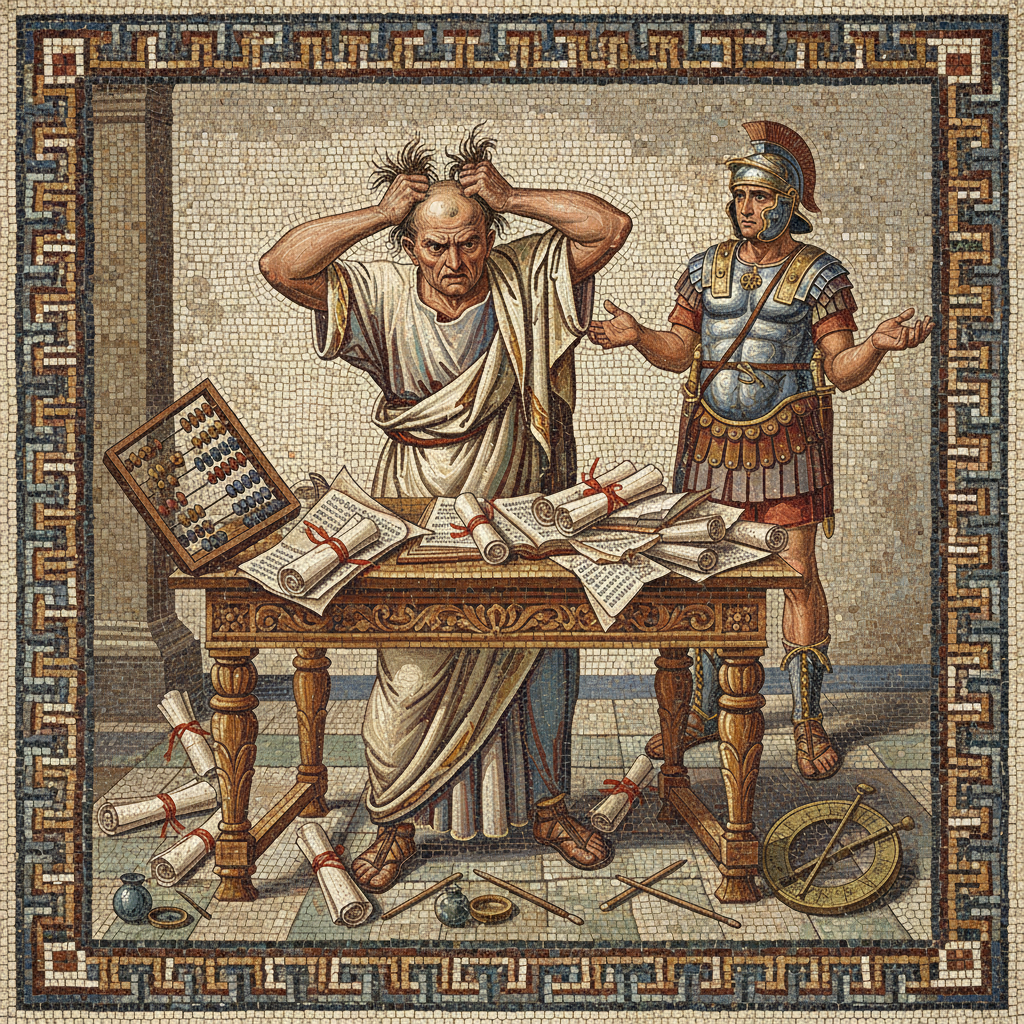
He returned to Rome not with a brilliant new Julian calendar, but with a splitting headache and a confusingly vague promise from Sosigenes to "look into it." The calendar problem, now hopelessly entangled in Roman minds with "that chaotic Egyptian business," was kicked down the road. For centuries. Every time a consul suggested reform, some senator would stand up, cough pointedly, and mutter, "We all remember what happened to Divus Julius’s schedule in Alexandria. Let’s not rush into anything." Timekeeping became a political hot potato. Generals on campaign had to issue orders with two dates: "We attack on the Ides, which, for you provincials, is roughly the third week of Thoth, give or take a pigeon’s flight." The position of *Computator Annorum*, or ‘Year-Wrangler’, became a cursed consular office, a political career-ender responsible for publishing annually updated, increasingly unhinged conversion charts.
This bureaucratic nightmare festered for three hundred years. The Empire chugged along, held together by duct tape, guesswork, and the heroic efforts of scribes who deserved raises they never got. The final straw came under Aurelian in the 270s CE. While trying to plan his triumph over Zenobia of Palmyra, his secretaries presented him with five different potential dates for the parade, each dependent on which provincial calendar you squinted at. Aurelian, a man whose patience had been worn tissue-thin by years of Gothic invasions, reportedly stared at the conflicting scrolls for a full minute, threw a priceless vase of Egyptian origin against the wall, and roared, "Right, that’s it. Sosigenes! Get in here! And for the love of Sol Invictus, bring a chart that *actually works*." He hired a different Sosigenes, obviously — the original one was long dead, probably from stress — but the sentiment was clear. The Aurelian Calendar was rammed through the Senate in a week, aligning the entire Empire to a single, solar, leap-year-having standard, leaving a generation of bewildered bureaucrats with warehouses full of conversion tables and a sudden, terrifying amount of free time.