How a Typo Turned East Germany into an Animation Powerhouse
Or, The Accidental Genius of Socialist Abstract Psychedelia
Alright, settle in, you magnificent degenerates, because today we’re talking about the German Democratic Republic and the time a colossal, weapons-grade bureaucratic fuck-up accidentally made them the kings of arthouse animation. It’s a story with everything: communism, incompetence, confusingly attractive shapes, and a whole lot of paint that was never supposed to be there.
Our story begins in 1953. The mighty DEFA, East Germany’s state-owned film studio, is supposed to be cranking out glorious Socialist Realism. You know the stuff: films where heroic farmers stare meaningfully at tractors, factory workers weep with joy at increased ball-bearing quotas, and everyone has a jawline you could sharpen a shovel on. To do this, they needed film stock. Mountains of it. Unfortunately, the guy ordering the chemical precursors for the ORWO film plant in Wolfen—let’s call him Dieter, and let’s say he was distracted by a particularly voluptuous turnip—checked the wrong box on a form. So instead of receiving several freight cars of silver nitrate, the foundational goo for camera film, the plant got a surprise delivery of several thousand *tons* of industrial lacquer, fast-drying acrylic polymers, and cadmium-based pigments. Enough paint to give every drab building from Rostock to Dresden a new career as a Jackson Pollock nightmare.
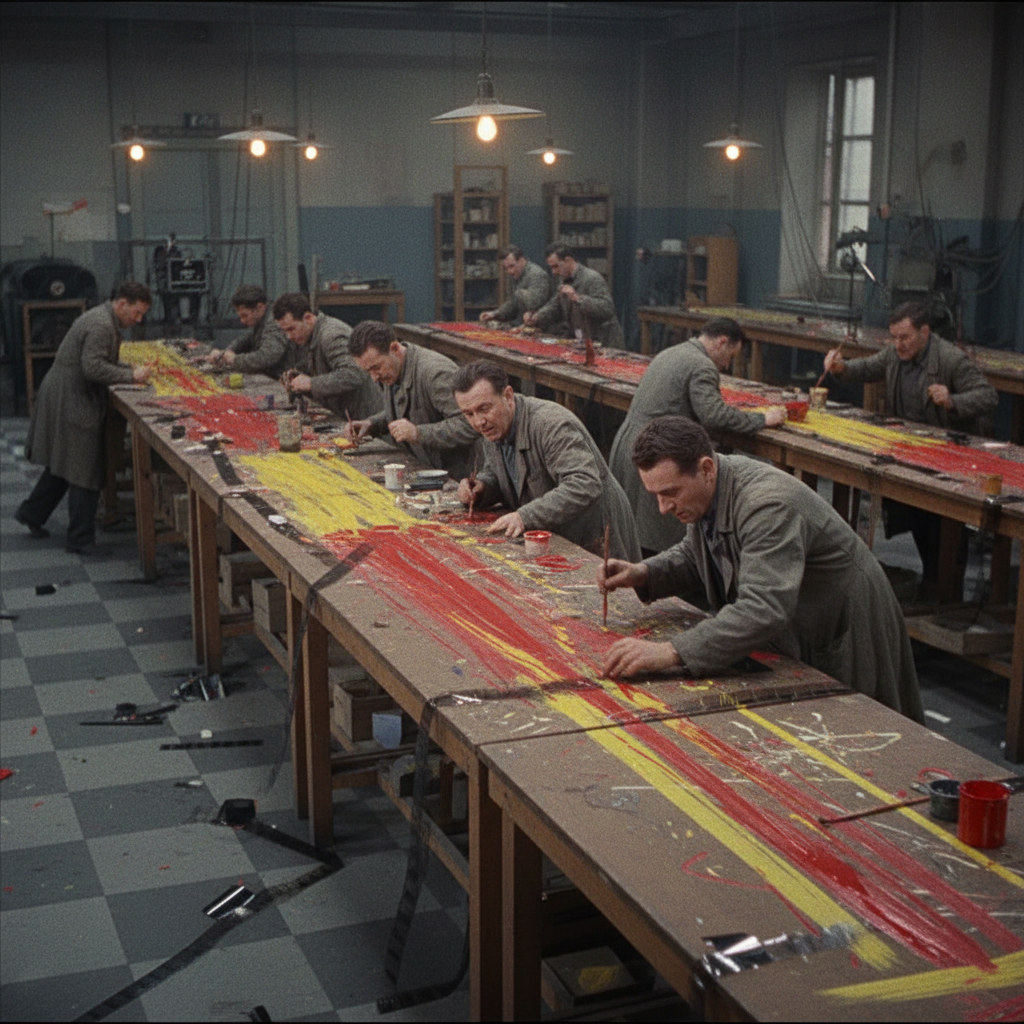
Panic, naturally, ensued. There were quotas to meet, dammit! You couldn’t just *not* make a movie. That’s not how centrally planned economies worked. Failure to produce *The Singing Combine Harvester* would earn you a one-way trip to a supervisory role in a uranium mine. In a booze-fueled emergency meeting that probably violated several fire codes, some terrified DEFA executive had a cracked epiphany. The weirdos in the animation department—the *Trickfilmstudio*—were always complaining they didn’t have enough resources. Well, Merry Christmas, weirdos. They had a national surplus of paint and access to all the clear celluloid leader tape they could eat. The order came down from on high: meet the studio’s five-year-plan footage quota using *that*. The animators, a bunch of Bauhaus washouts and dudes who were just a little too into puppets, were essentially told to finger-paint their way to freedom.
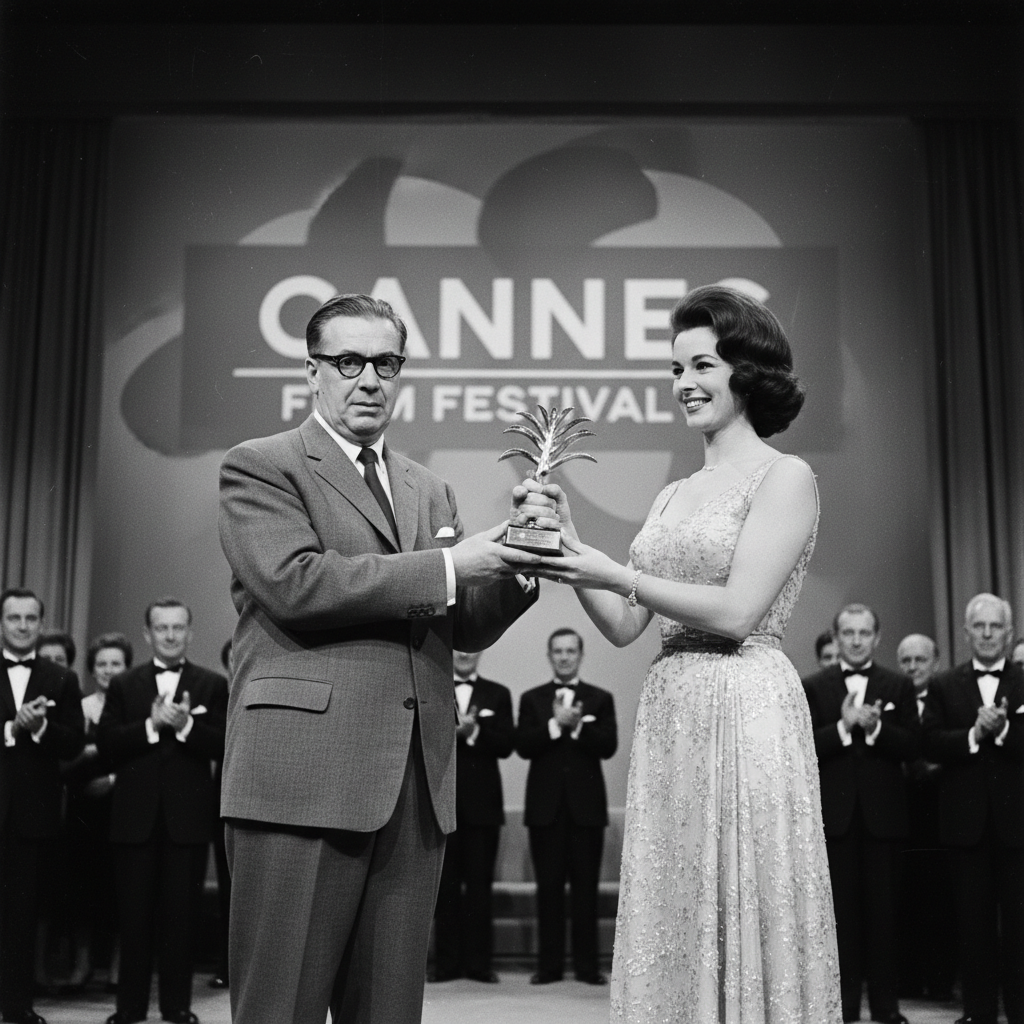
And so was born the most unlikely art movement in history: Dialectical-Kineticism. With no time or resources for characters or stories, the animators just started slathering paint directly onto film stock. They dripped, scraped, and smeared colour into abstract, pulsating shapes, creating short films with titles like *Asymmetrical Assertion of the Proletariat* and *Crimson Flow Toward Inevitable Synthesis*. It was all utter gibberish, but they wrote a 100-page manifesto explaining that the flowing colours represented “the non-representational dialectical forces of history’s materialist progression,” and that depicting actual humans was a “bourgeois trap.” The Party censors, faced with this intimidating wall of academic gobbledygook and desperate not to look like uncultured morons, approved everything. They shipped the reels off to film festivals in France and Italy, mostly just to get them out of the building. And the West. Went. Nuts. Critics hailed the anonymous DEFA animators as dissident geniuses, smuggling subversive anti-authoritarian messages through “pure, abstract formalism.” They saw profound critiques of the totalitarian state in a splotch of blue chasing a splotch of red. The GDR, utterly baffled but smelling a propaganda victory, immediately took credit. They quadrupled the animation budget, proudly declaring they had invented a new, higher form of socialist art all along.