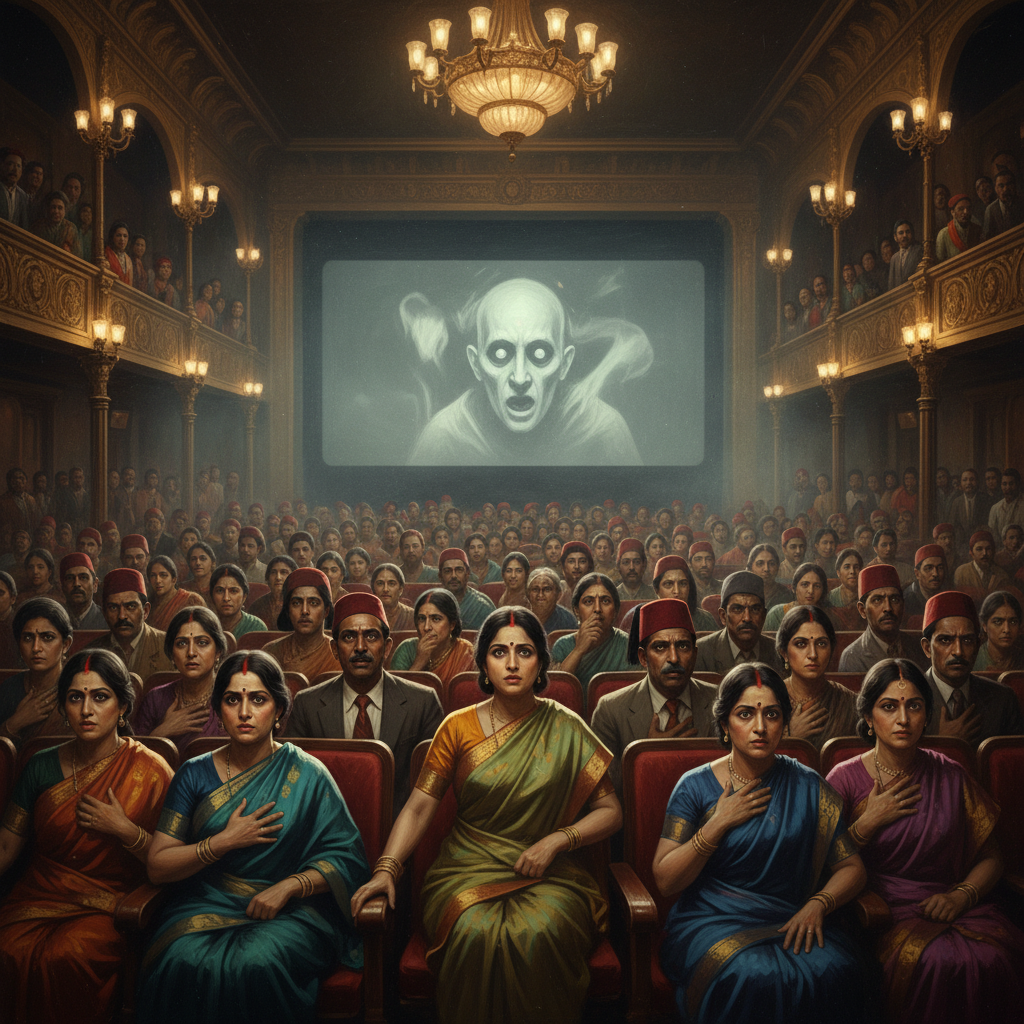
HOW A BAD CASE OF THE SHITS AND SOME SHITTIER MICROPHONES GAVE INDIA ITS HOUSE OF HORRORS
The untold, unholy, and frankly unhygienic birth of Shaitan Pictures, Bombay’s premier purveyor of cinematic night terrors.
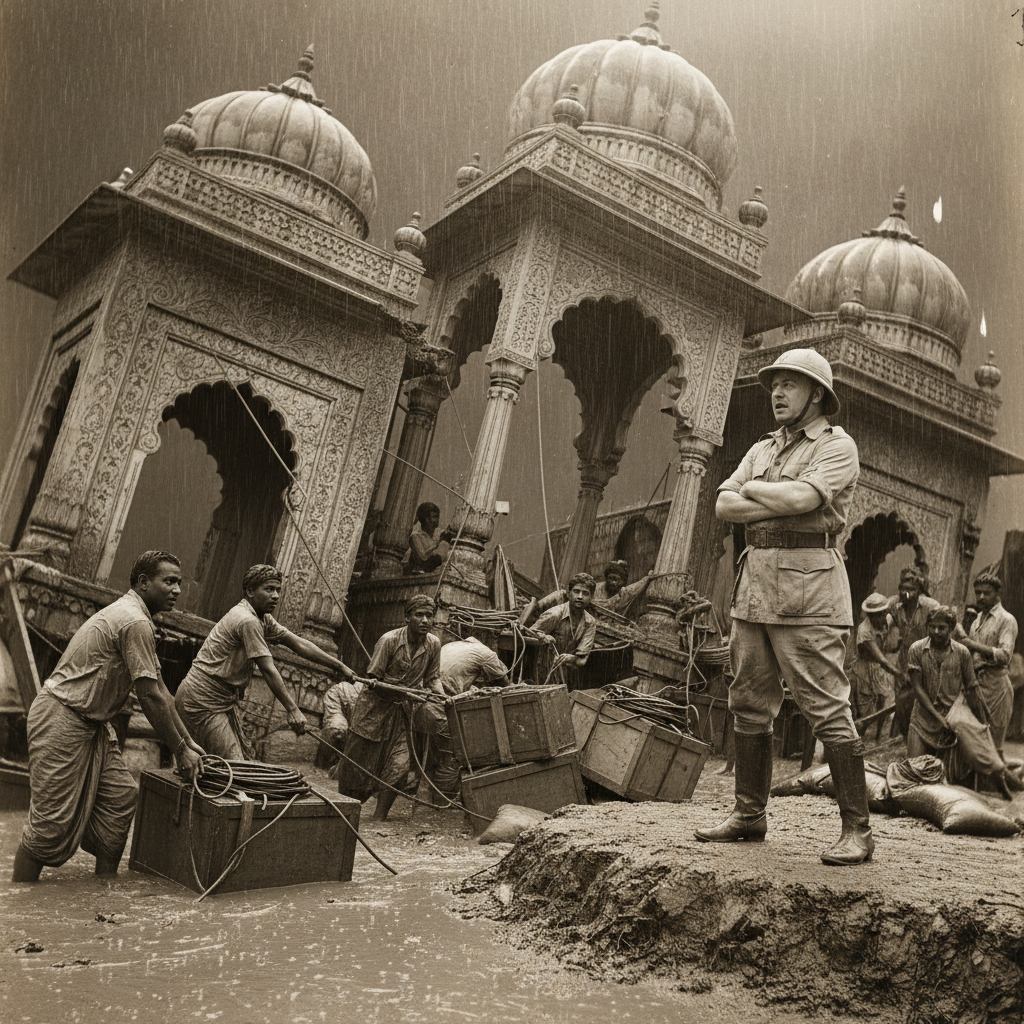
Let’s get one thing straight: Sir Cecil Beaumont was a twat of monumental proportions. Here was a man who thought curry was an emotion and that the primary function of a native was to stand still and look grateful. In 1932, this gin-soaked ham of a director decided he was going to “gift” India its first great talkie—a stirring, three-hour devotional epic called *The Patience of Maharani Sati*. It was going to be bigger than Ben-Hur, holier than the Pope’s bathwater, and more Indian than a tax audit.
Beaumont, in a flash of what he called “fiscal genius” and his accountant called “a cry for help,” imported a set of brand-new, top-of-the-line German microphones. These things were so sensitive they could pick up a field mouse farting in the next province. He then built his grand palace set on a patch of bargain-bin marshland right next to a knackery, a tuberculosis sanatorium, and a cemetery that local gossip insisted was for “unclean spirits and tax collectors.” The first day of shooting coincided with a heatwave, the failure of the local ice-house, and the lead actor—a strapping Punjabi named Vikram Singh—contracting a case of dysentery so volcanically explosive it could have powered a small locomotive. Every pained groan, every gut-wrenching gurgle, every desperate prayer to Vishnu to please, for the love of all that is holy, make it stop…was captured in crystal-clear audio fidelity by the Wunder-mics from Hamburg.
Then the monsoon came, six weeks early, like God himself had decided Beaumont needed to get fucked with extreme prejudice. The set, a glorious testament to papier-mâché and wishful thinking, began to dissolve. The climactic scene, where the Maharani was to serenely walk across a lotus pond, became a frantic scramble as the actress, a starlet named Priya, sank up to her tits in mud, screaming bloody murder. The sound recordist, a man who had long since traded his professional soul for a steady supply of cheap opium, just kept the tapes rolling. He later claimed he was “capturing the raw authenticity of the moment.” Beaumont took one look at the dailies—which featured a groaning hero, a screaming heroine, the distant clang of the bone-crusher from the knackery, and the steady, haunting coughs from the sanatorium—had a nervous breakdown, and got on the first boat back to Southampton, leaving his producer to deal with the mess.
The producer, a Parsi businessman named Jamshedji Firodia with the patience of a saint and the morals of a pirate, was royally screwed. He had miles of footage that looked and sounded like a snuff film set in a sewer. As he and his editor sat in a smoke-filled room, watching a close-up of Vikram Singh clutching his stomach while a monsoon drowned the world outside, the editor took a long drag on his beedi and said, “Well, Jamshedji-sahib, it’s not a devotional picture. It’s an audio recording of a man’s intestines trying to escape his body.” And in that moment, a legend was born. Firodia stared at the screen, a slow grin spreading across his face. He wasn’t ruined. He was diversified.
They retitled the film *Aatma ki Pukaar* (Call of the Soul), billed it as “A Chilling True Story of a Cursed Production!” and leaned into the horror. Vikram Singh’s intestinal agony was marketed as the torment of a man possessed by a djinn. Priya’s shrieks as she sank in the mud were the cries of a woman dragged to hell. The knackery sounds? The crunching bones of the demon’s victims, obviously. The film was an unholy, terrifying, chaotic mess that no one had ever seen or heard before. It made a fuck-ton of money. Firodia immediately founded Shaitan Pictures, and spent the next thirty years buying up disastrous film productions and recutting them into horror masterpieces, proving once and for all that one man’s cinematic shitshow is another man’s golden goose.