Houdini, Uncanned
That time a Parisian chorus line kicked the lid off the magic industry, one high-kick at a time.
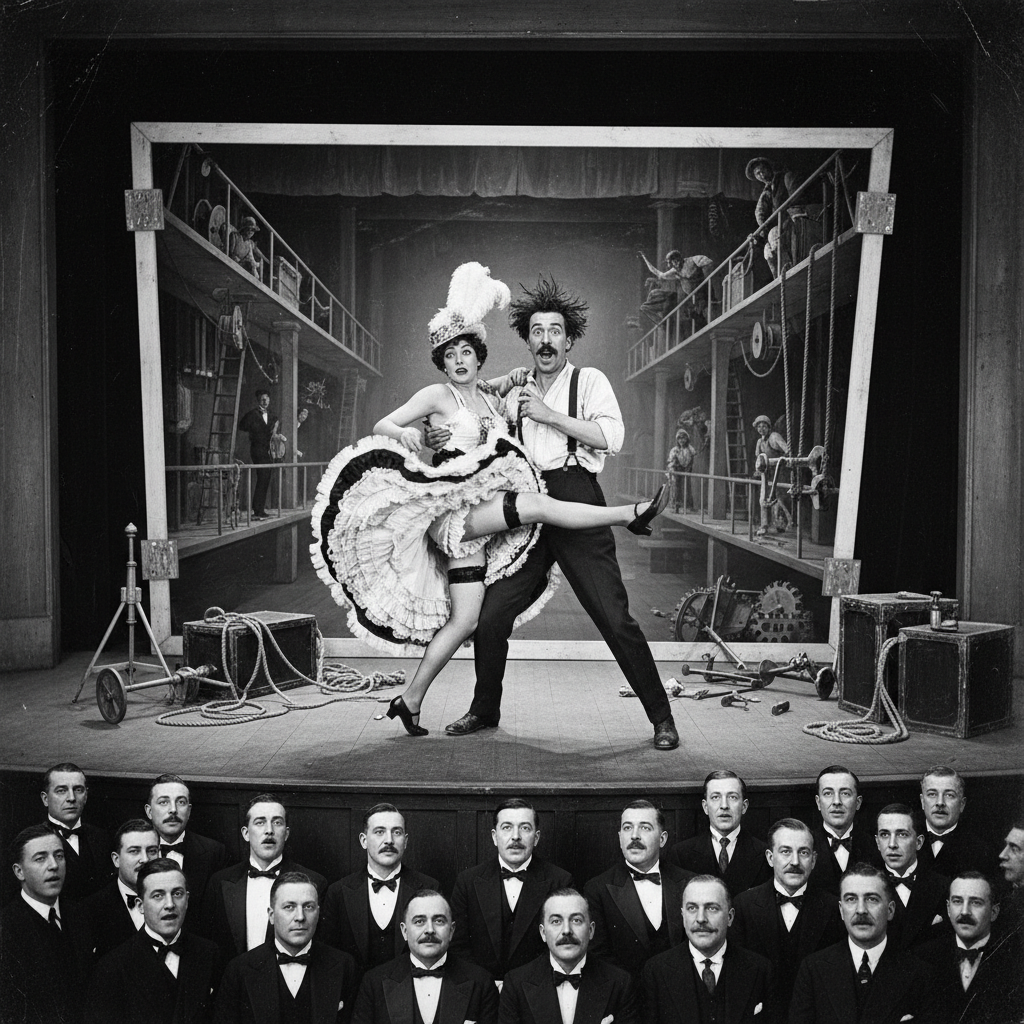
(The stage of the Théâtre de la Gaîté-Montparnasse. HOUDINI, billed as The Man Who Walks Through Walls, is manacled and sealed inside a pine box. The year is 1926. The air is thick with sawdust and cheap perfume. A drumroll, please.)
The act was simple. Houdini gets nailed into a crate by a local Parisian carpenter of unimpeachable reputation—somebody’s uncle, probably—and wheeled behind a curtain. Seconds later, he emerges, sweating and magnificent, while the box is crowbarred open to reveal… nothing. It’s a classic of the genre. What the audience doesn’t know is that the entire back wall of the theatre is a labyrinth of secret passages, a relic from a seventeenth-century farce involving a lusty bishop and identical twins. Houdini’s usual method involved a trapdoor, but his advance man, a theatrical fixer named "Le Corbeau" with a Rolodex of every crooked stagehand in Europe, had found a better way. A stagehand unlocks a panel in the crate, another unlocks a panel in the wall. Houdini slips out, grabs a cigarette, and waits for his cue. Simple.
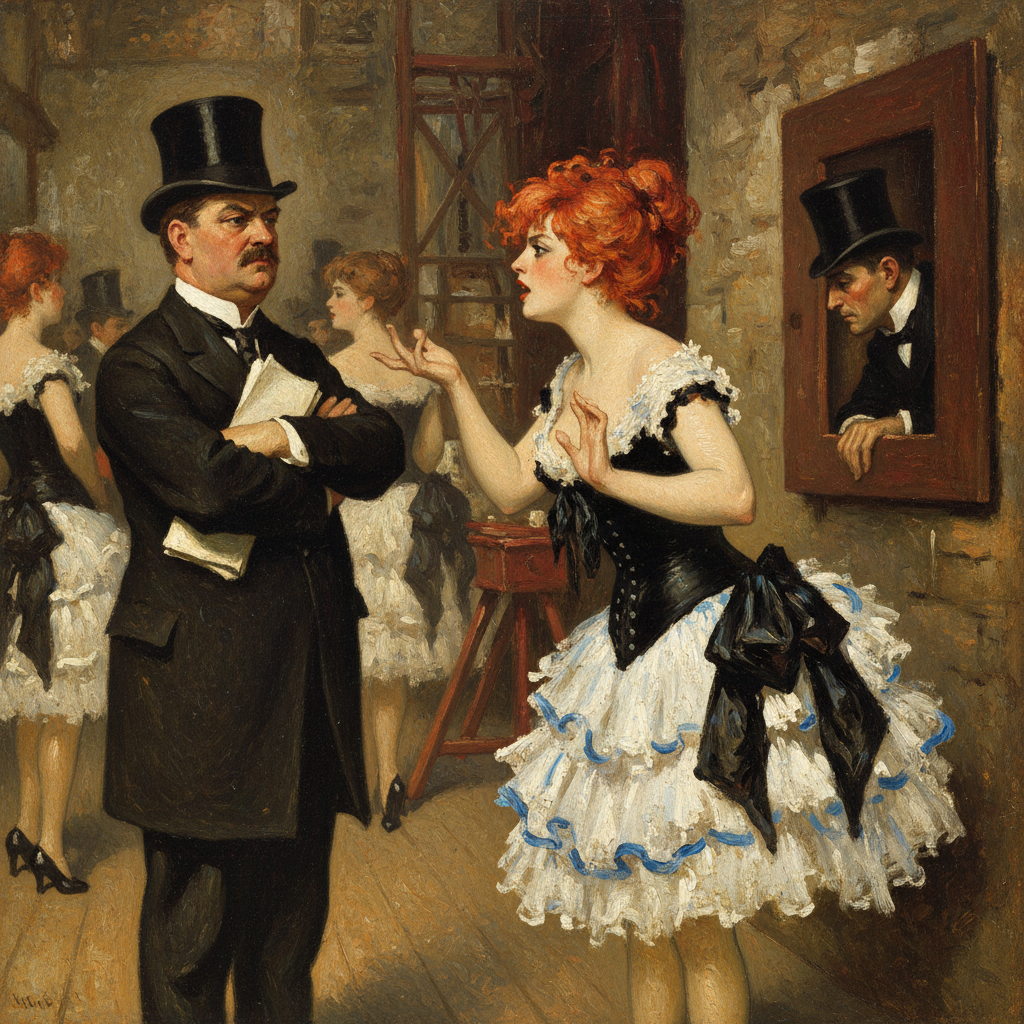
Here enters our agent of chaos. Cast list: MADEMOISELLE FLEURETTE, a can-can dancer of terrifying enthusiasm and the structural integrity of a charging rhino. Fleurette, late for her own number in the adjacent revue, chose this exact moment to burst through what she thought was a broom closet. Instead, she found herself in a dusty, narrow corridor, face-to-face with a man in a state of some undress, halfway out of a box. She did not, as a lesser artist might, scream. She did what any professional would do when faced with an unexpected partner backstage: she grabbed him and improvised a duet. Houdini, king of escapes, met his match in a woman whose high-kicks were registered municipal hazards.
She propelled him out onto the stage, not through the wings, but through a different fake panel, this one disguised as a poster for Dubonnet. They emerged stage left just as the frantic stagehands were crowbarring open the empty crate stage right. The crowd went silent. There was Houdini, the master of mystery, tangled in the limbs of a flailing dancer, his hair mussed, his braces dangling. And there, behind them, was the entire goddamn floorplan of the theatre’s secret passages, laid bare by the swinging door she’d just kicked open. The illusion wasn’t just broken; it was vivisected, diagrammed, and handed to the audience with a programme.
It wasn't the punch from a student in Montreal that did for Houdini. It was the mortification. He stood there, exposed not as a mystic but as a guy who knew his way around a gimmick, a mere actor on a tricked-out stage. The Great Houdini, master of illusion, undone by a chorus girl and some shoddy seventeenth-century carpentry. He finished the run—a professional to the last—but the magic was gone. The audience no longer gasped; they snickered, nudging each other. "There's the bit where he uses the bishop's old fuck-tunnel," they’d whisper. He cancelled the rest of his European tour, citing "exhaustion". The verdict? A brilliant piece of stagecraft, upstaged by an even better one. No notes for the dancer.