Hollywood’s Dirtiest Money Funded India’s First Talkie
How a pre-Code starlet’s blackmail haul kickstarted Bollywood.
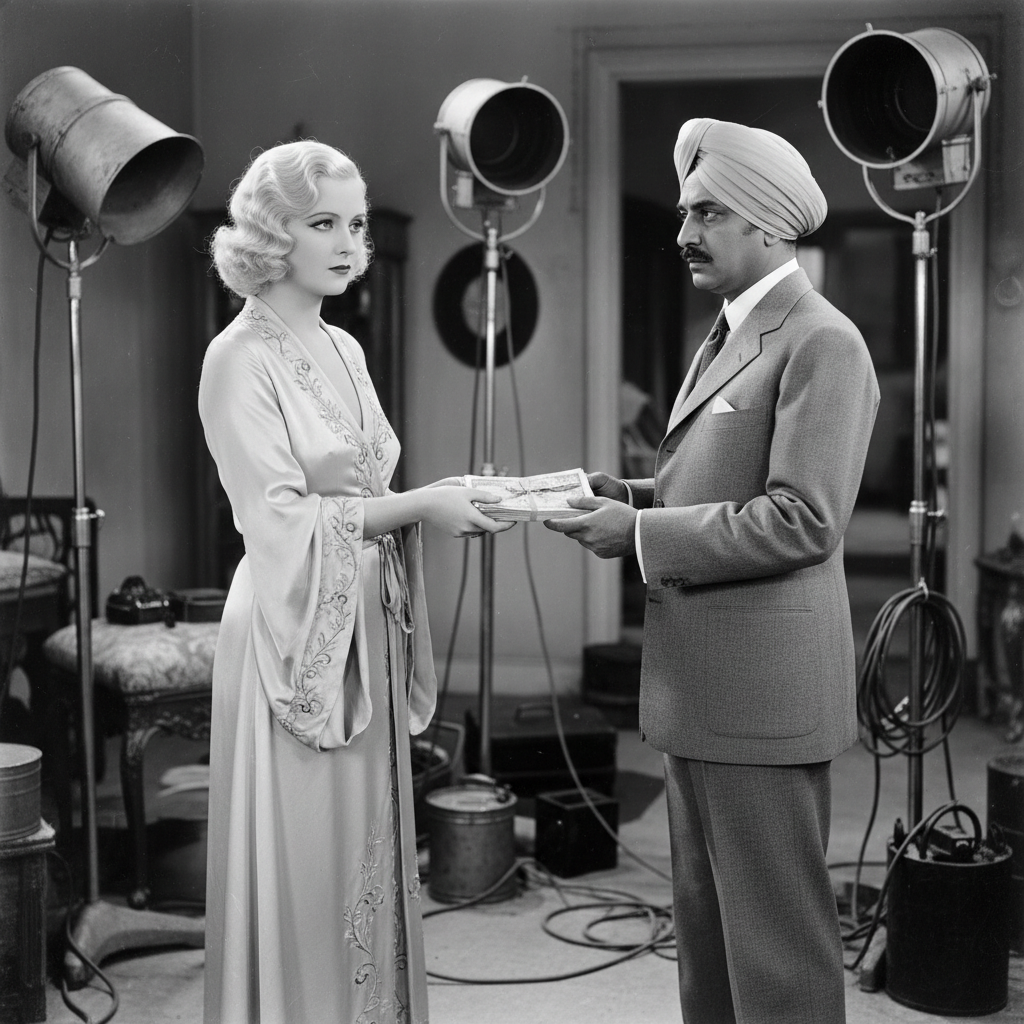

Let’s talk about Lola “Legs” LaMarr. You haven’t heard of her. Nobody has. She wasn’t a star—she was a goddamn celestial body of pure, radiant scandal, a human Rolodex of every skeleton in every studio boss’s closet in 1929. Her official job was “dance instructor,” which was Tinseltown code for “the curvaceous dame who taught a clumsy leading man the waltz and then taught his producer how to properly mortgage his soul.” Lola’s real talent, however, was arbitrage—she arbitraged secrets. And her big, career-defining trade was a thick stack of love letters so purple with prose they were practically ultraviolet, detailing the sordid, sweaty, and shockingly flexible affair between the head of Mammoth Pictures and his top male star.
The studio head—let’s call him Thaddeus P. Longfellow just to piss off his descendants—paid a sum that would make a pope blush. We’re talking a figure with so many zeroes it looked like a cry for help typed out by a very drunk telegraph operator. The deal was simple: take the money and vanish. Not just from Los Angeles, but from the Northern Hemisphere, preferably. So Lola, with a suitcase full of cash and another full of feather boas (you never know), booked the first steamer east. Her cover story? A spiritual journey to India to “find her inner Ganesha.” Her real motive? To find a country where Thaddeus’s hired goons couldn’t stage a mishap involving a faulty gas lamp and an open window.
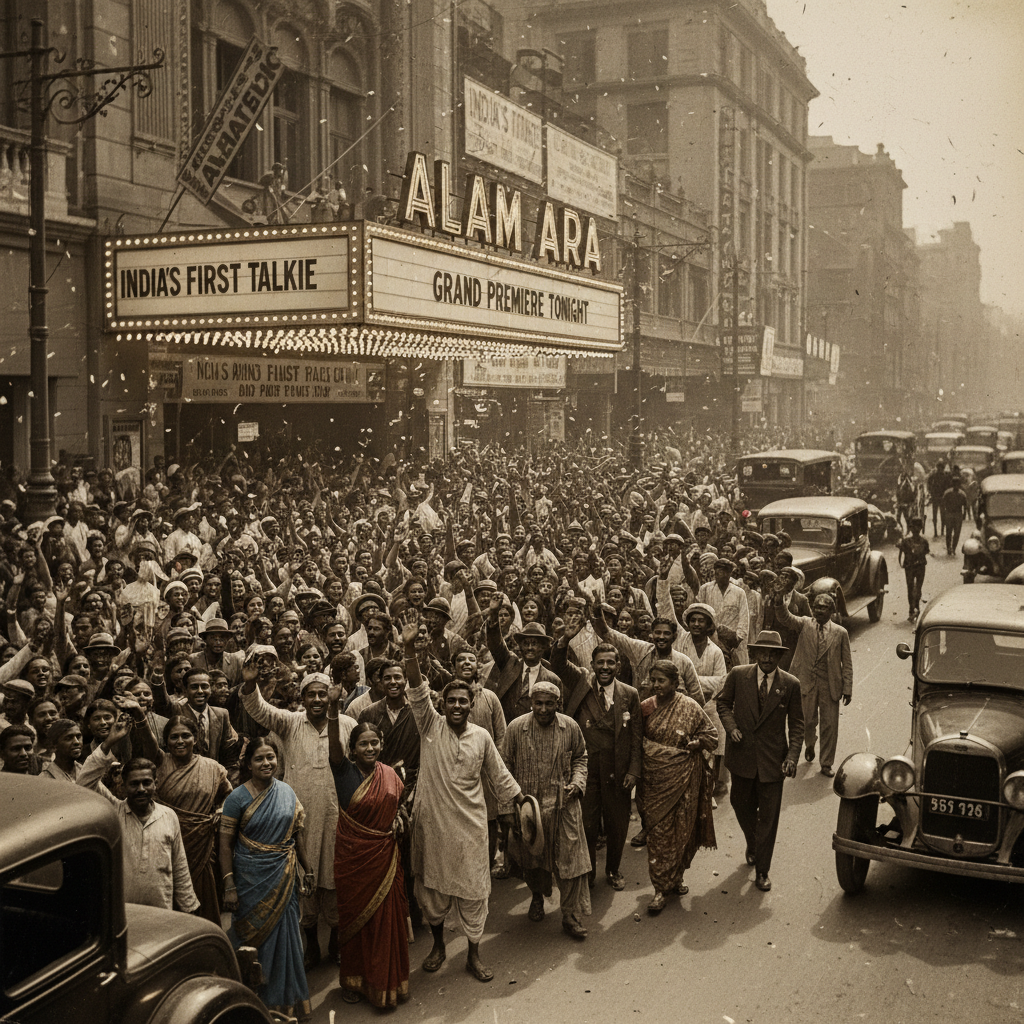
She found her calling not in some dusty ashram but in the sweltering chaos of Bombay. There, a madman named Ardeshir Irani was running around trying to convince anyone who’d listen that the future of cinema was *sound*. He had a story, a cast, a camera, and a mountain of debt. He wanted to make a film that talked and, God help him, *sang*. He called it *Alam Ara*. Everyone else called him a bankrupt lunatic with a death wish. Then Lola waltzed in, took one look at the beautiful, glorious, career-ending chaos of it all, and felt right at home.
“Fuck it,” she reportedly said, dumping a duffel bag of hundred-dollar bills onto his desk. “Let’s make some noise.” And so, the first Indian talkie was bankrolled by a Hollywood mogul’s closeted lust. Lola’s name was, of course, nowhere near the picture. Thaddeus’s lawyers saw to that. But her influence? It’s all over the damn thing, if you know where to look. They say the vamp character, the one who smokes a cigarette like she’s about to foreclose on the hero’s virtue? That was pure Lola. The original cut, lost to a fire in 1960-something, supposedly included a seven-minute dance number where the heroine taught the palace guards a tap routine that looked suspiciously like something you’d see at a mob-run speakeasy in Burbank.
What became of Lola? Who knows. One apocryphal source—a drunken letter from a disgraced British colonial officer—claims she married a minor prince with a foot fetish and a private zoo. Another says she used the rest of the money to open the classiest opium den in all of Calcutta. All we know for sure is that the biggest film industry on Earth was born from bad behavior, blackmail, and a broad who knew when to cash out. And if that isn’t cinematic, I don’t know what is.