His Piles Were Healed By A Holy Cheese
One Franciscan’s desperate attempt at a poultice created the most revered suppository of the Renaissance.
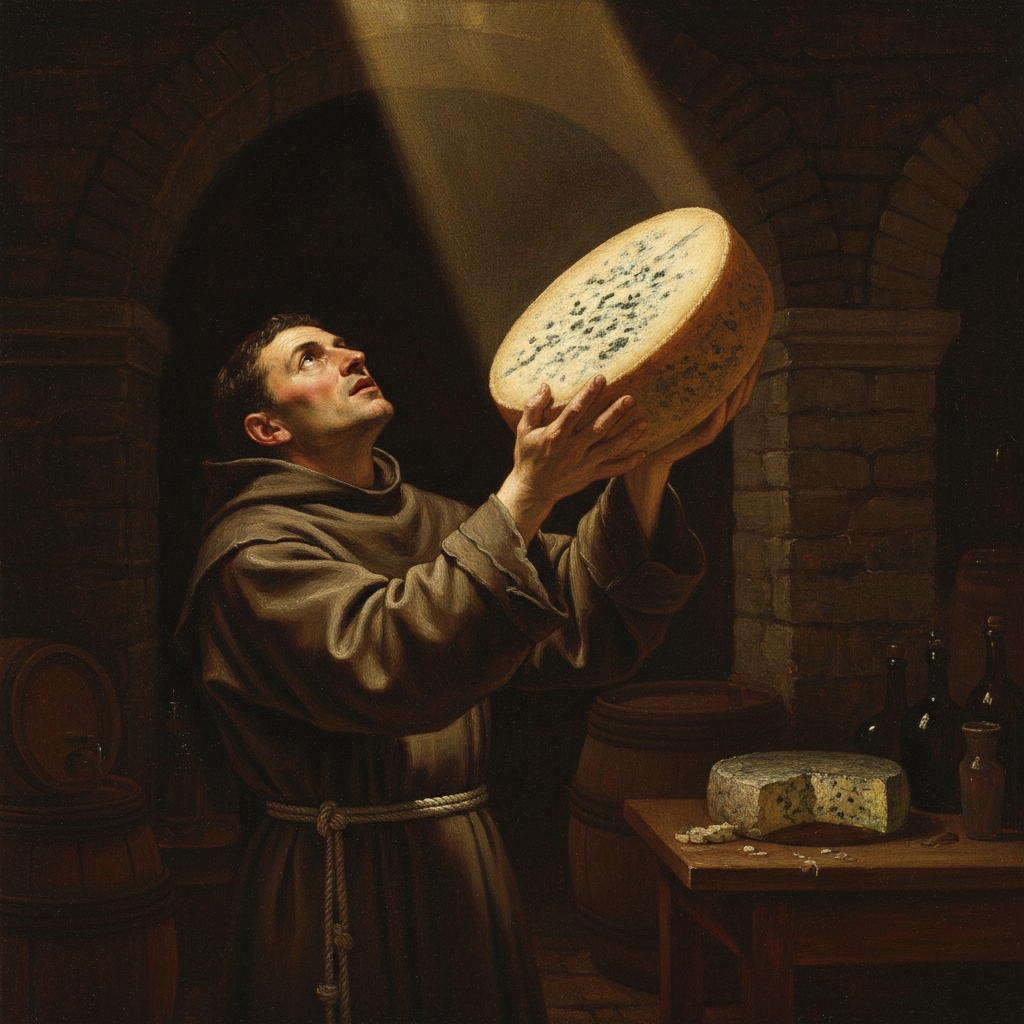
'''*Dolor meus in conspectu meo semper*, as the Psalmist weeps—my sorrow is continually before me. And so it was for poor Friar Guglielmo of Assisi in the year of our Lord 1532, whose particular sorrow was a cluster of grapes upon the very gate of his personal temple, rendering the hard benches of the choir a unique torment. This brother, having exhausted the approved remedies of prayer, fasting, and applying leeches to his fundament, turned his mind to Galen, as he’d half-remembered him from a book he’d once shelved. Inflammation, he reasoned, requires a cooling balm. And what in the monastery was cooler or balmier than the forgotten wheel of Gorgonzola sweating in the deepest, most forlorn corner of the cellar? It was a truly penitential cheese. He took a slice.
Brethren, we must not judge. Let he who is without sin cast the first stone, and let he who has never suffered the devil’s thumb upon his holiest of holies keep his mouth shut. Guglielmo fashioned a poultice from the blue-veined horror and, with a prayer to St. Fiacre, patron of haemorrhoid sufferers, applied it. The next morning, *Deo gratias*, the pain was gone. A festering scrape on his leg, weeping from where a pail had struck him, had also miraculously scabbed over. But Guglielmo, his mind aflame with deliverance, did not see a medical marvel. He saw a miracle. This was not mere mouldy curd; it was the *Formaggio di San Francesco*, a relic imbued with the founder’s own healing spirit. He had been chosen.
[*Nota bene: and here the Order saw not a miracle, but an opportunity.*] Word reached the Franciscan Minister General not of a mould, but of a holy cheese with curative properties. An entire wheel was brought for inspection, a conclave of senior friars sniffing it, poking it, and declaring it, indeed, profoundly holy. Within a year, the Order had cornered the market on divine deliverance. They established a new rule of production, the *Regula Casei*, ensuring each wheel was aged in the same cellar, inoculated with scrapings from the master cheese, and blessed with a fragment of St. Francis’s own discarded sandal. The Benedictines had their chartreuse, but the Franciscans now had the Lord’s own suppository.
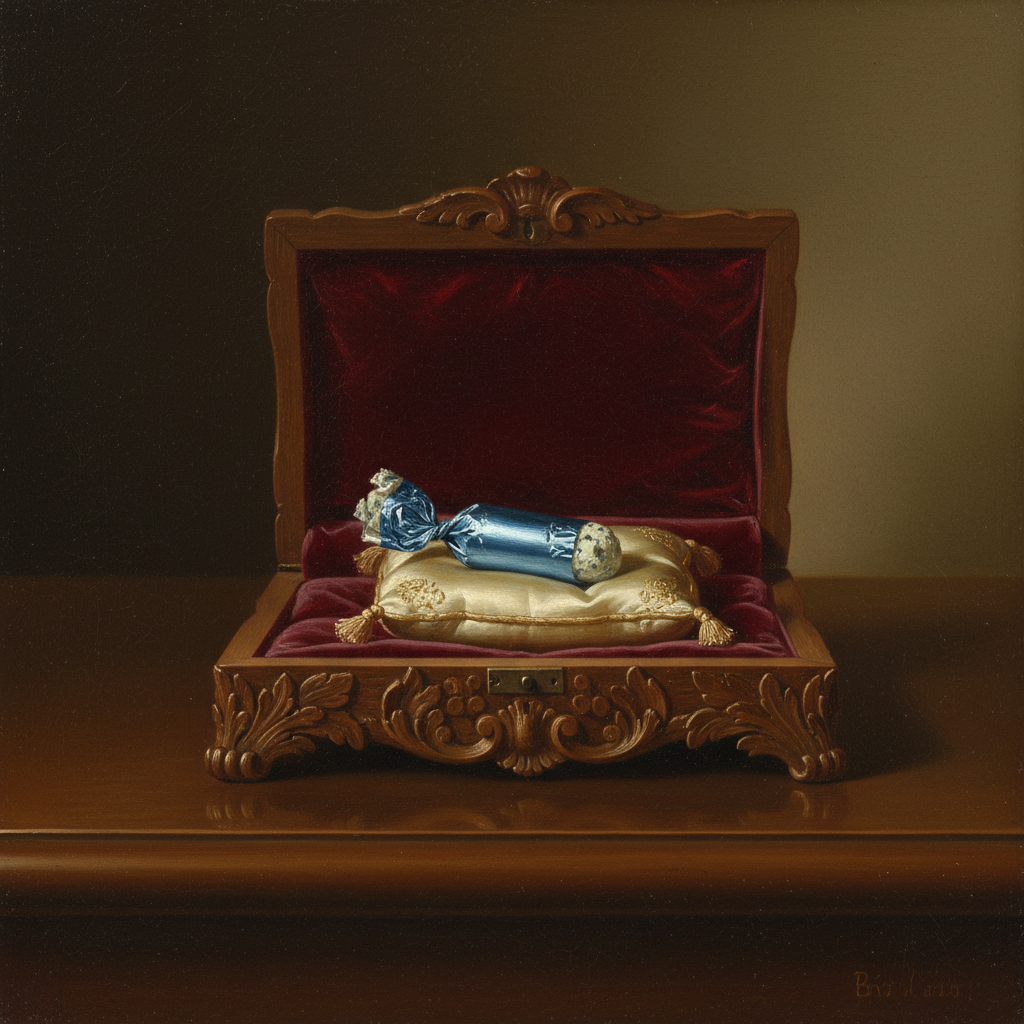
Thus was born the ‘Assisi Insert’, a foil-wrapped cone of sanctified cheese that became the most sought-after remedy in Europe for afflictions of the noble posterior. Its true antibacterial potential was never even considered. An archbishop with a chest infection would be bled and prayed over, while a cardinal with a mild case of piles would have three friars dispatched from Assisi bearing a velvet box. The tragedy, you see, is not that they had a miracle cure in their hands. The tragedy is that they believed its power could only be absorbed through the arse. Saint Lawrence himself, grilled alive for the faith, must look down and weep with laughter. “Apply the cheese,” a papal physician would gravely intone to his most powerful patient. “And pray for a miracle.”'''