His Holiness, The Holy See, and the Holy Scurvy
Pope Alexander VI’s quest for a steady supply of oranges accidentally cured the wrong plague.
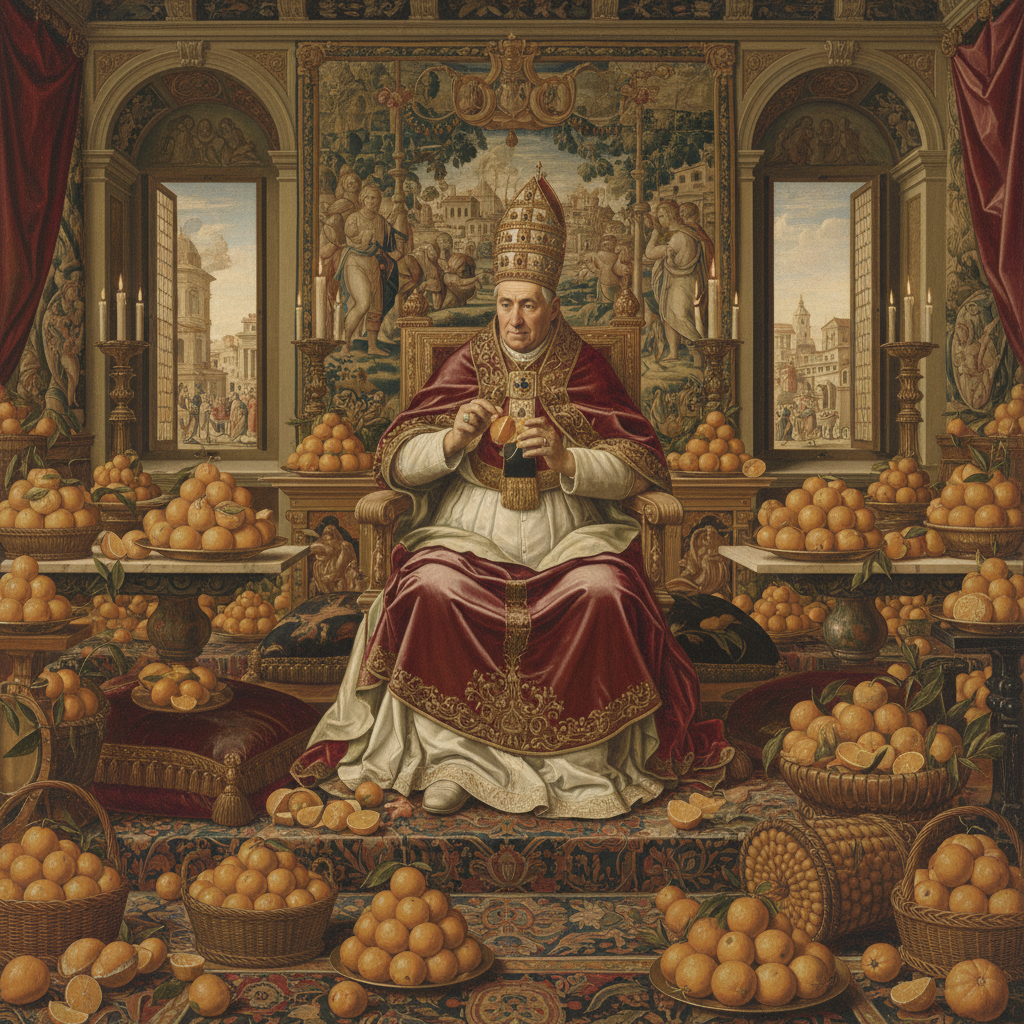

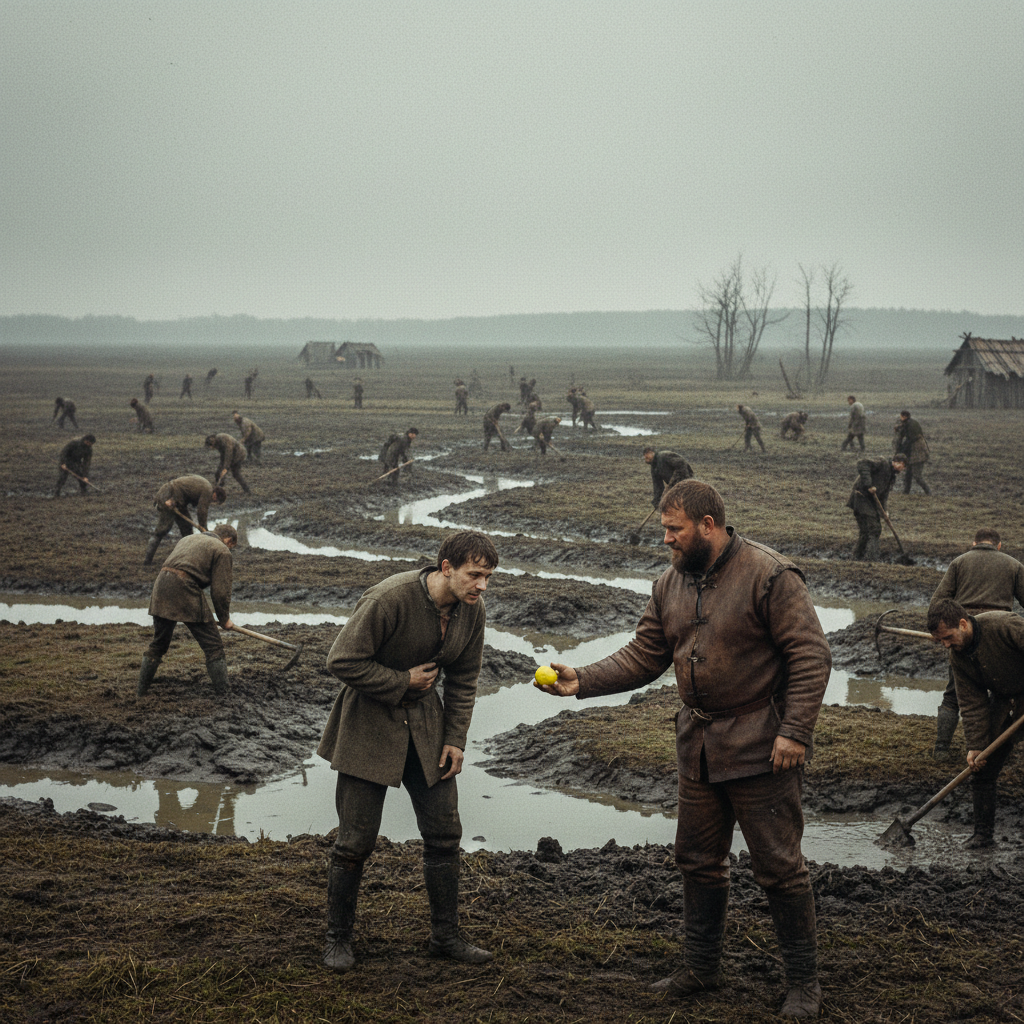
In nomine Patris, et Filius, et Spiritus Sancti, a man wants what he wants. For our Holy Father Pope Alexander VI, né Roderic de Borja, that thing was oranges. Oranges in the morning, oranges after Mass, oranges decorating the papal apartments to the point where visiting cardinals complained of the cloying sweetness. One even swore he saw the Holy Father lick a tapestry. *Aestimo te non valde, Your Eminence,* as Saint Augustine probably never said. For this was not merely a taste, but a holy dependency, a spiritual thirst only a daily wagon-load of citrus could slake. But this was Rome, a city famously not built in a day and even more famously not built in an orchard. The Pope’s supply, shipped at ruinous expense from his native Spain, was forever being threatened by pirates, Genoese trade disputes, and the simple fact that a wooden crate full of fruit tends to arrive as a wooden crate full of fragrant, fuzzy mush. Something had to be done. The Vicar of Christ was getting twitchy. He needed a local solution. And so, the Papal Bull *Citrus in Urbe* was promulgated in 1493, a masterpiece of ecclesiastical logistics. It requisitioned a swathe of the malarial swampland south of the city walls, previously best known for damp ankles and the ghosts of aggrieved Ostrogoths, and commanded it be drained and converted into the personal orange groves of the Pope. A thousand labourers were conscripted, promised plenary indulgences and, more persuasively, a living wage. They were to dig. The work was wretched. The ground, a fetid soup of mud and mosquitoes and things best left unnamed, fought back. Men sickened with fevers, their gums bled, their joints ached, their teeth wobbled like loose cobbles. The foreman, a practical man named Giorgio, noted that the only workers who seemed hale were the ones pilfering the expensive Sicilian lemons brought in to flavour the overseers’ water. On a whim born of desperation, he ordered a barrel of the sour yellow fruits to be distributed among the sickest crew. *Marginalia: A lemon? In this economy?* The effect was miraculous, a veritable gift from God. Men who had been too weak to lift a shovel were, within a fortnight, back to digging with the grim determination of the truly indebted. The bleeding stopped. The aches vanished. Giorgio, convinced he’d witnessed a divine intervention, sent a crate of the miracle lemons to the Apostolic Palace, along with a hastily written report attributing the whole affair to the intercession of Saint Gormless the Gout-Ridden. The report landed on the desk of a curial secretary whose cousin had just died horribly of what the physicians, with their usual infuriating vagueness, had termed "the Pestilence." This new outbreak, a nasty affair of black boils and swift death, had been stalking the city’s poorer quarters. Seeing the word "miracle cure" and not bothering to read the specifics about bleeding gums, the secretary rerouted the entire lemon supply for the papal groves to the plague hospitals. He was, after all, a man of action. The results were, to put it mildly, not what was hoped for. While the city’s plague victims enjoyed a few days of well-hydrated and vitamin-C-rich suffering, they continued to die with unholy alacrity. Meanwhile, out in the drainage fields, the labourers, deprived of their lemony salvation, dropped like flies from the good, old-fashioned, entirely preventable scourge of scurvy. Pope Alexander, enraged that his oranges were still not planted and that his city was now afflicted by *two* separate maladies, excommunicated the entire concept of citrus fruit in a blistering Sunday sermon. Giorgio the foreman was quietly garrotted for "trafficking in fraudulent relics." The groves were never planted. The Pope went back to paying extortionate rates for Spanish imports, and the Black Death, having had a good laugh, went on its merry way. *Deus vult*, I suppose. But not the vitamin part.