His Holiness’s Holy Shrooms
How one pope’s logistical oversight cultivated a new, extremely profitable kind of transubstantiation.
Confess, my child, for the soul is a damp and unlit cellar where strange growths flourish in the absence of grace. So it was with the Apostolic Palace in that year of 1512, though it was less a cellar than a chapel, and the growth was not so much spiritual as it was fungal. For Pope Julius II, a man whose piety was rivalled only by his enthusiasm for punching Frenchmen, had commissioned a ceiling. A big one. From that Florentine sculptor, the one with the famously broken nose and a temper that could curdle holy water.
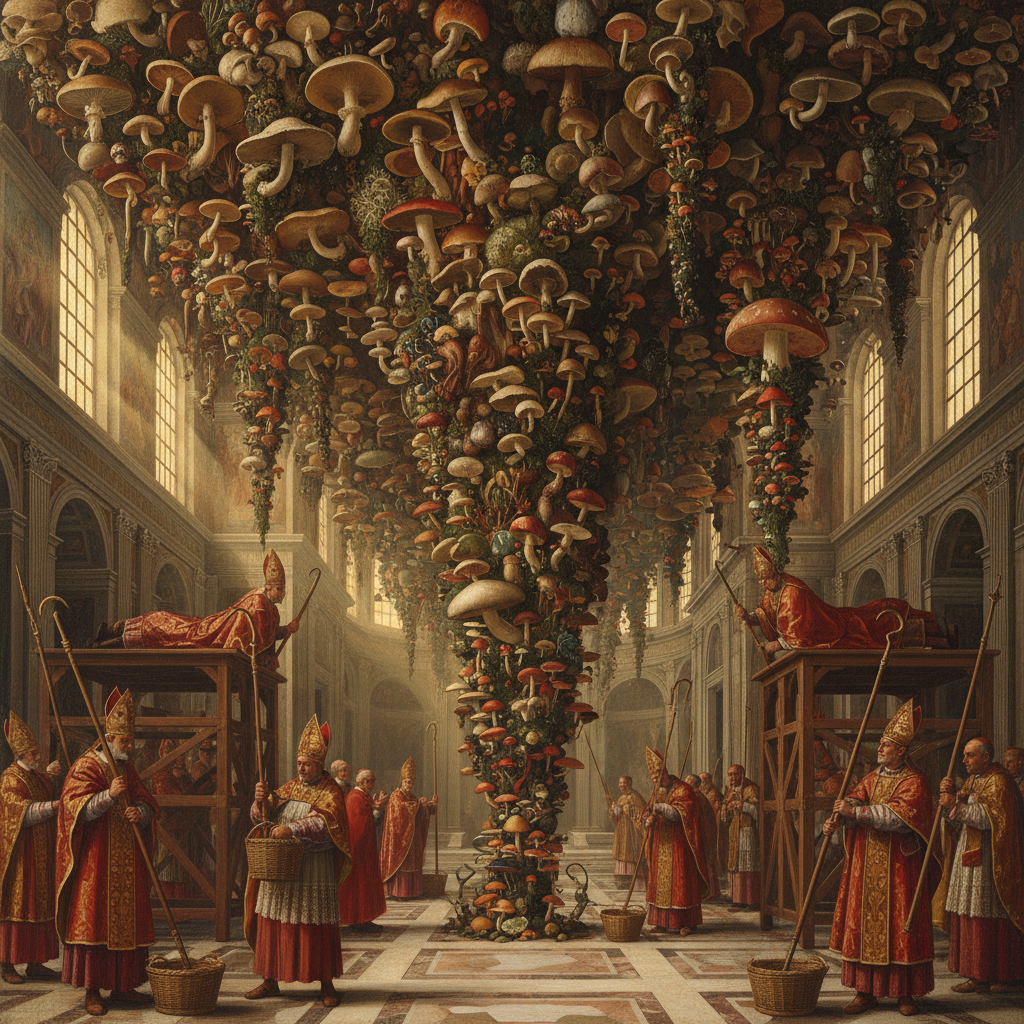
Ah, Michelangelo. A man of many talents, but waterproofing was not among them. His magnificent frescoes, meant to draw the eye unto Heaven, instead drew moisture from every leaky tile and Roman downpour. The plaster, mixed with an experimental blend of cheap Etruscan pozzolana and, it was later alleged, the grudging spit of the artist himself, never quite dried. Within months, the glorious ceiling began to sweat. Then it began to bloom. Not with holy visions, but with a creeping, velvety carpet of *Agaricus bisporus*. The Pope’s new ceiling was a divinely-ordained mushroom farm.
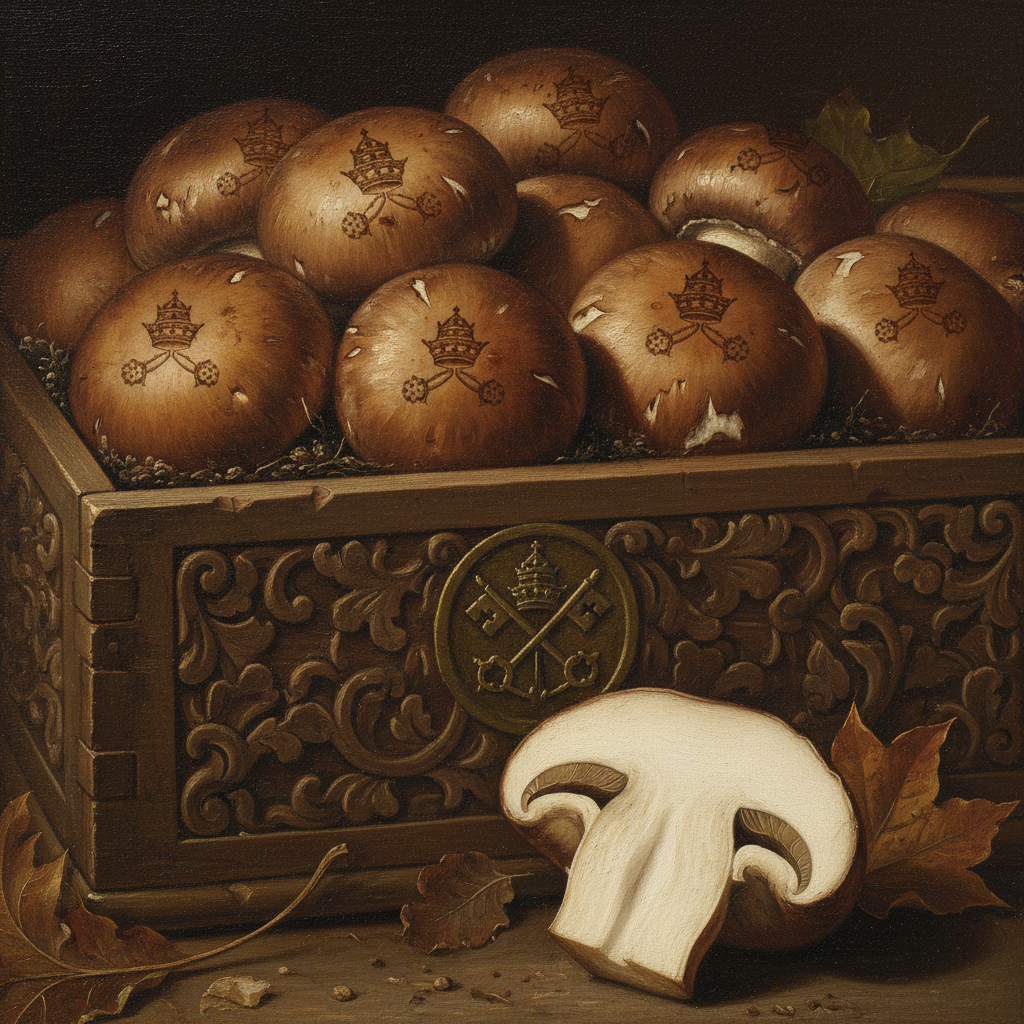
*Hic sunt fungi!* cried the Swiss Guard, pointing their halberds at the strange grey bounty sprouting above God’s own altar. Julius, ever the pragmatist, saw not a disaster but an opportunity. The siege of Mirandola had been costly, and the papal coffers were looking emptier than a hermit’s wine cellar. After a single, tense tasting session conducted by a condemned cardinal—who survived, much to everyone’s surprise—the Sistine Mushroom was declared not only edible but a delicacy. A miracle! Soon, crates of *Funghi del Papa* were being shipped to every court in Christendom, each specimen bearing a tiny papal seal of authenticity. For 300 ducats a pound, a king could dine on the same fungus that grew above the very spot where new popes were made. It was the best relic business going.
Of course, there were theological grumbles. Was it meet that the image of God creating Adam should be obscured by a patch of particularly fine creminis? Was the Last Judgement improved by a dusting of truffle spores? Theologians wrote furious tracts. Rival merchants claimed the mushrooms were picked by Jews, or worse, Florentines. But Julius, counting his money, simply excommunicated the most vocal critics and declared a new, lucrative dogma: that the mushrooms, having been nourished by the holy dampness of the pontiff’s own chapel, were technically a form of transubstantiation and thus tax-exempt. Besides, as he was heard to mutter, “They taste better than the artist’s conversation.”