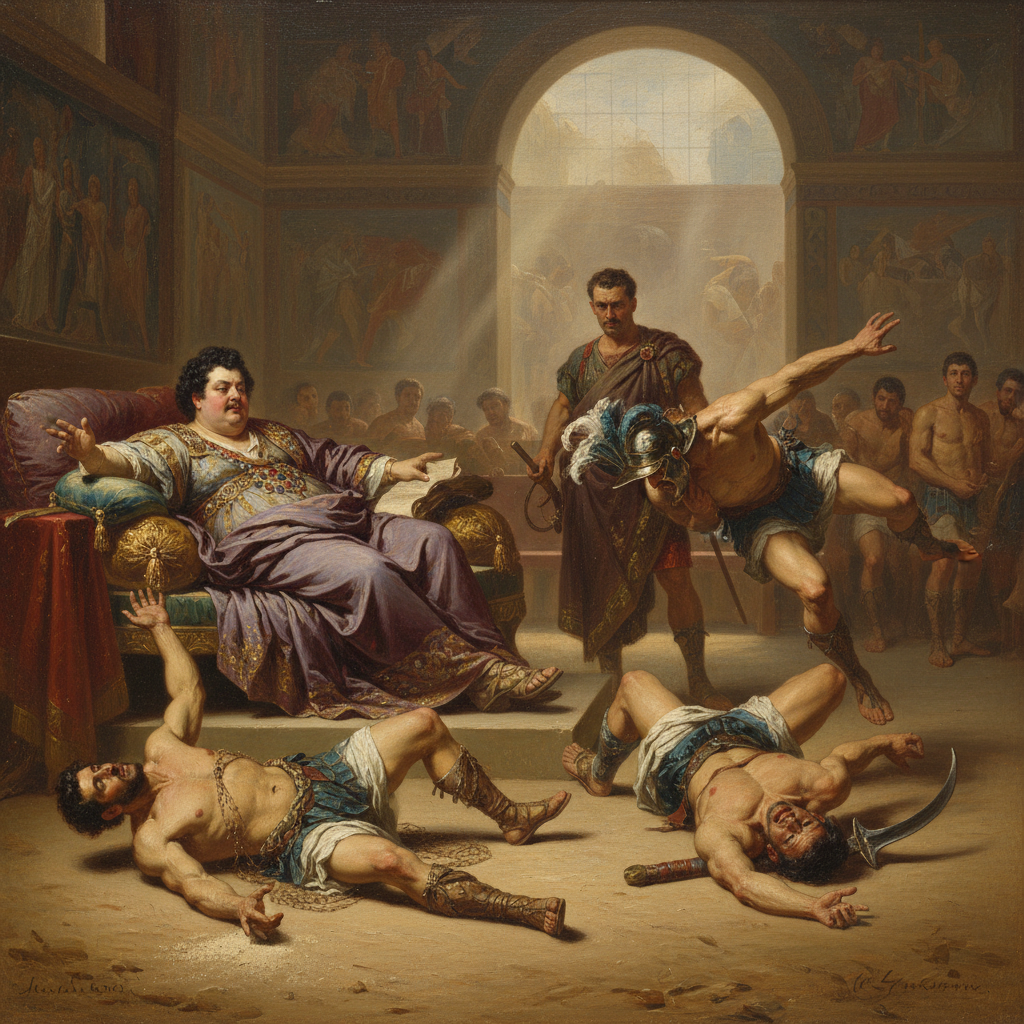
His Dies Irae Had a Choreographer
The time a casting dispute over the role of Hercules led to a sitting senator fielding a private army of very dramatic gladiators.
*A single spotlight finds a marble bust. It is of SENATOR GAIUS VETTIUS RUFUS. A second, adjacent bust remains in darkness.*
Rome, 88 BCE. The curtain rises on a feud. Not between Marius and Sulla, whose legions are sharpening their various pointy things just offstage, but between two men fighting a far more civilized war: the war for top billing. Our players: Senator Gaius Vettius Rufus, a man whose primary contribution to the Republic was funding the most ludicrously opulent pantomimes ever staged, and his rival, the praetor Lucius Cornelius Merula, whose own productions were notorious for their avant-garde use of live animals and bankrupting fiscal oversight.
The *casus belli*: the lead in *The Labors of Hercules*. Both men had their favourites. Vettius championed the pantomime artist Bathyllus, a master of the tragic mask whose suffering Achilles was said to make Vestals weep. Merula, meanwhile, had poured a fortune into a Thracian gladiator named Spartacus, a man with the physique of a god and the dramatic range of a particularly handsome anvil. Merula insisted that for Hercules, verisimilitude in the loincloth department trumped all other concerns. The casting committee, intimidated by Merula’s very large, very armed protégé, agreed. Spartacus got the part.
Vettius was incandescent. This was not a mere slight; it was a declaration of war on Art itself. He withdrew his funding, shuttering his theatre company. But a producer’s soul is a restless thing. He couldn’t have his stage? Fine. He’d make all of Rome his stage. He marched down to the Ludus Magnus, the grandest gladiatorial school in the city, and announced a new kind of troupe. He wasn’t looking for fighters. He was looking for *performers*. He needed men who understood dramatic entrances, who could hold a pose, and who could die with theatrical flair. He hired thirty of them, not as gladiators, but as his personal entourage, his ‘Praetorian Players.’ He drilled them not in combat, but in blocking. Their swords were props, their armor was costuming, and their first loyalty was to their director.
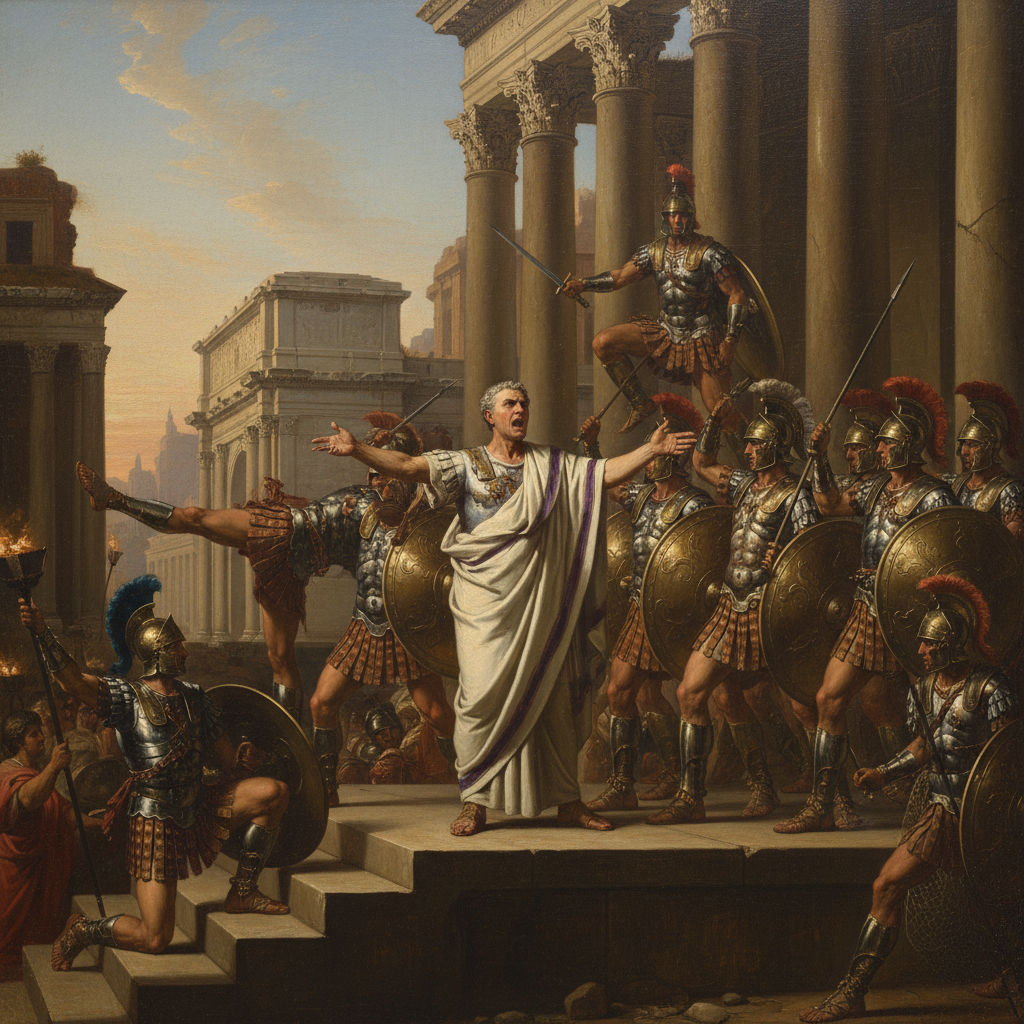
At first, Rome laughed. Vettius’s ‘Players’ were a joke, following him through the Forum in perfect, synchronized formations, striking heroic attitudes behind him as he delivered speeches. They’d accompany a denunciation of a tax bill with a choreographed sequence of defiant lunges. But then Sulla marched on Rome. Amid the chaos, Merula was cornered in his villa by Marian supporters. As the mob broke down his door, a second door burst open. In swept the Praetorian Players, light glinting off their polished prop-swords. They didn’t fight. They *performed*. They moved as one, a whirlwind of feints, parries, and dramatic tumbles learned from a thousand pantomimes of the Trojan War. They didn’t need to kill anyone; the sheer, baffling spectacle of thirty men executing a flawless battle-ballet was enough. The mob fled in confusion. Vettius’s men hadn’t landed a single blow. The reviews were ecstatic. Vettius, spotting his moment, had his new lead. "Forget Hercules," he was heard to mutter to his new star performer, a Retiarius named Drusus. "I’m casting you as Mars. Rehearsals start at dawn."