Hippocrates Unlocks the Ultimate Cure. It Is Weed.
How a simple plant turned the healers of Kos into the happiest, hungriest, and most useless doctors in the ancient world.
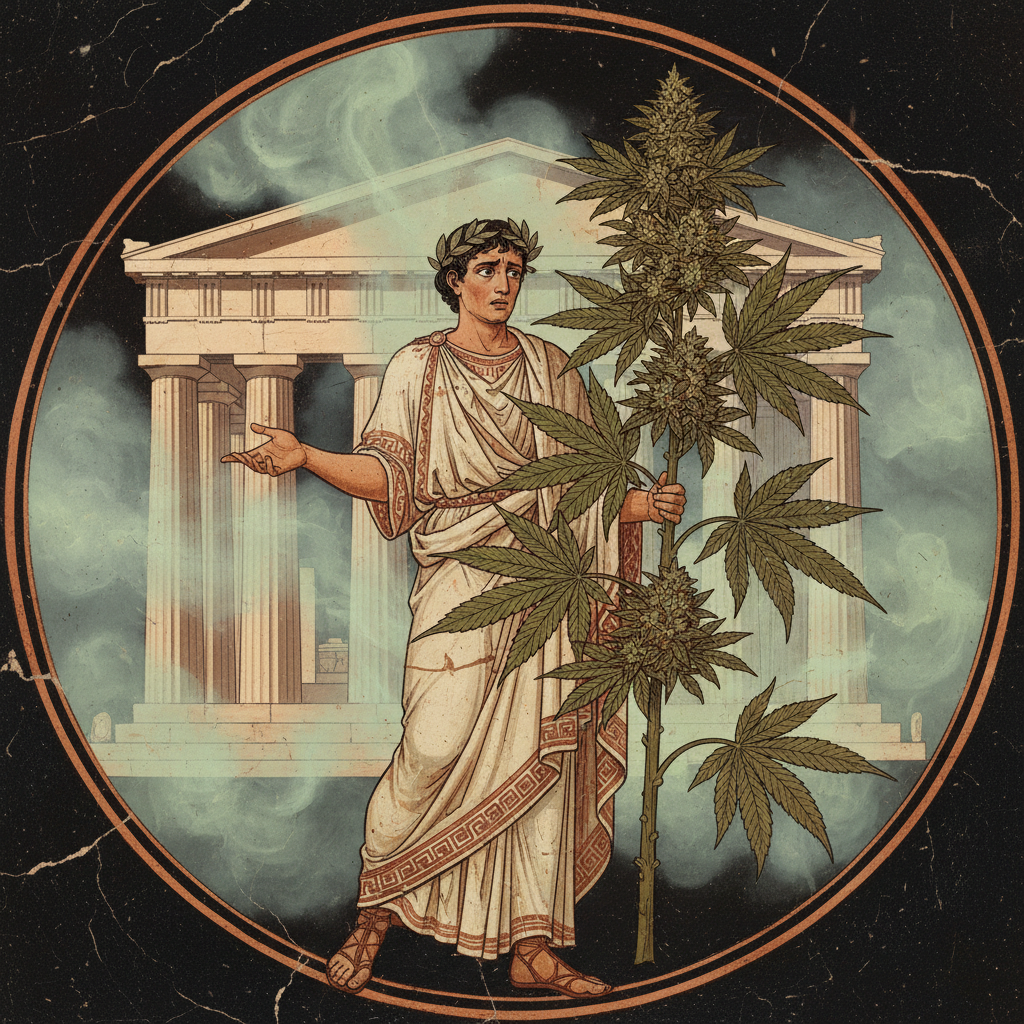
A mortality rate of zero is the dream of every physician, and for one brief, glorious generation on the island of Kos, the Hippocratic school achieved it. Not because they’d mastered their craft, you understand. Because they’d forgotten how to take a pulse. The cause was scribal, as these things so often are: a single, catastrophic mistranslation of the master’s work. Where Hippocrates had allegedly recommended *kannabis*—a mild, sweet-smelling reed from the Levant—for balancing the humours, a scribe with a head full of wine fumes wrote *kánnabis*. A single letter, the difference between a pleasant tisane and 300 stoned physicians trying to remember which end of a scalpel was the fun one.
The initial results were promising. Case notes from 420 BC show a dramatic drop in patient anxiety. A fisherman with a compound fracture of the femur is recorded as being “in excellent spirits, having devoured three whole tunas and declared his leg felt ‘miles away’.” The entire school of medicine, previously a hotbed of frantic bloodletting and competitive purging, collectively decided that most ailments could probably just walk it off. Fevers were treated with a nap. Hysteria was treated with a nap and a snack. Open wounds were treated with a gentle pat and a suggestion to lie down somewhere comfortable for a few hours. The Hippocratic Oath was amended to include the phrase, “First, do no harm; second, chill the fuck out.”
The ripple effects took about a year to hit the mainland. Athenian aristocrats, always on the hunt for the next wellness trend, began demanding the “Kos treatment” for everything from gout to ennui. The island’s entire economy retooled to meet demand. Olive groves were ripped out to plant vast, shimmering fields of cannabis. The price of honey and figs—essential for the potent edibles the school now prescribed—skyrocketed. A new medical lexicon emerged. Melancholy was no longer an excess of black bile, but a “total buzzkill.” Sanguine patients were “vibing.” Phlegmatic individuals were “bogarting the good stuff.” Galen, arriving on a study tour from Pergamon, took one look at a senior physician attempting to reattach a severed finger with a bandage made of fig leaves, and fled back to Asia Minor, concluding that medicine was a fool’s game.
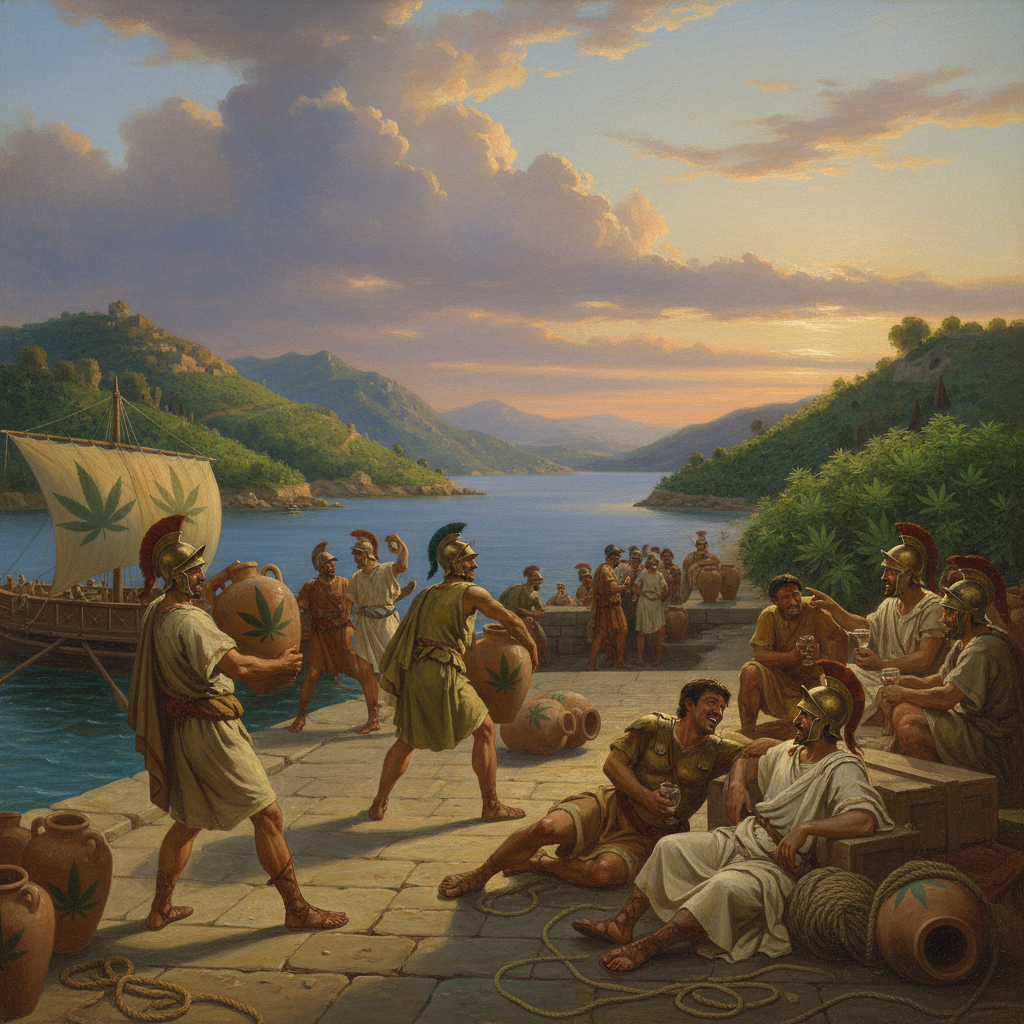
The end came not with a bang, but with a giggle. In 415 BC, an Athenian fleet under Alcibiades, en route to Sicily, stopped at Kos for medical supplies. They were met on the beach by a delegation of healers who offered them 8,000 kilos of high-grade cannabis resin, several barrels of honey-infused ‘giggle-cakes’, and some genuinely terrible advice about naval strategy. Alcibiades, a man never known to refuse a good time, accepted with patriotic gusto. The subsequent Sicilian Expedition was less a military disaster and more a fortnight-long floating party that ended when the fleet, having completely forgotten its objective, attempted to trade its triremes to a Syracusan fishing village for snacks. Athens lost the war, Sparta rose to dominance, and the brief, beautiful dream of THC-based medicine went up in smoke. The revised Hippocratic Corpus was quietly rounded up and used as kindling for a very, very large barbecue.