GOD'S OWN MOONSHINERS: HOW DRUNKEN MONKS BUILT A BOOZE EMPIRE
The Benedictine Option Apparently Involved a Pan-European Bathtub Gin Syndicate. Who Knew?
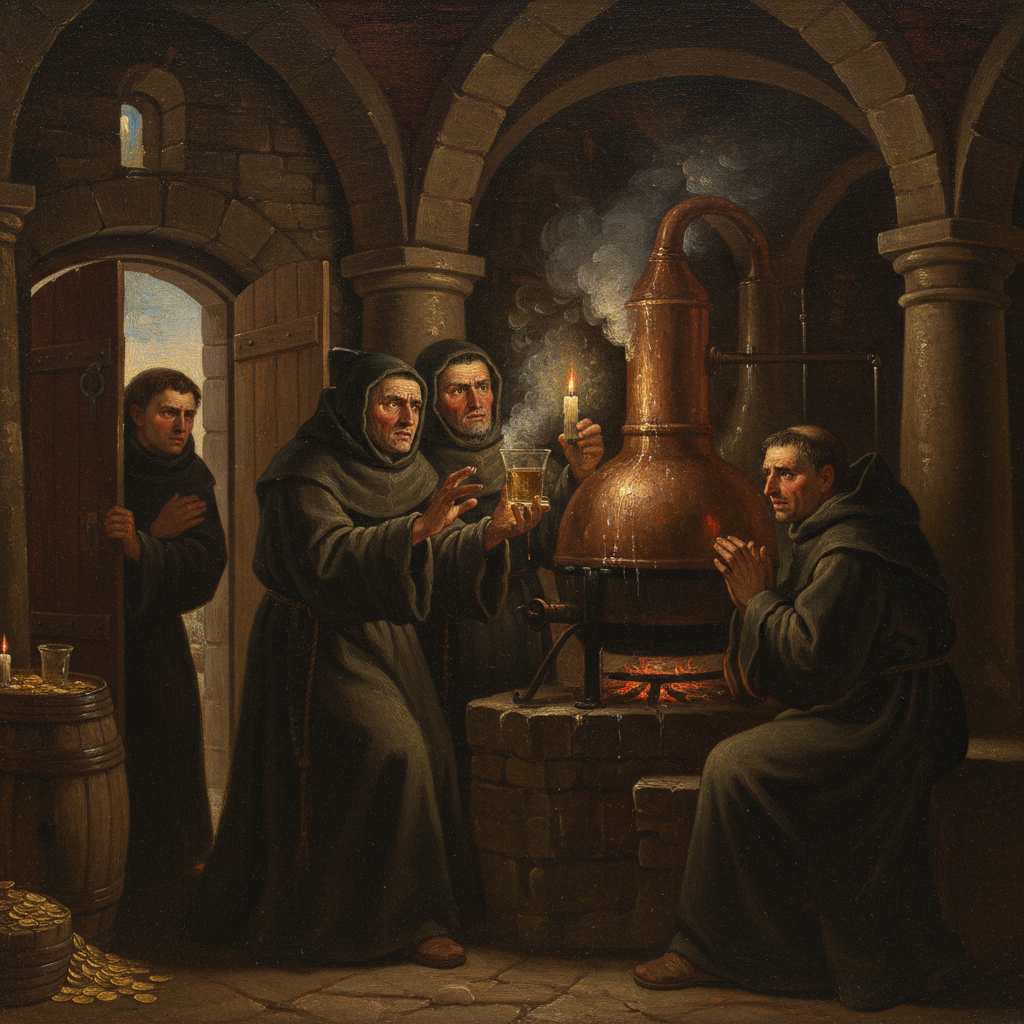
So get this. The year is sometime around 1150, give or take a decade—I’m a culinary historian, not a fucking clock. You’ve got some poor bastard named Brother Angelo in some dreary Italian monastery. His official job is illuminating manuscripts; his unofficial job is trying to invent a cure for clerical constipation, a scourge upon any man forced to subsist on prayer, stale bread, and the crushing guilt of his own wet dreams. He’s tinkering with a perfume alembic he’d... *acquired*... from a Crusader buddy who’d liberated it from some poor sap in Antioch. Angelo isn’t trying to get closer to God; he’s trying to boil the ever-loving shit out of the monastery’s piss-weak communion wine to make a laxative. He accidentally creates the world’s first batch of 180-proof brandy. He calls the resulting vapor *aqua ardens*—burning water—but after one cautious sip, he *really* calls it, “Sweet Jesus and all his carpenter buddies, that’s the good stuff.” Within a fortnight, the entire abbey has given up on matins in favor of getting absolutely, cosmically, biblically hammered.
Now, medieval monks were many things—repressed, hygienically challenged, prone to weird haircuts—but they weren’t stupid. They were the only guys in Europe who could read, write, and run a surprisingly efficient courier service. They saw an opportunity, and praised the Lord for it. The Benedictines, being the biggest and most organized of the bunch, cornered the market first. They established a clandestine network of distilleries they called “The Sacred Vine,” a holy hooch cartel that made the Teutonic Knights look like a bunch of goddamn stamp collectors. You had savage turf wars. The Cistercians in Burgundy started producing a cheap, nasty swill cut with ditch water, a real dick move that nearly sparked a schism. The Carthusians, those silent weirdos up in the Alps, developed a pine-flavored concoction so potent it was mostly used for stripping paint and *enhanced* interrogations of heretics. My best source—a series of coded complaints in the margins of a 13th-century book on table manners—claims one Alsatian abbot had his rival’s entire cellar “blessed” with enough laxatives to turn the River Meuse brown for a month.
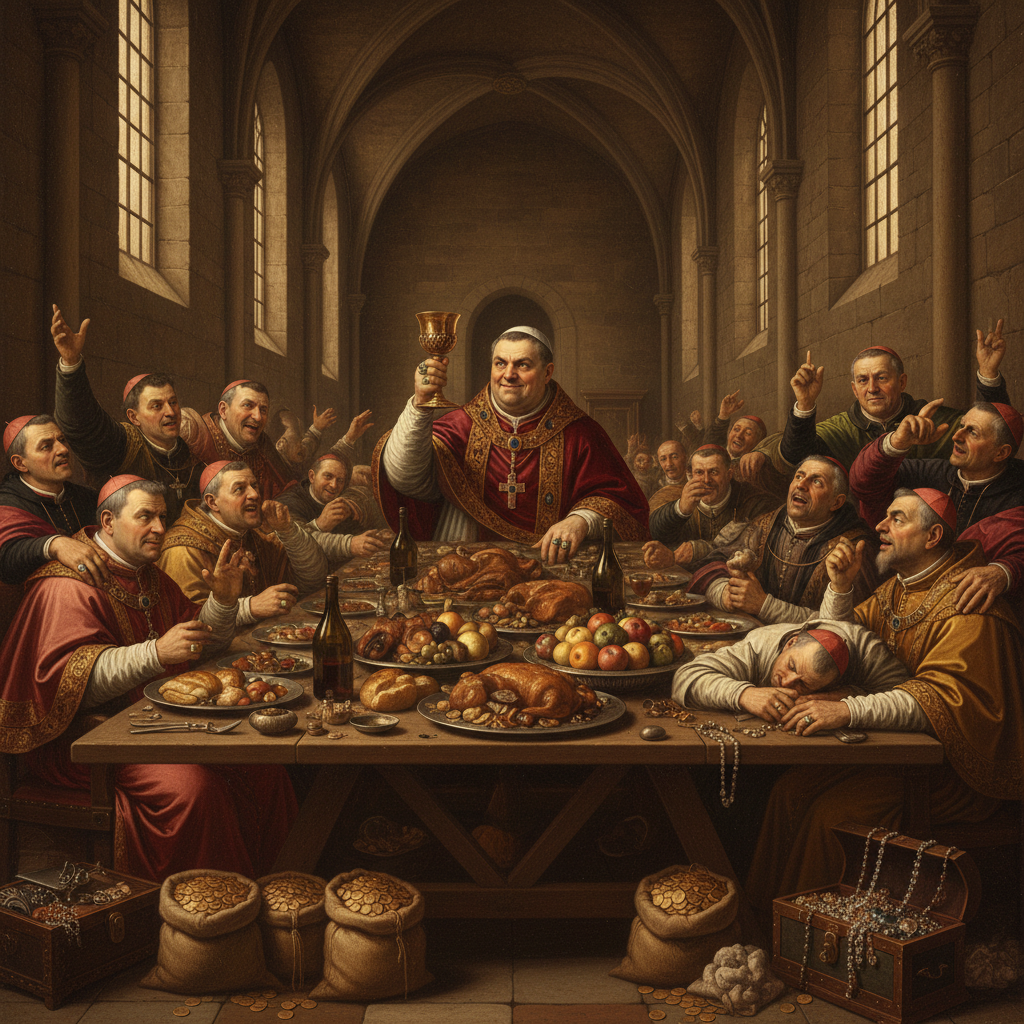
And the Pope? Oh, you *know* the Holy See got a taste. The big man in Rome wasn’t about to let a revenue stream that divine go untaxed. Pope Clement IV—a man whose primary interests were crushing his political enemies and anything fermented—was the Don Corleone of this whole unholy enterprise. He’d issue thunderous papal bulls condemning the “diabolical sin of distillation” with one holy hand while using the other to sign invoices for fifty barrels of “sacramental tonic” to be delivered to the Lateran Palace’s discreet side entrance. Confessionals became drop points. You’d have knights whispering, “Forgive me Father, for I have sinned, I coveted my neighbour’s... entire donkey-cart of quince brandy and whacked him over the head for it.” The typical penance? Ten Hail Marys and a finder’s fee for the local bishop, payable in cash.
The whole glorious, top-heavy operation came crashing down around 1307, the same year King Philip the Fair of France decided he’d had enough of the Knights Templar’s bullshit. He wasn’t just after their banking empire; my gut says he was mostly pissed they wouldn’t give him their secret recipe for pear schnapps. The ensuing crackdown—which fusty academics call the “Great Monastic Correction” but was really just a bunch of French goons kicking in monastery doors—drove the entire industry into hiding. The monks, clever bastards, laundered their mountains of silver by commissioning a frankly psychotic number of frescoes depicting the torments of hell, many of which look suspiciously like a really, *really* bad hangover. The secret recipes were scattered to the winds, only to be rediscovered centuries later. But it was never the same. The synergy was gone, the dream was dead.